
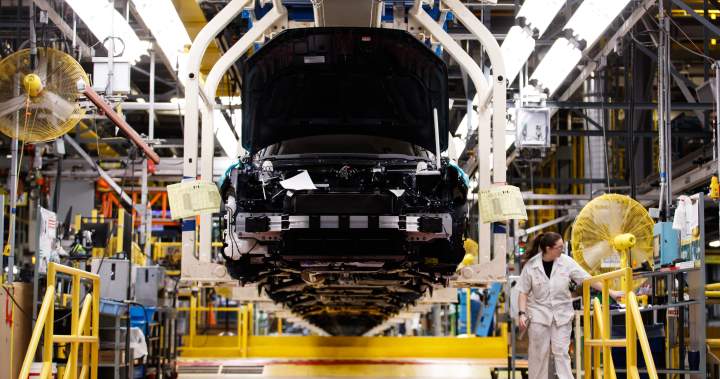

The auto industry just got a major shake-up that could reshape where your next vehicle gets built. Ottawa recently introduced new tariff rules that demand automakers produce more vehicles right here in Canada if they want to avoid hefty penalties when shipping cars south of the border.
The policy requires 60 percent of vehicles exported to the United States be manufactured on Canadian soil. Any company falling short faces a 25 percent tariff on those vehicles. It’s a bold move that puts Canadian manufacturing front and center in continental trade discussions.
I’ve covered Parliament Hill long enough to know when policy gets serious. This isn’t just political theater. The government wants assembly lines humming in Ontario and beyond, creating jobs that support families across this country. The stakes couldn’t be higher for communities built around automotive production.
Finance officials confirmed the measure takes effect immediately, catching some manufacturers off guard. Companies now face a critical choice: increase Canadian production capacity or absorb substantial tariff costs that could slash profit margins. Neither option comes cheap or easy.
The automotive sector employs roughly 125,000 Canadians directly, according to recent industry figures. Thousands more jobs connect indirectly through parts suppliers, dealerships, and service networks. When assembly plants thrive, entire communities benefit from stable employment and economic growth that ripples through local businesses.
Honda and Toyota already maintain significant Canadian operations, particularly in Southern Ontario. These companies might adapt more smoothly to the new requirements since their existing footprint already approaches the 60 percent threshold. Their Alliston and Cambridge facilities have long been productivity powerhouses.
Smaller manufacturers and luxury brands face tougher decisions. Companies with limited Canadian presence must now weigh major infrastructure investments against accepting tariff penalties. Building new facilities takes years and requires billions in capital expenditure that shareholders scrutinize closely.
Industry analysts predict some automakers will boost production here while others might redirect exports to different markets. The policy fundamentally alters cost calculations that determine where vehicles get assembled. Every company now runs numbers to figure out their most profitable path forward.
Trade experts I’ve spoken with see this as Canada asserting leverage within continental commerce. The United States remains our largest automotive export market by far, making access incredibly valuable. Ottawa clearly believes manufacturers need Canadian production enough to meet the new standard.
Critics argue the policy could backfire by raising vehicle prices for consumers. If automakers pass tariff costs to buyers, Canadian families might pay more for cars and trucks. Economic modeling suggests price increases could range from hundreds to thousands of dollars per vehicle depending on manufacturer response.
Union leaders celebrate the measure as overdue protection for Canadian workers. Unifor, representing thousands of autoworkers, lobbied for exactly this kind of policy for years. They view domestic content requirements as essential insurance against production moving to lower-cost jurisdictions.
The timing intersects with broader continental uncertainty around trade relationships. Washington’s shifting positions on tariffs and trade agreements create volatility that makes long-term planning difficult for manufacturers. This Canadian policy adds another variable to an already complex calculation.
Electric vehicle production adds extra complexity to the equation. Many automakers planned EV facilities in jurisdictions offering the richest incentives, not necessarily Canada. Now they must reconcile those plans with the new 60 percent requirement or risk tariff exposure.
I remember when Windsor and Oshawa were synonymous with automotive prosperity. Those communities know both the benefits of thriving plants and the devastation when production lines go silent. This policy aims to prevent future closures by mandating Canadian content in continental trade.
Provincial governments, especially Queen’s Park, strongly support measures protecting manufacturing jobs. Ontario’s economy remains heavily tied to automotive production despite diversification efforts. Keeping assembly plants operational directly impacts provincial GDP and employment rates.
Some manufacturers already signaled investment responses. Increased production means expanded facilities, additional workers, and upgraded equipment. The policy might trigger billions in new capital spending across the sector if companies choose expansion over tariffs.
Implementation details matter enormously. How officials verify production percentages, handle parts sourced internationally, and enforce compliance will determine real-world impact. Bureaucratic processes sometimes create unintended bottlenecks that complicate straightforward policy goals.
The measure also tests Canada’s relationship with other trading partners. Mexico, another major automotive producer, watches closely. If similar policies spread, continental supply chains could fragment, raising costs and reducing efficiency gains that integrated production networks create.
Currency fluctuations add another layer. A stronger Canadian dollar makes exports more expensive regardless of tariffs. Manufacturers must navigate exchange rate risk alongside new regulatory requirements, complicating financial projections.
Dealerships across Ottawa and beyond await clarity on inventory impacts. If certain models become more expensive or harder to source, consumer options narrow. Selection variety matters to buyers who want specific features, colors, or configurations.
Environmental considerations intersect with production location. Canadian manufacturing generally operates under stricter environmental regulations than some jurisdictions. Increased domestic production might actually reduce the automotive sector’s overall carbon footprint depending on energy sources and transportation distances.
The policy represents calculated economic nationalism in an era where governments increasingly prioritize domestic interests. Free trade orthodoxy that dominated recent decades faces growing skepticism when communities lose good-paying jobs to international competition.
Looking ahead, this could become a template for other sectors. If the auto tariff policy succeeds in boosting Canadian manufacturing without major economic disruption, policymakers might apply similar frameworks to steel, aluminum, or technology products.
Uncertainty remains about long-term effectiveness. Will manufacturers genuinely expand Canadian operations or find creative compliance workarounds? Enforcement capacity and political will determine whether ambitious policy goals translate into tangible outcomes for workers and communities.
What seems clear is that Ottawa drew a line. Canadian market access comes with expectations around domestic production. Whether that calculation proves economically sound or politically sustainable depends on how companies respond and consumers react to any resulting price changes.