

Walking past the Rideau Canal last week, I overheard two tourists debating whether Canada actually makes anything for defense anymore. That conversation stuck with me. It’s a fair question many Canadians ask when they see international headlines dominated by American or European defense contractors.
The federal government just answered that question with a resounding yes. Ottawa announced a massive $900 million investment into Canada’s defense and aerospace sector this week. This isn’t just another government spending announcement. It represents a fundamental shift in how Canada approaches national security and technological innovation.
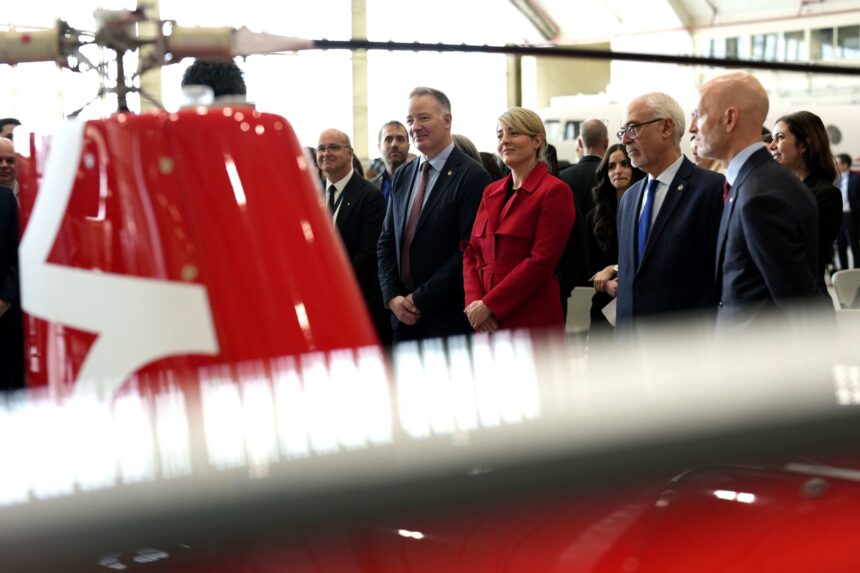
Foreign Affairs Minister Mélanie Joly stood in front of reporters and outlined an ambitious vision. The funding package targets three cutting-edge technology areas that sound like science fiction but are very much our present reality. Quantum computing systems, autonomous drone technology, and advanced aerospace manufacturing will receive substantial federal support over the next five years.
Bombardier emerged as a primary beneficiary of this investment strategy. The Montreal-based aerospace giant will receive significant funding to develop next-generation aircraft components specifically designed for military applications. This partnership makes strategic sense given Bombardier’s decades of experience in aerospace engineering and manufacturing.
The timing of this announcement carries particular weight. Global defense spending reached unprecedented levels in 2023 as nations reassess security priorities. Canada faced mounting pressure from NATO allies to increase defense investments and meet the alliance’s spending targets. This $900 million commitment addresses some of those concerns while positioning Canadian companies at the forefront of emerging defense technologies.
Quantum computing represents perhaps the most intriguing element of this investment package. These incredibly powerful computers process information in ways traditional systems simply cannot match. For defense applications, quantum technology could revolutionize encryption, cybersecurity, and strategic planning. Canada already hosts several world-leading quantum research facilities, particularly in Waterloo and Ottawa.
The National Research Council confirmed that roughly $300 million will flow specifically toward quantum defense applications. Dr. Raymond Laflamme, a prominent quantum physicist, praised the investment during a technical briefing. He explained that quantum sensors could detect submarines or aircraft with unprecedented accuracy. These systems might identify threats that current radar and sonar technologies completely miss.
Autonomous drones form another critical component of the funding package. These aren’t the small consumer drones you see buzzing around parks on summer afternoons. Military-grade autonomous systems can conduct surveillance, deliver supplies, and perform reconnaissance missions without risking human lives. Several Canadian startups have developed innovative drone technologies but struggled to compete against well-funded international competitors.
The Department of National Defence indicated that $350 million will support domestic drone development and manufacturing. This investment aims to reduce Canada’s reliance on foreign drone suppliers while creating high-skilled jobs across the country. Minister Joly specifically mentioned collaboration with universities in Ontario, Quebec, and British Columbia that have established aerospace engineering programs.
I’ve covered enough budget announcements to recognize political theater when I see it. This investment feels different somehow. Government officials presented detailed technical specifications and concrete timelines rather than vague promises about future prosperity. The emphasis on measurable outcomes and private sector partnerships suggests genuine commitment beyond typical election-year posturing.
Bombardier’s involvement adds credibility to the entire initiative. The company weathered significant financial challenges over the past decade, including controversial government bailouts that sparked public debate. This defense contract provides Bombardier with stable, long-term revenue while leveraging their existing manufacturing infrastructure. The company plans to hire approximately 1,200 workers across facilities in Quebec and Ontario.
Critics quickly emerged following the announcement, as they always do with major defense spending. The Canadian Centre for Policy Alternatives questioned whether $900 million represents the most effective use of public funds. Some economists argue that healthcare, education, or climate initiatives deserve higher priority than military technology development.
Those objections deserve serious consideration. Defense spending always involves difficult tradeoffs between security requirements and domestic priorities. However, the economic multiplier effects of advanced manufacturing shouldn’t be dismissed. Every dollar invested in aerospace and quantum research generates additional economic activity through supply chains, employment, and technological spillovers into civilian applications.
The parliamentary defense committee scheduled hearings for next month to examine the investment’s details. Members from all parties will scrutinize contract terms, accountability measures, and expected outcomes. This oversight process represents healthy democratic function, ensuring taxpayer money gets spent responsibly rather than disappearing into bureaucratic black holes.
International reaction has been largely positive. NATO Secretary General expressed support for Canada’s increased defense commitment during a video conference with Canadian officials. The United States Department of Defense indicated interest in potential collaboration on quantum and drone technologies. These systems could enhance continental defense cooperation through NORAD and other binational security arrangements.
Small and medium-sized enterprises stand to benefit significantly from this investment strategy. The funding includes provisions requiring prime contractors like Bombardier to partner with smaller Canadian companies. This approach distributes economic benefits more broadly while fostering innovation across the entire defense industrial ecosystem. Ottawa-based tech firms specializing in software development and systems integration could secure valuable subcontracts.
The government emphasized that this $900 million represents just the beginning. Officials hinted at additional investments pending budget negotiations and parliamentary approval. Industry Canada projected that defense and aerospace sectors could generate $3 billion in economic activity over the next decade if current momentum continues.
Walking home from Parliament Hill yesterday, I noticed construction crews working on new office buildings near Tunney’s Pasture. Those developments weren’t happening five years ago. Ottawa’s tech sector has grown substantially, attracting talented engineers and researchers from across Canada and internationally. This defense investment could accelerate that growth trajectory.
Canada faces genuine security challenges that simplistic partisan talking points often obscure. Climate change opens Arctic shipping routes while simultaneously creating new territorial vulnerabilities. Cyber threats evolve faster than traditional security frameworks can address. Autonomous systems and quantum technologies aren’t optional luxuries but necessary tools for protecting Canadian sovereignty.
The $900 million investment won’t solve every defense challenge Canada confronts. It does demonstrate political willingness to make substantial commitments rather than relying on minimal compliance with international obligations. Whether this funding delivers promised outcomes remains to be seen. Implementation matters far more than announcements.
This story will unfold over months and years as contracts get awarded and technologies develop. I’ll be watching closely, asking tough questions, and holding government officials accountable for results they promised Canadian taxpayers.