
I’ve been covering Toronto’s healthcare landscape for years, and yesterday’s developments hit particularly close to home. My neighbor, a nurse at one of our city hospitals, mentioned she’s worried about her department’s future. Those casual conversations now carry real weight as we examine what’s unfolding across our healthcare system.
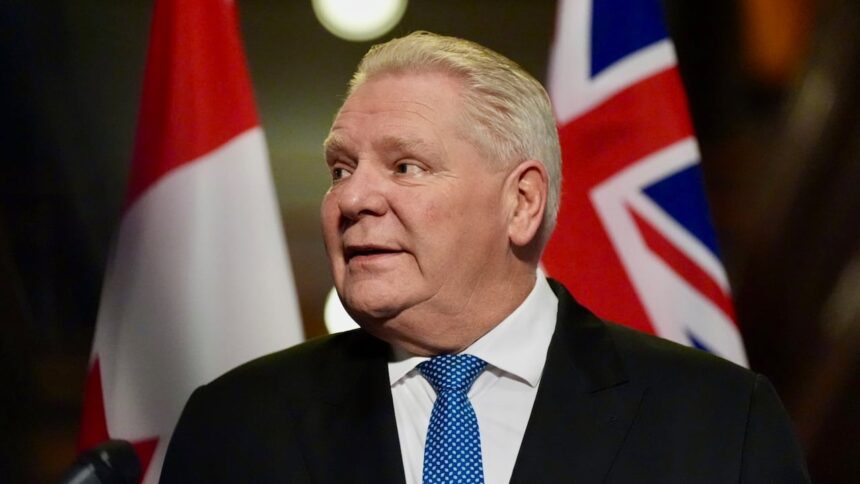
Premier Doug Ford defended his government’s healthcare record this week while Toronto hospitals face mounting financial pressures. The timing feels awkward. Several major institutions across our city are reporting significant deficits that threaten patient care and staff stability.
University Health Network recently disclosed a projected deficit exceeding $200 million for this fiscal year. That’s not a small accounting error. We’re talking about one of Canada’s largest hospital networks struggling to keep books balanced. Unity Health Toronto faces similar challenges with deficits approaching $160 million across its three hospital sites.
“We’re making difficult choices every single day,” said Dr. Kevin Smith, President and CEO of University Health Network, during a recent media briefing. “These aren’t just numbers on spreadsheets. They represent real impacts on patient services and our dedicated staff.”
The financial strain isn’t isolated to one or two institutions. SickKids Hospital, Sunnybrook Health Sciences Centre, and Michael Garron Hospital all report similar pressures. Each institution serves different communities across Toronto, but they share common struggles with funding shortfalls and rising operational costs.
Ford’s government points to increased healthcare spending as evidence of their commitment. The province allocated $85 billion to healthcare this year, representing a substantial increase from previous budgets. Ministers emphasize new infrastructure projects and expanded capacity as proof of progress.
But hospital administrators tell a different story from their vantage points. The gap between provincial funding increases and actual operational costs continues widening. Inflation affects hospitals just like it affects our grocery bills. Medical equipment costs more. Utilities climb higher. Staff wages need adjusting to reflect economic realities.
“The funding formula hasn’t kept pace with the actual cost of delivering modern healthcare,” explained Anthony Dale, President of the Ontario Hospital Association, in recent testimony. “Hospitals are expected to do more with funding that doesn’t match their real-world expenses.”
Toronto hospitals face unique pressures compared to institutions in smaller communities. Our city’s population density creates higher patient volumes. We serve as regional referral centers for complex cases requiring specialized treatment. Immigration brings wonderful diversity to our neighborhoods but also creates demand for services that funding models don’t adequately recognize.
I spoke with Sarah Chen, a healthcare policy analyst at Toronto Metropolitan University, about these systemic challenges. She’s been researching hospital financing for over a decade. Her insights reveal deeper structural problems beyond any single government’s policies.
“Ontario’s per capita healthcare spending ranks among the lowest in Canada,” Chen explained during our conversation at a campus coffee shop. “When you combine that with Toronto’s cost of living and operational expenses, hospitals face an impossible equation.”
The human impact of these deficits extends beyond administrative concerns. Hospitals contemplating service reductions must weigh which programs get cut. Mental health services often face scrutiny despite growing community needs. Rehabilitation programs that help patients recover might see reduced capacity. Diagnostic wait times could lengthen as institutions delay equipment purchases.
Staff morale suffers when financial uncertainty looms large. My neighbor mentioned colleagues leaving for positions in other provinces or private sector opportunities. Nursing shortages already challenge Toronto hospitals before financial pressures add another layer of stress. Experienced professionals bring invaluable knowledge that takes years to develop.
The provincial government maintains that hospital deficits result from internal management issues rather than insufficient funding. Finance Minister Peter Bethlenfalvy suggested hospitals need better efficiency and accountability measures. That perspective doesn’t resonate with administrators struggling to maintain services with limited resources.
“We’ve implemented every efficiency measure possible,” said Dr. Jane Philpott, Dean of Queen’s University’s Faculty of Health Sciences and former federal Health Minister, commenting on the broader situation. “At some point, efficiency becomes a euphemism for cuts that harm patient care.”
Toronto’s hospital deficit crisis unfolds against broader healthcare system challenges. Family doctor shortages leave many residents without primary care. Emergency departments experience overcrowding that strains resources. Long-term care facilities face their own funding pressures that affect hospital discharge planning.
Political rhetoric around healthcare rarely matches lived experiences of patients and providers. Ford’s government emphasizes spending increases while hospitals report insufficient resources. Both statements can technically be accurate while missing the complete picture. Costs rise faster than funding. Demand outpaces capacity. The math simply doesn’t work.
I’ve covered enough budget cycles to recognize familiar patterns. Governments announce funding increases that sound impressive in press releases. Hospitals quietly struggle with deficits that don’t generate equivalent attention. The gap between political messaging and operational reality widens until crisis forces difficult conversations.
What happens next matters tremendously for Toronto residents. Will the province provide additional emergency funding to address deficits? Might hospitals implement service reductions that affect patient access? Could we see facility closures or mergers that reshape our healthcare landscape?
These questions lack easy answers. Healthcare financing involves complex formulas, political considerations, and competing priorities for limited provincial resources. But the stakes couldn’t be higher for communities depending on accessible, quality hospital services.
My neighbor deserves to work in an environment with adequate resources. Toronto residents deserve healthcare institutions that can meet community needs without choosing between financial stability and patient care. Finding sustainable solutions requires honest acknowledgment of current challenges rather than defensive political posturing.
The deficit crisis facing Toronto hospitals demands attention beyond partisan debates. Our collective health depends on functional institutions capable of delivering essential services. Whatever our political leanings, we share common interest in healthcare systems that work effectively for everyone.