
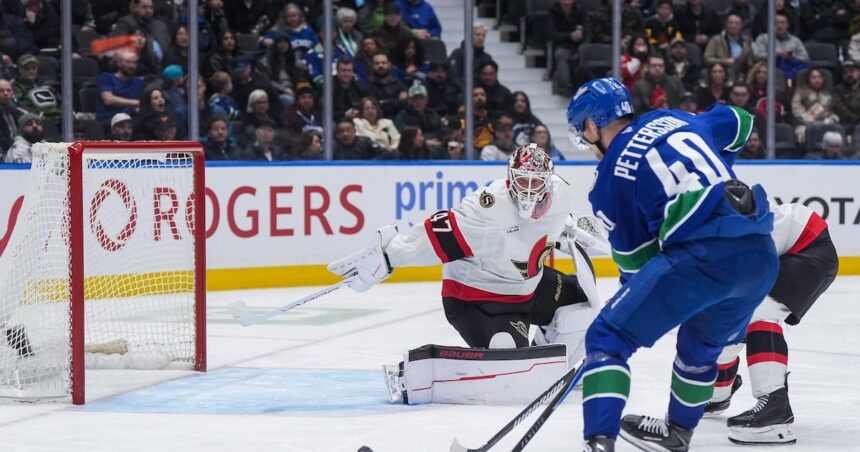

James Reimer sits in the Ottawa Senators’ dressing room with the kind of quiet confidence that comes from spending over a decade in professional hockey. At 36 years old, he understands his role has shifted dramatically from his early days as a starting goaltender. These days, he’s perfectly content being the steady veteran presence supporting the team’s younger netminders.
The Manitoba native joined the Senators organization knowing exactly what management expected from him. He wouldn’t be the number one guy between the pipes anymore. Instead, he’d provide reliable backup goaltending while mentoring the franchise’s future stars. For many athletes, accepting a reduced role might feel like a step backward. Reimer sees it completely differently.
“You’re always grateful for the opportunity to play,” he said during a recent conversation with reporters at Canadian Tire Centre. His words carry genuine appreciation rather than empty platitudes. After 14 seasons bouncing between six different NHL franchises, he knows how quickly opportunities can disappear in professional sports.
I’ve covered countless athletes throughout my career in Ottawa, and there’s something refreshing about Reimer’s approach. He doesn’t project bitterness about his changing status. He radiates contentment with where his career has landed. That perspective becomes increasingly rare in a league obsessed with statistics and starting positions.
The Senators brought Reimer to Ottawa specifically for his experience and professionalism. General Manager Steve Staios wanted someone who could step into games without missing a beat when called upon. More importantly, the organization sought a veteran who could guide younger goaltenders through the mental challenges of playing hockey’s most pressure-filled position.
Anton Forsberg currently handles most of the starting duties for Ottawa. The 31-year-old Swedish goaltender has become the team’s go-to option when healthy. Behind him, highly touted prospect Mads Sogaard waits for his chance to establish himself as an NHL regular. Reimer fits perfectly between these two, providing stability without blocking anyone’s development path.
His journey to this point hasn’t followed a straight line. Toronto drafted him in the fourth round back in 2006. Few people expected much from the 99th overall selection. He proved skeptics wrong by becoming the Maple Leafs’ starting goaltender and earning a reputation for spectacular performances in high-pressure situations.
Toronto fans still remember his playoff heroics during the 2013 postseason. Despite the team’s eventual collapse against Boston, Reimer displayed remarkable composure for such a young netminder. Those performances established him as a legitimate NHL talent capable of stealing games single-handedly.
Subsequent stops in San Jose, Florida, Carolina, San Jose again, and Detroit taught him valuable lessons about hockey’s business side. Teams trade goaltenders frequently because evaluating their performance involves so many variables beyond personal control. A goalie might play brilliantly while his team loses consistently due to weak defensive play or inadequate scoring support.
Reimer accumulated 213 career wins across those 14 seasons. He posted a respectable career save percentage that demonstrates consistent competence even if he never achieved superstar status. More importantly, he earned respect throughout the league for his work ethic and positive attitude regardless of circumstances.
Ottawa’s coaching staff appreciates having someone with Reimer’s resume available when needed. Head coach Travis Green can confidently insert him into the lineup without worrying about a significant dropoff in goaltending quality. That reliability proves invaluable during the grueling 82-game regular season schedule.
The veteran’s influence extends beyond what happens during games. Young goaltenders face immense psychological pressure that position players rarely experience. Every mistake gets magnified because goals allowed directly appear on scoreboards. One bad game can shatter a prospect’s confidence if they lack proper mental frameworks for processing failure.
Reimer shares wisdom gained from hundreds of NHL appearances with Ottawa’s younger netminders. He discusses pre-game preparation routines that help maintain focus. He explains techniques for quickly forgetting bad goals and resetting mentally between periods. These conversations happen informally in practice or during road trips rather than through formal coaching sessions.
“Having James around has been tremendous for our goaltending group,” Green mentioned during a media availability session last month. The coach emphasized how Reimer’s professionalism sets standards for everyone around him. Veterans who accept reduced roles gracefully make coaching staffs’ jobs considerably easier.
Financial considerations also factored into Ottawa’s decision to sign Reimer. His contract carries a modest cap hit that doesn’t restrict the team’s flexibility in other areas. Organizations must carefully balance spending between different positions while remaining under the NHL’s salary cap ceiling. Overpaying for backup goaltending can create problems when trying to retain key forwards or defensemen.
The Senators currently sit in a challenging position within their division standings. They’re trying to transition from rebuilding toward legitimate playoff contention. That process requires contributions from every roster spot, including backup goaltenders who might only play 20 to 25 games annually.
Reimer’s presence provides insurance against the injury problems that inevitably affect every NHL team. If Forsberg goes down with a significant injury, Ottawa needs someone capable of handling extended starting duties. The veteran has proven repeatedly throughout his career that he can shoulder that responsibility when circumstances demand it.
His faith plays a significant role in maintaining perspective about his career trajectory. Reimer has spoken openly about his Christian beliefs and how they inform his approach to professional challenges. That spiritual foundation helps him avoid the bitterness that sometimes afflicts athletes watching their careers wind down.
Walking through the ByWard Market last week, I thought about how athletes like Reimer enrich Ottawa’s sports culture. This city has watched plenty of talented players pass through over the years. The ones who embrace their roles and contribute positively leave lasting impressions that transcend statistics.
The remainder of this season will test whether Ottawa can push toward playoff positioning. Reimer will certainly factor into that equation whenever his number gets called. His readiness to contribute without complaint exemplifies professionalism that younger players should study carefully.