
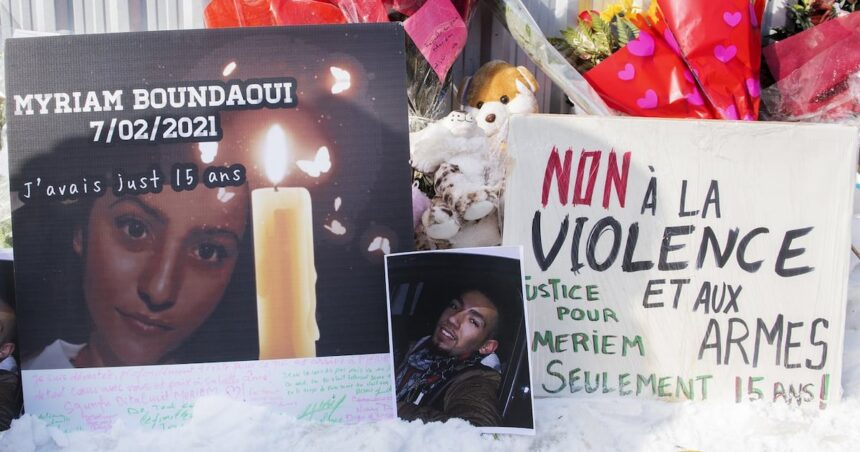

The courtroom fell silent as the defense lawyer stood to address the jury. His client faced serious charges after a teenager died in a drive-by shooting. The lawyer’s message was clear but troubling. His client never meant to kill anyone that night.
Thomas Trudel fired multiple shots at a moving car in Montreal. The incident happened in August 2022. One bullet struck 15-year-old Meriem Boundaoui. She died from her injuries. Now Trudel stands trial for second-degree murder. His defense team argues the charge should be manslaughter instead.
I’ve covered many trials in this city over the years. This case feels particularly heavy. A young life ended on a summer night. A family lost their daughter. The legal arguments now focus on intent and consequences.
The shooting occurred in the Rivière-des-Prairies neighborhood. Trudel allegedly fired at a vehicle carrying several people. Meriem sat inside that car. She had no connection to whatever dispute led to the shooting. She was simply in the wrong place at the worst possible time.
Defense attorney Alexandre Bien-Aimé presented his client’s position to the jury. Trudel admits he fired the weapon. He acknowledges his actions led to Meriem’s death. But Bien-Aimé insists his client never intended to kill anyone. The distinction matters significantly in Canadian criminal law.
Second-degree murder requires proof of intent to kill. Manslaughter involves causing death without that specific intent. The difference carries enormous weight in sentencing. Murder convictions bring mandatory life sentences. Manslaughter allows for more judicial discretion.
Quebec Superior Court Justice Hélène Di Salvo presides over the trial. She will instruct the jury on the legal definitions. They must decide what Trudel intended when he pulled the trigger. Did he mean to kill? Or did he act recklessly without murderous intent?
The prosecution argues differently. Crown attorneys contend that firing multiple shots at a vehicle shows intent. They point to the nature of the act itself. Shooting at people in a car creates obvious lethal risk. The prosecution says Trudel knew his actions could kill.
Montreal has struggled with gun violence in recent years. Statistics from the Service de police de la Ville de Montréal show concerning trends. The city recorded 36 shootings in 2022. That number dropped to 28 in 2023. But each statistic represents real trauma for families and neighborhoods.
Meriem’s death shook the Rivière-des-Prairies community deeply. Residents held vigils. They demanded action on gun violence. Local community organizations called for better youth programs and conflict resolution resources. The teenager’s loss became a rallying point for change.
I remember walking through that neighborhood after the shooting. The mood felt tense and sorrowful. People questioned how a child could die this way. Parents worried about their own children’s safety. The incident touched something raw in Montreal’s collective consciousness.
The legal proceedings now attempt to assign responsibility and consequences. Trudel’s admission that he fired the shots removes some uncertainty. The jury doesn’t need to determine if he pulled the trigger. They must assess what he thought would happen when he did.
Defense strategy often focuses on reducing charges in cases like this. Bien-Aimé’s argument follows a familiar pattern. Accept the basic facts. Contest the interpretation of intent. Hope the jury sees reasonable doubt about premeditated murder.
Canadian law recognizes different levels of culpability. Not all killings qualify as murder. The system attempts to match punishment to moral blameworthiness. Reckless actions that cause death differ legally from calculated decisions to kill.
But does that distinction offer comfort to Meriem’s family? They lost their daughter regardless of legal categories. Their grief doesn’t change based on verdict terminology. The justice system provides accountability, not restoration.
Montreal’s Haitian community followed this case closely. Meriem came from that community. Her death resonated particularly among families who already feel vulnerable to violence. Community leaders spoke about the need for justice and prevention.
The trial also raises questions about access to firearms. How did Trudel obtain a gun? Quebec has strict firearms regulations. Yet weapons continue appearing in criminal incidents. Law enforcement agencies struggle to track illegal gun trafficking.
Local advocacy groups have pushed for stronger measures. They want better coordination between provincial and federal authorities. They argue that stopping guns at borders requires more resources. The conversation extends beyond individual criminal cases to systemic issues.
As I sit in courtrooms covering cases like this, patterns emerge. Young people involved in disputes. Easy access to weapons. Split-second decisions with permanent consequences. Montreal isn’t unique in facing these challenges. But each incident demands local attention and response.
The jury will deliberate after hearing all evidence and legal instructions. They carry significant responsibility. Their verdict will determine Trudel’s future. It will also send messages about accountability and violence.
Meriem’s family attends the proceedings. Their presence reminds everyone why the trial matters. Legal arguments about intent and definitions seem abstract. But the human cost remains painfully concrete.
Montreal must continue addressing the conditions that enable such tragedies. Better youth services. Stronger gun control. Community investment. These steps won’t bring Meriem back. But they might prevent the next family from experiencing similar loss.
The verdict, whatever it may be, won’t feel like enough. Justice systems can punish. They can’t heal. A teenager died. A community grieves. And we’re left asking how to prevent it from happening again.