
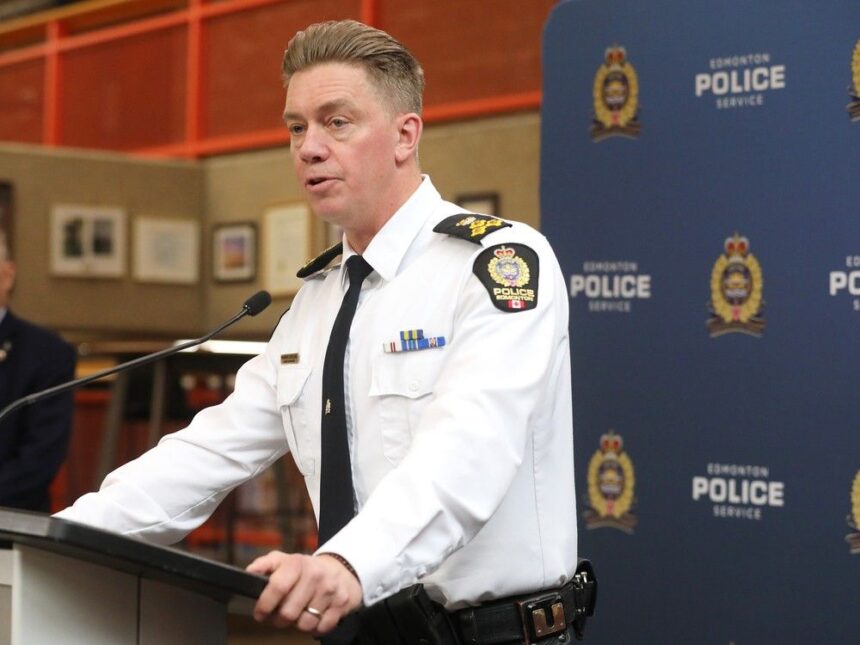

The first time I heard rumblings about Police Chief Dale McFee’s trip to Israel, I was grabbing coffee on Whyte Avenue. Two regulars were debating it with the kind of passion that only controversial civic issues can spark in our city. What started as a professional development trip has turned into something much bigger. It’s now a community conversation about trust, transparency, and who our police leadership represents.
McFee traveled to Israel in late 2023 for what Edmonton Police Service described as a law enforcement training opportunity. The trip was organized through the Jewish National Fund and focused on counter-terrorism tactics and security strategies. On paper, it sounds reasonable enough. Police chiefs often attend international conferences and training sessions. But this particular destination has sparked significant backlash from Muslim community organizations across Edmonton.
The Canadian Muslim Public Affairs Council has been vocal in their criticism. They argue the trip creates a perception problem that damages trust between police and Muslim residents. According to the Edmonton Journal, multiple Islamic organizations have jointly called for answers about why this specific program was chosen and who funded it. These aren’t fringe voices. These are established community groups representing thousands of Edmonton families.
I’ve covered enough city hall meetings to know when an issue has real legs. This one does. The controversy centers on several interconnected concerns that go beyond a simple work trip. First, there’s the matter of optics during a time of heightened geopolitical tension. The ongoing Israeli-Palestinian conflict has deeply affected communities right here in Edmonton. Families watch the news with heavy hearts. Protests and counter-protests have filled our streets.
Community leader Nasir Butt told reporters that the trip sends a troubling message. He represents the Alberta Muslim Public Affairs Council. His organization questions whether police leadership should participate in programs tied to nations currently involved in controversial military operations. It’s a fair question that deserves a thoughtful answer rather than defensive posturing.
The Jewish National Fund has its own complicated history. Critics point out that the organization has supported settlement activities in disputed territories. That adds another layer to an already complex situation. When public officials accept training or sponsorship from organizations with political dimensions, it inevitably raises questions. Those questions multiply when the officials in question are supposed to serve all communities equally.
I reached out to several contacts within Edmonton’s Muslim community. Many expressed frustration that they learned about the trip after the fact. Transparency matters in policing. When citizens feel information is withheld or minimized, trust erodes quickly. One mother I spoke with near the Islamic Family and Social Services Association shared her worry. She wondered if officers trained in such programs might view her teenage son differently.
The Edmonton Police Service has defended the trip publicly. Spokespersons emphasized that counter-terrorism training benefits the entire city regardless of where it occurs. They’ve pointed to similar trips taken by other Canadian police services. Toronto and other major cities have sent delegations to Israel for comparable programs. That context matters, but it doesn’t fully address the concerns being raised.
What strikes me most about this controversy is timing. Edmonton has worked hard to build bridges between diverse communities. Our city prides itself on multiculturalism and inclusion. We’ve seen beautiful examples of interfaith cooperation and dialogue. But those relationships are fragile. They require constant nurturing and genuine mutual respect. When one community feels their concerns are dismissed, everyone loses.
The political dimensions can’t be ignored either. City council members have fielded questions from constituents. Some councillors have expressed surprise they weren’t informed before the trip occurred. Others have defended the police chief’s autonomy in professional development decisions. The Edmonton Police Commission, which provides civilian oversight, has also faced scrutiny about whether they approved or even knew about the trip in advance.
I’ve walked these streets for years covering stories that matter to everyday Edmontonians. This issue touches something deeper than policy. It’s about whether our institutions reflect our values. Muslim families contribute enormously to our city’s fabric. They run businesses along 107th Avenue. They volunteer at food banks. Their kids play hockey and attend our universities. When they raise concerns about police leadership, those concerns deserve serious engagement.
Some critics have accused Muslim organizations of overreacting. They argue that professional training shouldn’t be politicized. But policing is inherently political. Every decision about resource allocation, training priorities, and community partnerships reflects values and priorities. Pretending otherwise ignores reality.
The path forward requires genuine dialogue rather than entrenched positions. Chief McFee could help by meeting directly with concerned community leaders. Not a quick photo opportunity, but substantive conversation. Explaining the trip’s educational value while acknowledging the legitimate concerns it raised. That kind of leadership builds trust rather than just defending decisions.
The Edmonton Police Commission also has a role to play. They could review policies around international training programs. Perhaps establish clearer guidelines about disclosure and community consultation when trips involve politically sensitive destinations. Transparency doesn’t mean micromanaging every conference. It means recognizing when community input matters.
Our city faces real challenges around public safety. Gang violence, drug trafficking, and property crime demand effective responses. Counter-terrorism expertise certainly has value. But effectiveness requires community cooperation. When significant portions of the population distrust police leadership, that cooperation suffers. Everyone becomes less safe.
I keep thinking about those two people debating over coffee on Whyte Avenue. They genuinely wanted to understand different perspectives. That’s the Edmonton I know. We’re capable of difficult conversations. We can acknowledge complexity without retreating to simplistic positions. Muslim groups aren’t attacking police. They’re asking for accountability and respect. That’s not controversial. That’s citizenship.
The controversy around Chief McFee’s Israel trip won’t disappear with defensive statements or dismissive responses. It requires the kind of authentic engagement that makes Edmonton special. Our diversity is our strength, but only when all voices feel genuinely heard. The coming weeks will show whether our civic leaders understand that fundamental truth.