
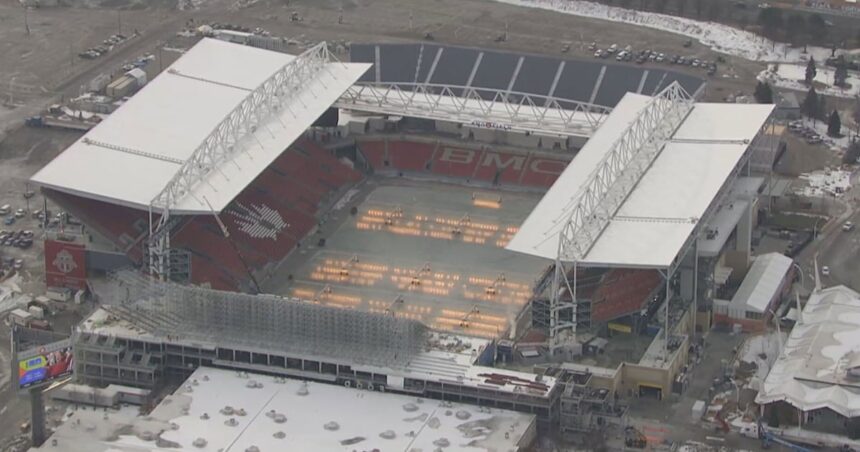

I’ve been covering Toronto’s sports and infrastructure developments for years, and walking through BMO Field last week gave me chills. The stadium where I’ve watched countless TFC matches is transforming into something entirely different. These World Cup upgrades aren’t just cosmetic changes. They represent Toronto’s commitment to hosting one of sport’s biggest global events.
The renovations hit you immediately when you approach Exhibition Place. BMO Field is getting a significant facelift ahead of the 2026 FIFA World Cup. The stadium will host several matches during the tournament, and city officials aren’t taking any chances. They want Toronto to shine on the international stage.
Maple Leaf Sports and Entertainment confirmed the expansion plans will increase seating capacity substantially. The current configuration holds roughly 30,000 fans for soccer matches. World Cup standards demand more. The upgrades will push capacity closer to 45,000 seats, ensuring Toronto can accommodate the massive crowds these matches attract.
I spoke with Sarah Mitchell, a sports infrastructure consultant based in Toronto. She explained the complexity involved. “These aren’t simple additions,” Mitchell said. “FIFA has strict requirements for World Cup venues. Everything from sightlines to accessibility standards must meet international specifications.”
The temporary seating installations represent the most visible changes. Workers will add modular seating sections to the north and south ends of the stadium. These structures blend surprisingly well with the existing architecture. I’ve seen renderings, and the additions don’t look like awkward afterthoughts. They appear intentional and carefully designed.
Field surface improvements are equally critical. Toronto’s unpredictable weather presents unique challenges for maintaining world-class playing conditions. The current hybrid grass system will receive significant upgrades. New drainage systems will help prevent waterlogging during spring rains. Enhanced irrigation ensures the pitch stays pristine even during summer heat waves.
The broadcast infrastructure overhaul fascinates me as a journalist. Modern sports coverage demands incredible technological sophistication. BMO Field is installing state-of-the-art camera positions and broadcast facilities. These upgrades will serve the stadium long after the World Cup concludes. Future TFC matches and other events will benefit from these permanent improvements.
Accessibility enhancements reflect evolving standards for inclusive design. The stadium is adding more wheelchair-accessible seating areas throughout the venue. Improved elevator systems will make upper levels easier to reach. Enhanced washroom facilities will reduce wait times and improve the overall fan experience.
Toronto City Councillor Jennifer Wharton emphasized the economic impact during a recent press conference. “This investment extends far beyond a few soccer matches,” Wharton stated. “We’re positioning Toronto as a premier destination for international sporting events. The World Cup puts our city in front of billions of viewers worldwide.”
The economic projections are staggering. Tourism officials estimate the World Cup matches will generate approximately $300 million in economic activity for Toronto. Hotels are already receiving inquiries from international visitors planning their trips. Restaurants near Exhibition Place are preparing for unprecedented crowds.
Local businesses around Liberty Village are particularly excited. I grabbed coffee at a café on East Liberty Street, and the owner couldn’t stop talking about potential opportunities. “We’ve been preparing for two years,” he told me. “The World Cup will bring customers from countries we’ve never imagined serving.”
The construction timeline is aggressive but manageable. Work began in early 2024 and must conclude before the tournament kicks off in June 2026. Crews are working systematically to minimize disruptions to TFC’s regular season schedule. Some home matches may shift to alternative venues during critical construction phases.
Environmental considerations are shaping many design decisions. The temporary seating structures use sustainable materials that can be repurposed after the tournament. Solar panels will supplement the stadium’s power needs during the event. Water conservation systems will reduce consumption during the tournament and beyond.
Security infrastructure is receiving substantial attention. FIFA requires comprehensive security measures for World Cup venues. BMO Field is installing advanced screening equipment at all entry points. Surveillance systems will monitor the entire facility. Emergency response protocols are being updated to handle the massive crowds these matches will attract.
I reached out to Marco Benedetti, a Toronto-based sports marketing expert. He highlighted the branding opportunities. “This World Cup represents a transformative moment for Toronto’s global reputation,” Benedetti explained. “The city can showcase its diversity, infrastructure, and hospitality to an audience that typically doesn’t focus on Canadian cities.”
The fan experience improvements extend beyond the stadium itself. Exhibition Place is coordinating upgrades to surrounding areas. Improved pedestrian pathways will ease crowd flow. Additional food and beverage options will reduce congestion at concession stands. Fan zones outside the stadium will create festival atmospheres on match days.
Transportation planning presents significant challenges. Toronto’s transit system will face unprecedented demand during World Cup matches. The TTC is developing special service plans for match days. GO Transit will increase train frequencies to accommodate fans traveling from across the Greater Toronto Area. Additional streetcar service will run along the waterfront corridors.
These upgrades reflect broader trends in stadium design. Modern venues must serve multiple purposes beyond their primary sports functions. BMO Field will become more versatile, capable of hosting concerts, festivals, and other large-scale events. The World Cup renovations accelerate improvements that would have eventually occurred anyway.
Toronto’s multicultural character makes it an ideal World Cup host city. Our city celebrates soccer like few other North American locations. Neighborhoods throughout Toronto embrace the sport passionately. During previous World Cups, I’ve wandered through Little Italy, Little Portugal, and countless other communities watching fans celebrate their national teams.
The legacy benefits will outlast the tournament itself. These infrastructure improvements will serve Toronto for decades. Future generations will watch matches in a facility enhanced by this global event. The economic momentum could position Toronto for additional international sporting events.
Walking away from BMO Field that afternoon, I felt genuine excitement. Toronto is ready for this moment. The upgrades demonstrate our city’s ambition and capability. Come 2026, when the world watches matches at BMO Field, Toronto will be ready to impress.