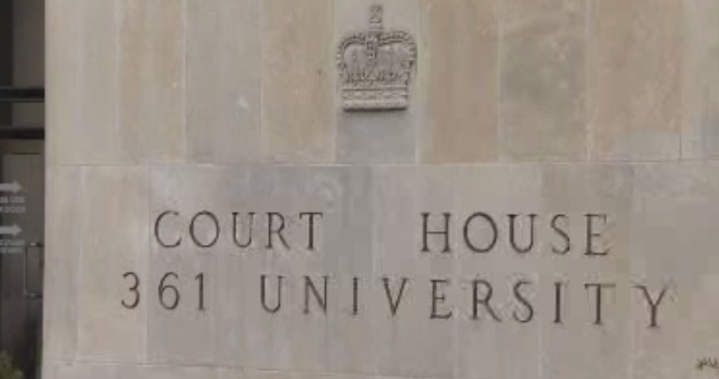

I’ve been covering Toronto’s legal and political landscape for years, and yesterday’s court decision caught my attention in ways that speak to broader tensions around free expression in our city. Ontario Superior Court Justice Frederick Myers delivered a ruling that stopped the province’s attempt to prevent Al-Quds Day protests from happening in Toronto. The decision carries weight far beyond this specific event.
The provincial government wanted an injunction that would have banned these demonstrations entirely. Justice Myers said no. His reasoning centered on fundamental questions about government power and constitutional rights that affect every Toronto resident, regardless of political views. The court found that Ontario failed to prove these protests posed immediate danger requiring such dramatic intervention.
Al-Quds Day events have occurred in Toronto for decades, drawing both supporters and critics into Queen’s Park and surrounding areas each spring. The gatherings focus on Palestinian solidarity, with participants marking what they describe as Jerusalem Day. Tensions around these protests have intensified over recent years, particularly following escalating conflicts in the Middle East that reverberate through Toronto’s diverse communities.
Attorney General Ilan Berman argued the province needed authority to block protests deemed harmful to public safety. The government’s legal team presented arguments suggesting these specific demonstrations crossed lines from peaceful assembly into territory that threatened community harmony. They pointed to concerns raised by Jewish community organizations about rhetoric used during past events.
Justice Myers examined those arguments carefully, according to court documents. He determined the province hadn’t met the legal threshold required for such sweeping restrictions on charter-protected activities. The decision emphasized that governments cannot simply ban speech or assembly because content makes people uncomfortable or even offended. Higher standards apply when constitutional freedoms intersect with public policy.
I’ve walked past countless protests at Queen’s Park during my reporting career. Some made me think differently about issues. Others challenged my assumptions or made me deeply uncomfortable. That discomfort, the judge essentially confirmed, doesn’t justify government censorship. Democratic societies require space for difficult conversations, even when those conversations generate friction.
The ruling doesn’t mean anything goes at these protests. Existing laws against hate speech, incitement to violence, and public disorder remain fully applicable. Toronto Police Services maintains authority to intervene if criminal activity occurs during any demonstration. What changed is that Ontario cannot preemptively shut down entire events based on predicted outcomes or controversial viewpoints.
Civil liberties organizations monitoring the case expressed relief at the outcome. Cara Zwibel from the Canadian Civil Liberties Association told reporters that injunctions blocking protests represent extreme measures requiring extraordinary justification. She emphasized that governments bear heavy burdens when seeking to restrict fundamental freedoms guaranteed under the Charter of Rights and Freedoms.
Jewish advocacy groups responded differently to the decision. The Centre for Israel and Jewish Affairs issued statements expressing disappointment with the ruling. Their representatives argued that Al-Quds Day events have historically featured speakers and messaging that cross into antisemitism. They worry the court decision enables harmful rhetoric to continue unchecked in Toronto’s public spaces.
These competing concerns reflect genuine tensions within our city’s multicultural fabric. Toronto hosts vibrant Palestinian and Jewish communities, both deeply connected to events unfolding thousands of kilometers away. When international conflicts escalate, our streets become stages where those disputes play out through demonstrations, counter-protests, and increasingly heated public discourse.
I spoke with several downtown business owners near Queen’s Park who’ve witnessed these annual events. Most expressed ambivalence about the court ruling. One restaurant manager told me he understands both sides but worries about disruptions affecting his Saturday afternoon customers. Another shopkeeper emphasized that living in a free society means tolerating speech we find objectionable.
The legal principles underlying Justice Myers’ decision reach back through Canadian constitutional history. Courts have consistently held that freedom of expression protects unpopular, offensive, and even deeply troubling speech. Exceptions exist for specific categories like hate propaganda, but judges interpret those exceptions narrowly to preserve robust public debate.
Provincial officials indicated they’re reviewing the decision and considering next steps. The Attorney General’s office released brief comments acknowledging the ruling while reaffirming commitment to community safety. Whether Ontario will appeal remains unclear as government lawyers analyze the written judgment’s full implications.
Toronto’s experience mirrors challenges facing cities across North America and Europe. Urban centers with diverse populations increasingly confront questions about balancing free expression against community cohesion. Simple answers prove elusive when fundamental rights collide with legitimate concerns about hate speech and public safety.
The practical impact of this ruling extends beyond Al-Quds Day specifically. It establishes precedent making future government attempts to ban protests face higher legal barriers. Advocacy groups across the political spectrum now have judicial confirmation that Ontario cannot easily restrict demonstrations based on ideological content or predicted community reaction.
I find myself thinking about what kind of city we want Toronto to be. One where difficult conversations happen in public view, or one where governments decide which viewpoints deserve platforms? The court chose the former, with all the messiness that entails. Democracy rarely offers tidy solutions to complex problems involving deeply held beliefs and historical grievances.
Queen’s Park will likely see these protests continue in coming years. Counter-demonstrations will probably occur simultaneously. Police will monitor both groups. Some Torontonians will participate, others will avoid the area entirely, and many will barely notice. That’s how pluralistic societies function when constitutional protections operate as designed.
The ruling reminds us that living together in diverse cities requires tolerating expression we find wrong, offensive, or even dangerous to some degree. Where exactly those lines fall remains contentious. Yesterday’s decision didn’t resolve underlying tensions but clarified that courts, not provincial executives, determine when speech crosses into territory justifying government intervention.