
Ontario is having a big conversation right now. It’s about school board trustees and whether they should stay or go.
Education Minister Paul Calandra is thinking about removing these elected officials. That would be a major change. Parents and communities are starting to worry. They want to know what happens to their voice in education decisions.
I’ve spent weeks talking to people across the province. Teachers, trustees, professors, parents, advocates. Everyone has something to say about this issue.
The numbers tell part of the story. Ontario has 72 school boards serving more than 2.1 million students. That’s a lot of kids who might be affected.
Eight of the largest boards are now under provincial supervision. Six of those eight are among the biggest in Ontario. The province stepped in because of financial problems and management issues.
But here’s the thing. When supervisors take over, elected trustees lose their power. Decisions happen behind closed doors. Public meetings stop. Community input disappears.
I talked to Katina Pollock about this shift. She’s a professor at Western University who studies educational leadership. She was commissioned by the Canadian School Boards Association to research local voice in education.
“Elected school board trustees serve as a key mechanism through which local democratic voice enters system-level decision-making,” she told me. “They act as an important bridge between families, communities, and the broader education system.”
Pollock looked at what happened in other provinces. Nova Scotia eliminated elected trustees in 2018. It didn’t go well. People felt shut out of decisions. By 2023, there was a movement to bring trustees back.
Quebec had similar problems. French-speaking participants said they didn’t know how to influence decisions after elected commissioners were removed.
https://www.cdnsba.org/resources/publications/
Sachin Maharaj saw this coming. He’s an assistant professor at the University of Ottawa. About two and a half years ago, he predicted the current situation.
He studies school boards closely. He actually watches their meetings for research. That takes dedication.
Maharaj posted a lecture on YouTube back in July 2023. It’s called “Caught in the Middle: The Precarious Nature of Ontario School Boards.” He explained the competing pressures boards face.
“The Ministry does not respect trustees but wants us to blame when things don’t go right,” one trustee told him during his research.
https://www.youtube.com/watch?v=example
The history here goes deep. School board trustees have existed in Ontario since around 1816. That makes them the oldest form of democratically elected representation in the province.
They started managing one-room schools and hiring teachers. By 1841, they could levy local taxes for education funding.
That taxation power disappeared in 1997 under Mike Harris. Ontario moved to centralized funding. Boards lost financial independence.
Now Minister Calandra wants to go further. He’s been clear about his intentions.
“It’s safe to say the governance model is going to change,” he said at the Association of Municipalities of Ontario conference.
I tried to reach the Minister’s office three times. I wanted to know when we’d hear about the future of trustees. Communications officer Emma Testani didn’t respond or acknowledge my questions.
That silence speaks volumes in journalism. When officials won’t answer basic questions, it usually means something is brewing.
Jay Aspin knows about trustee work firsthand. He was Chair of the Near North District School Board when Calandra appointed a supervisor.
Aspin has 45 years of elected public service. He served 21 years as a trustee. He’s received the Order of Ontario. He was also an MP in Stephen Harper’s government alongside Calandra.
He wrote to Premier Doug Ford. His letter warned about Nova Scotia’s experience.
“This solution was a dismal failure, resulting in continually escalating problems,” Aspin wrote. “Eliminating trustees has had the impact of centralizing power in the provincial government, which removed local democratic input and sparked continual criticism.”
Aspin thinks Ontario should learn from that mistake. He fears the province is heading down the same path.
Minister Calandra responded through Facebook on March 17. He said Aspin was “pretending accountability is the problem” after presiding over the board’s dysfunction.
Arlene Morrell has a different perspective. She was elected as a trustee in 2014. She’s served as Thames Valley District School Board Chair. She received the Dr. Harry Paikin Award of Merit in 2024.
Thames Valley came under supervision in late April 2025. The province cited a significant deficit and a controversial staff retreat costing forty thousand dollars.
“Once a supervisor was appointed, the authority of the elected board was removed,” Morrell told me. “There are no publicly posted agendas, no meeting notices, and no open forums where deliberations occur.”
She said parents and community members often don’t even know decisions are being made.
“The public has a fundamental right to transparent decision-making in their local education system,” Morrell said.
Student trustees would also disappear under this change. That concerns Carter Peois, president of OSTA-AECO. His organization has represented students in Ontario’s K-12 system for twenty-five years.
“Student trustees bring forward successes and concerns directly from students,” Peois said on his website. “Eliminating student trustees would remove democratic voices for students.”
Teachers aren’t happy either. David Mastin is president of the Elementary Teachers’ Federation of Ontario. He was elected in August 2025.
“These interventions represent egregious government overreach, a troubling centralization of power, and a direct threat to local democracy,” Mastin said.
He thinks the government wants to control school board finances and real estate. That would treat education like a business instead of a public service.
“Government-appointed supervisors answer only to the premier and the education minister, not to parents, not to students, not to communities,” Mastin stated.
Marginalized students face particular risks. David Lepofsky chairs the Toronto District School Board’s Special Education Advisory Committee. He’s a retired lawyer and visiting professor of disability rights.
“This is especially worrisome for more than 120,000 students with disabilities,” he said. “They are among Ontario’s most underserved, vulnerable students.”
Lepofsky explained that the Toronto supervisor raised maximum class sizes. That hurts students with disabilities.
“While elected trustees met in public and routinely welcomed parents’ public presentations about concerns, the TDSB supervisor does his work behind closed doors,” he said.
Debbie King sees racial equity issues. She’s the TDSB trustee for Parkdale-High Park and chair of OPSBA’s Black Trustees’ Caucus.
“Under supervision, at least ten democratically elected Black trustees have been sidelined,” King said. “This weakens accountability in addressing measurable evidence of anti-Black racism in Ontario schools.”
Elaine Johnston represents First Nations concerns. She’s chair of the Algoma District School Board and OPSBA’s First Nations, Inuit, and Métis Trustees’ Council.
She attended an Indian Day School. Her parents attended residential school.
“The Minister’s proposal represents a consequential retreat from reconciliation, democracy and due process on consultation,” Johnston said.
First Nation-appointed trustees oversee financial transfers to school boards. They ensure residential school history never repeats.
The Ontario Autism Coalition is organizing a protest at Queen’s Park on March 23. Their poster asks a simple question: “If trustees are eliminated, who are you going to call?”
It’s a fair question. Parents usually escalate concerns from teacher to principal to superintendent to trustee. Without trustees, where do you go?
https://ontarioautismcoalition.com/
Kathleen Woodcock is president of the Ontario Public School Boards Association. She’s also a Waterloo Region trustee.
“Trustees do not run schools or manage staff,” Woodcock explained. “The trustee’s job is to ask the right questions, set expectations, and ensure public dollars are used responsibly.”
She said when boards are supervised, elected trustees lose decision-making authority. Often entirely.
“Local trustees give communities a real voice in their schools, and when that voice is weakened, everyone loses,” Woodcock said.
Public opinion is mixed. An Abacus Data poll from September 2025 surveyed 2,000 Ontario residents for CUPE Ontario.
Only 33 percent support eliminating elected trustees. Another 36 percent oppose it. A full 25 percent were unsure.
The Globe and Mail editorial board took a different stance in February. Their opinion piece was titled “Clean Slate for Ontario’s School Boards.”
They argued trustees have been “rudderless since the 1990s” when taxation powers disappeared. The editorial said if students do better under provincial management, it proves eliminating trustees isn’t a power grab.
On March 11, a coalition held a media conference at Queen’s Park. School boards, unions, Indigenous trustees, disability advocates, and civil liberties groups came together.
They called on the government to hold broad consultations before changing school board governance.
That same day, Premier Ford wouldn’t say if trustees would be on fall ballots.
“We’ll come out with an answer on that shortly,” Ford said when reporters pressed him.
He announced a new seven-hundred-fifty-dollar purchasing card for teachers instead. It’s for classroom supplies. Critics called it a distraction.
Liberal interim leader John Fraser said the funding doesn’t address broader classroom issues.
“This announcement is lipstick on a pig,” Fraser said.
NDP education critic Chandra Pasma called it “a stunt.”
Minister Calandra made revealing comments about supervised boards. When asked about timelines to return boards to local control, he said something striking.
“If it takes us one year, two years, three years, 10 years — I don’t care,” Calandra stated.
That’s a long time for communities to go without elected representation.
More than a dozen rural municipalities have sent letters opposing trustee elimination. Nine school boards have joined them.
The Ontario legislature resumes Monday, March 23. That’s after a fourteen-week winter break. Last year, the house sat only 51 days total.
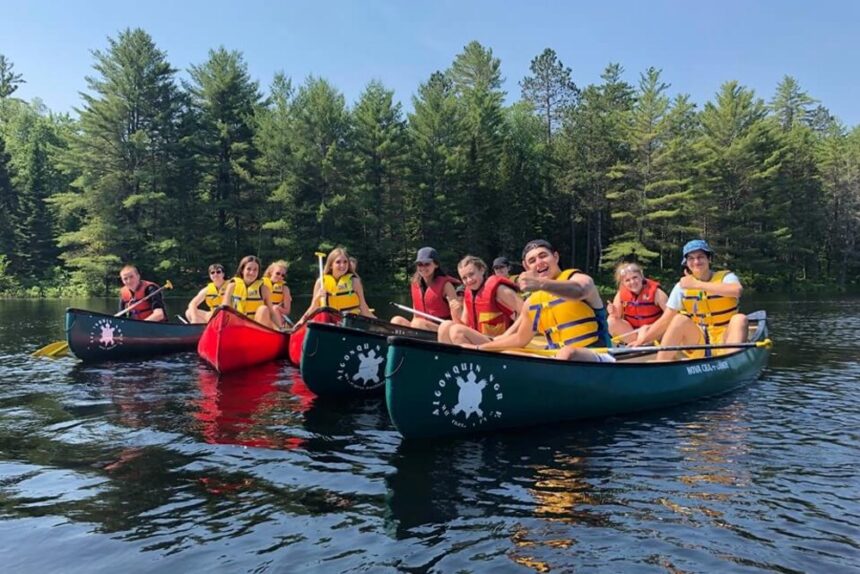
I keep thinking about school trips while reporting this story. Every kid remembers their field trips. The ROM. Science Centre. Niagara Falls. Camp trips up north.
Those excursions need approval. School boards have guidelines that keep students safe during those experiences.
Trustees review and approve those policies. They represent parents and communities on those decisions.
If trustees disappear, who makes those calls? Who do parents talk to if something goes wrong?
The bigger question is about democracy itself. Centralizing power means fewer people make decisions for more students.
Ontario spends more than thirty-two billion dollars on public education. That’s a huge budget. For comparison, health care gets about ninety-one billion.
Education shapes our kids’ futures. It deserves transparent, accountable governance with community input.
I grew up going to public school in this province. My friends’ kids go to public school now. This isn’t abstract policy. It affects real families.
Walking around Toronto, you see schools everywhere. Each one serves a neighborhood. Each neighborhood is different.
Scarborough needs different things than Etobicoke. North York is different from downtown. One-size-fits-all decisions from Queen’s Park can’t capture that diversity.
Small towns face this even more. Rural Ontario has unique challenges. Distance, population, resources. Local trustees understand those realities.
When I called sources for this story, the passion was clear. People care deeply about this issue. They’re not staying quiet.
Whether you support trustees or not, the conversation matters. Democracy works best when everyone gets heard.
The legislature resumes Monday. We’ll see if the government announces plans. Candidates for municipal elections can declare on May 1.
Election day is scheduled for October 26. Will trustee races be on the ballot? That’s the question everyone’s asking.
Minister Calandra says he’ll change the governance model. He’s been consistent about that. The details remain unclear.
What comes next will shape Ontario education for decades. This isn’t just about budgets and buildings.
It’s about who gets a say. Who speaks for communities. Who holds the system accountable.
Keep watching this story. It’s far from over. The voices are getting louder, not quieter.