

I spent last Tuesday morning walking through the freshly completed pavilion at Verdun Hospital. The contrast with the original 1930s building struck me immediately. Light poured through generous windows. Hallways stretched wide and uncluttered. This wasn’t just renovation. It represented a fundamental rethinking of how healthcare spaces should work.
Quebec faces a challenging reality with its hospital infrastructure. Some facilities boast cutting-edge modern design. Others date back to the nineteenth century or earlier. The gap between old and new raises important questions. How should today’s hospitals be conceived? What outdated practices must we leave behind?
Antoine Buisseret knows these questions intimately. As partner architect and director of Health Market Intelligence at Lemay, he’s witnessed the evolution firsthand. According to him, one critical element stands out. Modern hospitals must improve how people move through them. It sounds simple. The impact proves profound.
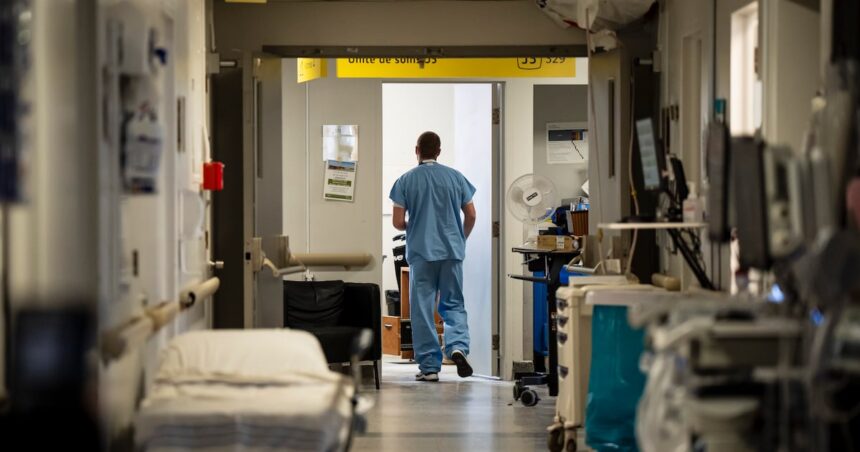
The new Verdun pavilion demonstrates this principle beautifully. The first patients arrived on February seventeenth. Staff can now navigate corridors freely with stretchers and wheelchairs. Equipment stations occupy designated spaces rather than blocking pathways. Compare this to the original building. Bringing a patient to intensive care requires shifting garbage bins, nursing stations, and various equipment items. The corridor never offers its full width.
Dr. Mathieu Surprenant walked me through during February. He serves as associate medical director for Local Management at Verdun Hospital. He also acted as medical co-lead on the project. His observations resonated with practical urgency. Staff workstations now integrate seamlessly into the architecture. They occupy less space while remaining accessible everywhere. The difference transforms daily workflows entirely.
Wider hallways serve patients beyond just transportation logistics. Eliane Favreau emphasized this during our conversation. She works as senior adviser at CIUSSS du Centre-Sud-de-l’Île-de-Montréal and project co-lead. The new pavilion’s five floors prioritize patient mobility programs. This matters especially for seniors. Rooms offer generous dimensions. Yet patients still venture into corridors to maintain movement during their stay.
I’ve reported on healthcare for years across Montreal. Maintaining seniors’ mobility in hospital prevents both physical and mental decline. It’s not optional care. It’s essential intervention. The architecture either supports this or obstructs it.
Quebec stands at what Buisseret calls “a tipping point” regarding health infrastructure. The province grapples with multiple sustainability challenges simultaneously. Staffing shortages strain available resources. Funding limitations have placed most major projects on hold. Meanwhile, existing buildings deteriorate further each year.
The numbers tell a sobering story. According to Santé Québec’s latest data, two hundred seventy-seven hospital pavilions across the province rate as poor or very poor condition. That’s a D or E grade. The maintenance needs list extends distressingly long.
Hôtel-Dieu de Sorel in Montérégie carries an accumulated maintenance deficit of sixty-one point one million dollars. Saint-Jérôme Hospital in the Laurentians faces ninety-one point seven million. The Douglas Hospital in Montreal became widely publicized after a ceiling collapse caused by water leakage. Its maintenance deficit reaches one hundred nineteen point three million dollars.
These figures represent more than accounting problems. They reflect spaces where healthcare workers struggle daily. Patients receive care in environments that undermine their recovery. Something must change.
Buisseret proposes focusing on existing infrastructure rehabilitation. Rebuilding Quebec’s entire hospital network from scratch simply isn’t feasible. Financial constraints make that impossible. Sustainability demands creative solutions instead. We must give current buildings a meaningful second life.
The concept of the generative hospital offers promising potential. Buisseret explained this emerging model during our interview. It secures initial investment while ensuring each component can regenerate itself over time. The design allows expansion or reconfiguration as population needs evolve.
Europe has begun implementing generative hospitals. Quebec is exploring how to adapt the model locally. The approach addresses limitations inherent in older single-building hospitals. Those structures often cannot evolve meaningfully.
Montreal’s hospital history reflects architectural shifts across different eras. Nineteenth-century pavilion-style hospitals featured multiple buildings without strong connections between them. The province then moved toward single-building hospitals. These resembled multi-storey towers grouping all services under one roof.
The future might require different thinking entirely. Buisseret suggests reconcentrating the hospital’s core mission on highly technical elements. Operating rooms and similar facilities would remain centralized. Other functions could operate as cooperating satellites. Administrative spaces or certain hospitalization units might separate from the main building. They’d still function in integrated coordination.
One oversight troubles Buisseret particularly. Current planning doesn’t anticipate transforming spaces during crises. The pandemic exposed this limitation brutally. Decision-makers must build crisis adaptability into future designs.
He also criticizes how public infrastructure projects operate “in silos” currently. Breaking down these divisions becomes essential to improving healthcare services overall. Architecture affects nursing efficiency. It influences patient recovery rates. It shapes staff morale and retention. These elements interconnect deeply.
Walking back through Verdun’s original building after touring the new pavilion felt almost disorienting. The cramped hallways seemed even narrower. The limited natural light appeared more oppressive. Yet thousands of patients received excellent care there over decades. Dedicated staff made it work despite architectural constraints.
The new pavilion doesn’t diminish that history. It builds upon it thoughtfully. Modern hospital design isn’t about aesthetics or luxury. It’s about creating environments where healing happens more effectively. Where staff can focus on care rather than fighting their surroundings. Where patients maintain dignity and mobility during vulnerable moments.
Quebec’s aging hospital infrastructure demands attention we can no longer defer. The Verdun Hospital pavilion demonstrates what’s possible when thoughtful design meets genuine healthcare needs. Other facilities across the province deserve similar consideration. The question isn’t whether we can afford these improvements. It’s whether we can afford not to make them.