
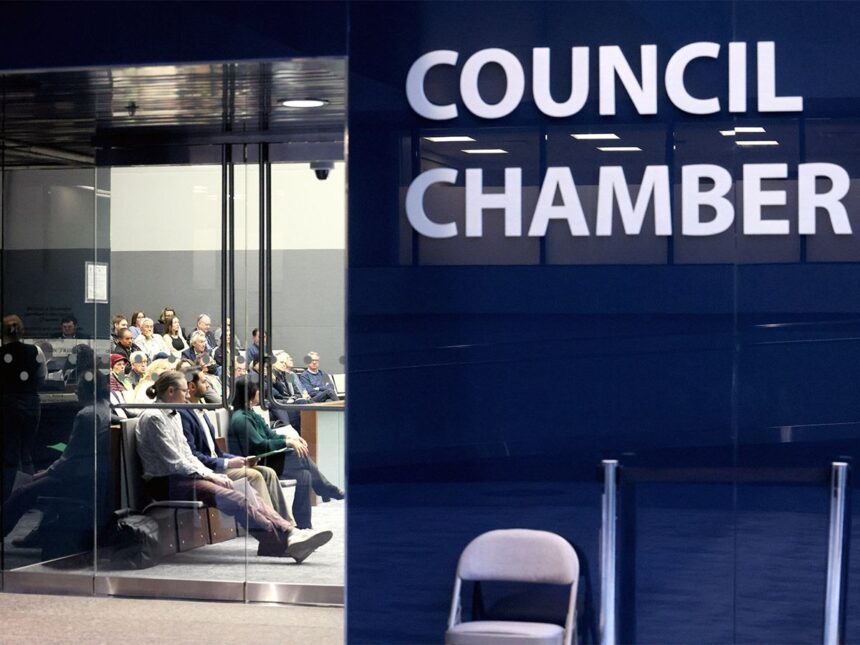

Calgary city council opened the doors Monday to what promises to be a lengthy, contentious week of public testimony. The topic? Whether to scrap the blanket rezoning policy that’s divided neighborhoods since 2024.
By Sunday evening, 360 residents had registered to speak. More lined up Monday morning at the municipal complex. The hearing could stretch all week, council confirmed.
This debate centers on undoing R-CG residential zoning citywide. That 2024 decision let homeowners convert single-family houses into duplexes, fourplexes or row housing without rezoning applications. Now, a motion seeks to reverse it entirely.
If the repeal passes, over 306,000 residential parcels would revert to original zoning. That represents roughly 68 percent of Calgary homes. Base density would drop from 75 units per hectare to 60. Building heights would max out at 10 metres. Zero lot lines would disappear.
Homeowners wanting R-CG-style redevelopments would need rezoning approval first. That typically means appearing before council at a public hearing.
I’ve covered municipal politics here for years. Rarely have I seen an issue generate this much sustained passion on both sides. The 2024 hearing drew massive crowds. Monday’s turnout was smaller but equally determined.
Eileen Deans spoke first. She’s a Ward 10 resident who also testified in 2024. Back then, she opposed blanket rezoning. Her position hasn’t changed.
Deans told council she saw financial motivations driving density increases. Administration benefits through higher property taxes, she argued. Developers profit from redevelopment margins. Affordability concerns take a back seat.
“I was a little bit shocked when it actually did pass,” Deans said. She referenced the clarity of public opposition during the original hearing.
She called the policy fundamentally flawed. Tweaking it would be “like adding lipstick to a pig,” she added.
Another speaker lives near the reservoir. She described $600,000 bungalows being demolished. In their place rise $800,000 duplexes. The policy serves developers maximizing profits, she claimed.
“Density did increase, but at the expense of affordability,” she told council.
She wants developers to consult neighborhoods first. Local area plans should guide multiplex development, she argued.
Supporters of blanket rezoning pushed back hard. They framed repeal as backwards-looking and economically harmful.
Chloe Chan lives in Crescent Heights. She warned that reversing course would limit housing choices. It would also increase city costs unnecessarily.
“Reintroducing a bottleneck for development at this moment is as good as taking a crowbar to the knee caps,” Chan said. She argued Calgary needs support, not sabotage.
Chan cited growth statistics. Calgary’s population jumped 28 percent over the past decade. That’s roughly 350,000 new residents. Alberta has led interprovincial migration for three consecutive years.
“We cannot act like we’re the small town no one knows about,” she said. Calgary is growing fast. The city needs to act accordingly.
She urged council to improve infrastructure and services within city limits. Sprawling outward makes less sense than building up, she argued.
I’ve watched this city transform over my career. Chan’s statistics reflect what I see daily. Calgary isn’t the sleepy petroleum hub it once was. Growth brings challenges and opportunities simultaneously.
The written submissions reveal additional complexity. Nearly 2,400 written comments landed on council’s agenda. But Ward 11 Councillor Rob Ward raised concerns about how those submissions were collected.
Ward spent his weekend reading and categorizing every written submission. He noticed confusion around the city’s question wording.
“The question being asked was not very clear,” Ward told council.
By his count, 1,854 respondents support repealing blanket rezoning. Another 295 oppose repeal. Twenty-six remain neutral.
But Ward flagged over 150 submissions containing no clear comments. Just checkboxes. He worries those responses may not reflect actual resident intentions.
“A lot of people put ‘opposed’ because they’re opposed to blanket rezoning,” Ward explained. But checking “opposed” actually means opposing the repeal motion. That creates genuine confusion.
Ward said many residents selected the wrong option based on what they actually wanted.
This confusion matters significantly. Council will weigh written feedback alongside oral testimony. Misinterpreted data could skew decision-making.
Some councillors want more than simple repeal. They’re pushing for replacement frameworks that still accommodate density.
Mayor Jeromy Farkas has emphasized this since last fall’s election. He repeated it Monday.
Farkas told reporters that repeal won’t stop hundreds of thousands of people from moving here. Calgary must continue building. But building should happen strategically.
“We have to continue to build, and one of the central topics of the campaign was building in a way that made sense,” Farkas said. He wants density focused where community support exists. Where infrastructure can handle it.
Farkas framed the hearing as giving Calgarians more voice in how change happens.
Calgary’s municipal development plan targets a 50-50 split. Half of new development should occur in established areas. Half in greenfield zones. Last year’s ratio was 43 percent established, 57 percent greenfield.
Joachim Mueller leads planning for the city. During Monday’s presentation, he outlined what the repeal motion includes.
It would reinstate low-density residential zoning in the land-use bylaw. It would revert residential parcels to pre-2024 zoning. But it also includes exemptions for parcels meeting specific criteria. And it retains some amendments approved after the 2024 hearing, including parking changes.
Several councillors hinted they may propose amendments once public testimony concludes.
Ward 8 Councillor Nathaniel Schmidt campaigned on “fixing” blanket rezoning, not repealing it outright. He wants to explore all available options for housing diversity.
“It’s about using as many tools in our tool kit as we can,” Schmidt said. Different housing forms suit different people’s needs.
From my vantage point, this debate reflects deeper tensions about Calgary’s identity. Are we preserving neighborhood character or accommodating newcomers? Are we prioritizing homeowner autonomy or collective housing needs?
These questions don’t have simple answers. I’ve interviewed residents on both sides. Their concerns feel genuine and deeply personal.
The hearing runs 9:30 a.m. to 9:30 p.m. daily. It’s being streamed online for residents who can’t attend in person.
Three hundred sixty speakers represent a significant public turnout. But that number could grow as registration remains open throughout the week.
Council faces a challenging balancing act. They must weigh competing priorities while serving Calgary’s long-term interests.
Whatever council decides will shape housing development for years. It will influence neighborhood composition, affordability trends, and infrastructure planning.
I’ll be watching closely. This decision matters far beyond zoning technicalities. It’s about what kind of city Calgary wants to become.