
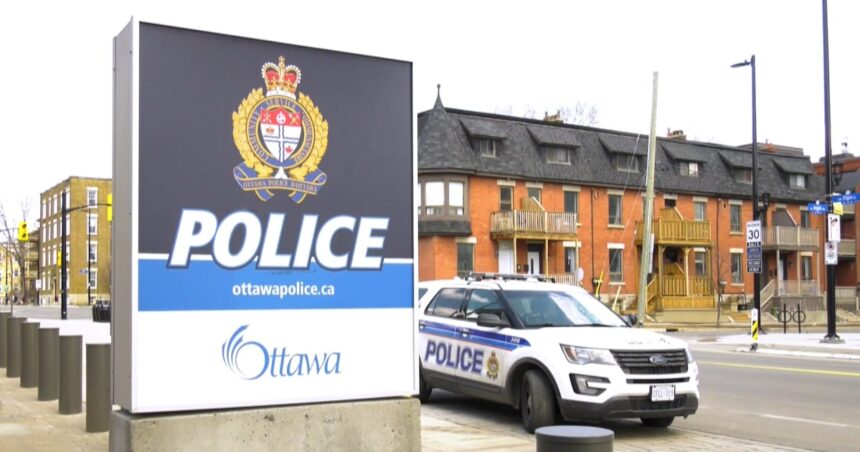

Walking through the ByWard Market on a chilly Tuesday morning, I’ve watched this neighborhood transform over decades of covering Ottawa’s shifting landscape. The cobblestone streets that once felt inviting now carry an undercurrent of unease that residents and business owners openly discuss.
Ottawa police have announced a significant operational shift starting May 1st. Chief Eric Stubbs unveiled plans to dramatically increase officer visibility throughout the downtown core and ByWard Market. The announcement came during Tuesday’s Mayor’s Breakfast at City Hall, where Stubbs spoke candidly with Mayor Mark Sutcliffe about mounting safety concerns.
The initiative represents the most substantial downtown policing commitment in years. Stubbs acknowledged what many residents already feel daily. Safety concerns have escalated among business owners, residents, tourists, and regular downtown visitors.
“We know that we have to do something,” Stubbs told attendees at the breakfast. His words reflected frustration that’s been building across the community for months.
The operational plan targets specific geographical zones. Officers will maintain sustained presence in the ByWard Market, along Rideau Street and King Edward Avenue, throughout Centretown, in Chinatown, and along Bank Street. These areas have consistently generated the highest volume of calls and complaints.
Fourteen additional officers will join the downtown Neighbourhood Resource Team. That expansion comes through the Ottawa Police Service’s staff stabilization plan, which has helped address chronic staffing shortages that plagued the service for years.
I’ve spoken with merchants along Sussex Drive who’ve watched foot traffic decline as concerns about aggressive panhandling and disorder increased. Their businesses depend on tourists and locals feeling comfortable strolling through the market’s historic corridors.
The deployment strategy involves multiple specialized units working in coordination. Neighbourhood Resource Teams will anchor the presence, supported by community policing officers, the Community Youth Unit, Ottawa Police special constables, traffic officers, and members of the new Parliamentary Precinct team.
Stubbs emphasized an operational change that breaks from traditional reactive policing. Frontline officers from each platoon will now dedicate portions of their shifts to proactive work in the downtown core. Even tactical units will allocate shift time to maintaining downtown visibility.
“All of those units – very visible and they’ll be focused,” Stubbs explained. Officers will concentrate on identified hot spot areas and individuals causing the most significant community harm.
The chief outlined three primary goals for the initiative. First, establishing improved and visible police presence throughout target areas. Second, achieving measurable decreases in crime rates and calls for service. Third, developing increased consistency when addressing social disorder issues.
Last summer brought an unexpected influx of vulnerable individuals from other Ontario communities. Officers on the ground reported seeing unfamiliar faces from Montreal, Cornwall, Kingston, and Sudbury. That population shift coincided with noticeable increases in both calls for service and reported crimes.
The correlation wasn’t coincidental, according to frontline officers who work these neighborhoods daily. Social agencies serving vulnerable populations struggled to keep pace with the sudden demographic changes.
I’ve covered parliamentary affairs long enough to recognize when political pressure drives policy shifts. Business improvement associations have been vocal about deteriorating conditions. The ByWard Market BIA has presented council with detailed documentation of incidents affecting merchants and patrons.
Tourism Ottawa data shows visitor hesitancy about downtown experiences. That’s concerning for a city heavily dependent on tourism revenue, particularly around signature attractions like the market.
Stubbs’ comments reflected awareness that police alone can’t solve underlying social issues. The vulnerable population needs comprehensive services addressing mental health, addiction, and housing insecurity. However, public safety requires immediate attention while longer-term solutions develop.
Critics argue increased police presence might simply displace problems to other neighborhoods. That concern has merit based on experiences in other Canadian cities. Vancouver and Toronto have both grappled with similar challenges when concentrating enforcement resources.
The Neighbourhood Resource Teams represent Ottawa Police Service’s proactive component. These teams build relationships within communities, theoretically allowing officers to address issues before they escalate. Their effectiveness depends on consistent presence and community trust.
Traffic officers joining the downtown initiative might seem unusual initially. However, their visibility and authority to address various bylaw violations creates additional deterrent effects beyond traditional patrol functions.
The Parliamentary Precinct team’s involvement acknowledges downtown Ottawa’s unique character as the nation’s capital. Security requirements around Parliament Hill create specialized needs that standard municipal policing doesn’t typically address.
Implementation timing coincides with warming weather when downtown activity naturally increases. Spring and summer bring festival season, outdoor dining, and peak tourism. That’s when downtown vibrancy matters most economically.
Business owners I’ve interviewed express cautious optimism. They’ve heard promises before but want sustained commitment extending beyond initial deployment. Consistency matters more than temporary surges that fade after media attention dissipates.
Residents living in Centretown and Sandy Hill neighborhoods adjacent to the market welcome increased presence. Many have curtailed evening walks or changed daily routines due to safety concerns. That shouldn’t happen in any urban neighborhood.
The success metrics Stubbs outlined will require transparent reporting. Decreased crime statistics and reduced calls for service can be measured objectively. Subjective improvements in perceived safety matter equally but prove harder to quantify.
Community policing philosophies emphasize relationship-building over enforcement-only approaches. Whether this initiative balances those priorities remains to be seen. The involvement of specialized youth units suggests some recognition of that balance.
Ottawa’s downtown deserves to feel welcoming for everyone who lives, works, or visits there. The market’s historic charm and cultural significance make it central to our city’s identity. Allowing disorder to define that space diminishes what makes Ottawa special.
This policing initiative represents one component of necessary responses to complex urban challenges. It won’t solve everything, but visible presence matters when people feel unsafe. The real test comes in sustained implementation and coordination with social services addressing root causes.