
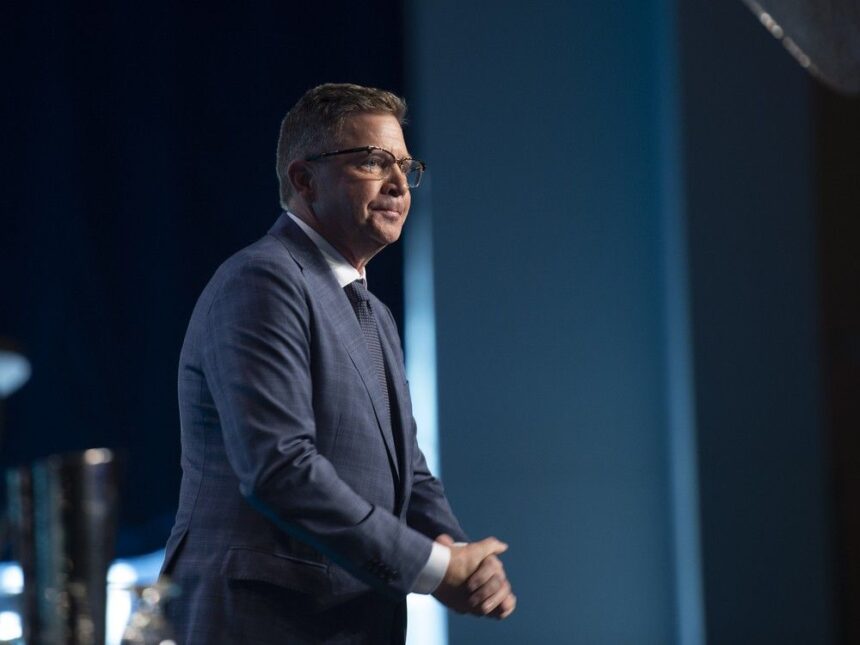

I’ve been thinking a lot about second acts lately, especially as I watch familiar faces in Edmonton’s political landscape find new ways to contribute to our city. Tim Cartmell’s story feels particularly resonant right now.
The former councillor and mayoral candidate has stepped into a significant role at NAIT as associate vice president of major capital projects. It’s a position that suits his background perfectly, blending his engineering expertise with the community connections he built during eight years on city council. For someone who represented Ward pihêsiwin through two terms, this feels like a natural evolution rather than a retreat.
Cartmell will be overseeing construction of NAIT’s Advanced Skills Centre, a project backed by $384 million in provincial funding over three years. The centre aims to bring 5,500 additional students to NAIT across 29 different trades. Those numbers matter in a city that’s constantly growing and desperately needs skilled tradespeople. I’ve covered enough stories about labour shortages to know this isn’t just about buildings—it’s about Edmonton’s economic future.
What struck me most about Cartmell’s comments to Postmedia was his honesty about the toll of modern politics. He said he’s extremely unlikely to run for office again, despite never saying never entirely. That’s a significant statement from someone who nearly captured 30 percent of the mayoral vote just months ago. Running under the Better Edmonton banner, he focused on municipal taxes, public safety concerns, and what he viewed as lack of direction at city hall.
The personal cost of that campaign clearly weighed heavily. Cartmell mentioned facing criticism, demonization, and personal attacks during the election cycle. He noted how difficult that was for his family members too. Anyone who’s watched Edmonton politics knows things have gotten more heated in recent years. Social media amplifies everything, and nuance often disappears in favor of sharp-edged soundbites.
I find his reflection on public perception particularly interesting. Cartmell said perceptions developed about who he was that felt far removed from his actual identity. That disconnect between public persona and private reality affects many public figures, but hearing someone articulate it so clearly feels rare. Most politicians keep those frustrations private long after leaving office.
Still, he was candid about missing certain aspects of council work. Helping constituents solve problems gave him genuine satisfaction. Many former councillors I’ve spoken with over the years say the same thing. The direct impact you can have on someone’s life when you help navigate city bureaucracy creates meaningful connections. That part of public service clearly meant something to Cartmell.
Now he’s channeling that desire to contribute into transforming north central Edmonton. The NAIT project sits in a part of the city that’s seen significant change over recent decades. New residential developments, infrastructure improvements, and community initiatives have gradually reshaped the area. A major expansion at one of Edmonton’s anchor institutions could accelerate that transformation considerably.
NAIT serves as both an educational hub and economic engine for our city. The institution trains thousands of students annually in practical skills that directly feed into Alberta’s workforce needs. Expanding capacity across nearly 30 trades means more welders, electricians, carpenters, and heavy equipment operators entering the job market. Those are careers that build cities, literally and figuratively.
Cartmell’s engineering background gives him technical credibility for this kind of work. Managing large capital projects requires understanding complex timelines, budgets, regulatory requirements, and stakeholder coordination. His council experience adds another layer—he knows how institutions interact with communities and governments. That combination should serve NAIT well as they navigate this ambitious expansion.
The three-year provincial funding timeline creates clear parameters and pressures. Projects of this magnitude don’t happen without challenges. Supply chain issues, labour availability, regulatory approvals, and unexpected site conditions can all create complications. Having someone at the helm who understands both technical and political landscapes could prove invaluable.
What I appreciate about Cartmell’s approach is his commitment to staying in Edmonton for the foreseeable future. His kids live here, and he mentioned a grandchild arriving soon. That personal investment in the city’s future adds weight to his professional choices. This isn’t a stepping stone to somewhere else—it’s about contributing to the community where his family has put down roots.
The transition from elected office to institutional leadership isn’t uncommon, but it requires adjustment. Council work involves constant public engagement, media scrutiny, and political negotiation. Project management at a post-secondary institution operates differently, with clearer objectives and less political theater. For someone who expressed fatigue with public-facing battles, that shift might bring welcome relief.
Edmonton benefits when experienced people find new ways to serve. Cartmell brought specific concerns to his mayoral campaign that resonated with a substantial portion of voters. Whether you agreed with his positions or not, nearly 30 percent support indicates his message connected with many Edmontonians. That perspective doesn’t disappear just because he lost an election.
Now he’ll apply that energy toward building something tangible. Infrastructure projects create visible, lasting change in ways that political debates often don’t. Years from now, students will walk through buildings Cartmell helped bring to fruition. They’ll learn skills that support their families and build our city’s infrastructure. That’s a legacy worth pursuing.
I’ve watched Edmonton’s political landscape shift considerably over my years covering this city. The intensity has increased, the divisions feel sharper, and the personal costs of public service have grown. When capable people decide the price is too high, our community loses potential leadership. Understanding why that happens matters.
Cartmell’s candor about his decision offers valuable insight. Politics has always involved criticism, but something has changed in how we engage with public figures. The distance between perception and reality, amplified by social media and partisan divisions, creates an environment that’s increasingly difficult to navigate. That’s worth examining as we think about who runs for office and why.
For now, Tim Cartmell is building rather than campaigning. He’s focusing on a project that could reshape part of our city and create opportunities for thousands of students. That work matters deeply to Edmonton’s future, even if it happens outside the spotlight of electoral politics.