
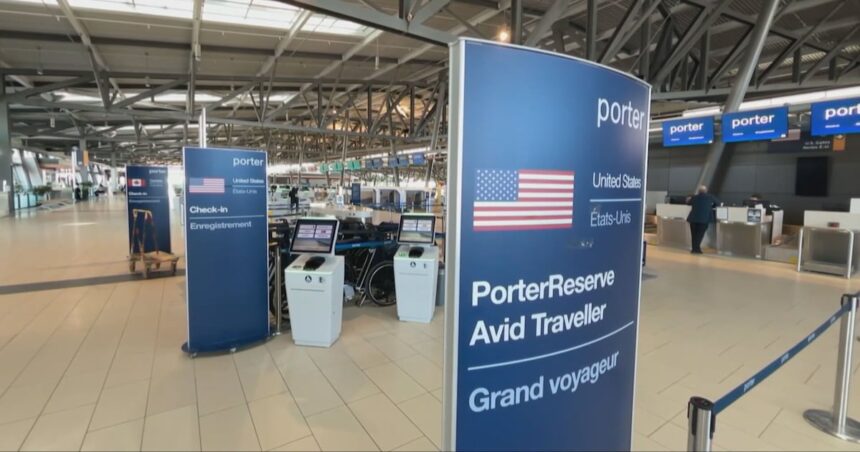

I watched a couple argue about their summer plans at Trudeau Airport last Sunday afternoon. The woman wanted to visit family in Toronto. Her partner kept refreshing flight prices on his phone. They weren’t happy with what they saw.
Gas analysts predict we could hit $2 per litre this week. The conflict escalating in the Middle East is pushing fuel costs higher. Drivers and travellers across Montreal are feeling the squeeze. This isn’t just about filling up your car anymore.
The Strait of Hormuz situation has disrupted vital shipping channels. Oil prices are climbing fast. John Gradek from McGill University put it bluntly to CTV News. We’ve seen 40 to 50 cent increases per litre for regular gas. Aviation fuel has actually doubled in price.
I filled up near my Plateau apartment Sunday afternoon. The pump showed $1.93 per litre. The guy next to me just shook his head and laughed. What else can you do?
Porter Airlines already added a $40 fuel surcharge on certain tickets. They told media that fuel represents their highest operational cost. The airline insists this charge will be temporary. The surcharge applies specifically to VIPorter flight redemptions as a “Peak Surcharge” for each passenger, each way. Standard bookings don’t face this extra fee yet.
Gradek isn’t convinced about the temporary part. He’s tracked airline pricing patterns for years. Fuel surcharges have a habit of sneaking into regular fares. They rarely disappear completely once introduced. Airlines find creative ways to maintain higher prices even after fuel costs stabilize.
I spoke with travellers at Trudeau last week for another story. Many are reconsidering their plans. Families who usually fly to Toronto or Ottawa are now calculating drive times. Short-haul flights suddenly seem less practical when you factor in these new costs.
But driving isn’t looking much better right now. Dan McTeague from Canadians for Affordable Energy issued a stark warning. Get prepared for prices over $2 per litre within 24 to 48 hours. That prediction came Sunday, so we’re likely there now.
The timing couldn’t be worse for Montreal drivers. April 15 brings another price jump that many people don’t know about. Gas stations across Canada switch from winter to summer gasoline blends. The summer formula uses more expensive components and sophisticated refining processes.
McTeague estimates this seasonal change adds another 10 cents per litre. So if we hit $2 next week, expect $2.10 two weeks later. That’s assuming nothing else changes in global oil markets. Given current Middle East tensions, that’s a big assumption.
I remember when $1.50 per litre felt outrageous. My neighbours and I complained endlessly about it. Now $1.93 is our Sunday afternoon reality. My friend who commutes from Laval to downtown Montreal is calculating whether she can afford to keep driving to work.
Porter’s fuel surcharge is likely just the beginning. McTeague expects other Canadian carriers to follow suit quickly. Air Canada, WestJet, and smaller regional carriers all face the same fuel cost pressures. Competition usually keeps prices somewhat in check, but when everyone faces identical cost increases, surcharges spread fast.
Travel agents I’ve spoken with report a surge in cancellations. Families are postponing summer vacation plans. Others are switching from flights to road trips, at least for destinations within reasonable driving distance. Then they see gas prices and reconsider everything.
The ripple effects extend beyond personal travel. Montreal’s tourism industry depends heavily on visitors from Ontario, the Maritimes, and the United States. Higher travel costs could reduce visitor numbers this summer. Restaurants, hotels, and attractions may see fewer customers. Our economy needs tourism dollars, especially after years of pandemic recovery.
Local businesses that rely on delivery services face challenges too. Transportation costs affect everything from restaurant supplies to retail inventory. When diesel and gas prices climb, those increases eventually reach consumers through higher prices on goods and services.
McTeague offered some bleak advice about summer travel planning. The best time to book was two months ago. If you missed that window, your options look limited now. He jokingly suggested staying home or hitchhiking as we head into summer 2025. The humour doesn’t mask the real frustration many Montrealers feel.
I checked prices at several stations across different Montreal neighbourhoods over the weekend. Variations were minimal. Everyone’s paying roughly the same inflated rates whether you’re in Westmount, Hochelaga, or Pointe-Claire. This affects everyone regardless of neighbourhood or income level.
The situation feels particularly frustrating because we have limited control. Global conflicts and seasonal gasoline regulations drive these costs. Individual consumers can’t negotiate or opt out. We adjust our lives around prices determined by forces far beyond Montreal.
Some families are getting creative. Carpooling is making a comeback among colleagues. Parents are coordinating schedules to share school drop-offs. My building’s parking lot has noticeably fewer cars leaving each morning. People are biking and taking metro more often.
Public transit ridership numbers should be interesting when STM releases next month’s statistics. Higher gas prices historically push more people toward buses and metro. That could strain our already busy transit system during peak hours.
The summer travel season traditionally begins around Victoria Day weekend. Montrealers love escaping to cottages, visiting family, or taking road trips through Quebec’s beautiful regions. This year might look different. Beaches closer to home could see bigger crowds. Staycations might become the default rather than a choice.
I’m not cancelling my own summer plans yet. But I’m definitely rethinking them. That weekend in Quebec City might become a day trip instead. The flight to visit my sister in Vancouver looks increasingly expensive. Maybe she can come here instead, though her flight costs the same.
These decisions play out in households across Montreal right now. We’re all doing the same calculations. We’re all hoping prices stabilize soon. And we’re all wondering if $2 per litre becomes our new normal rather than a temporary shock.