

Walking past the old High School of Commerce building on Rochester Street last week, I noticed a group of students chatting outside during a break. Their ages ranged wildly, from early twenties to what looked like mid-fifties. That diversity has always struck me as one of Ottawa’s educational treasures, something you don’t see everywhere.
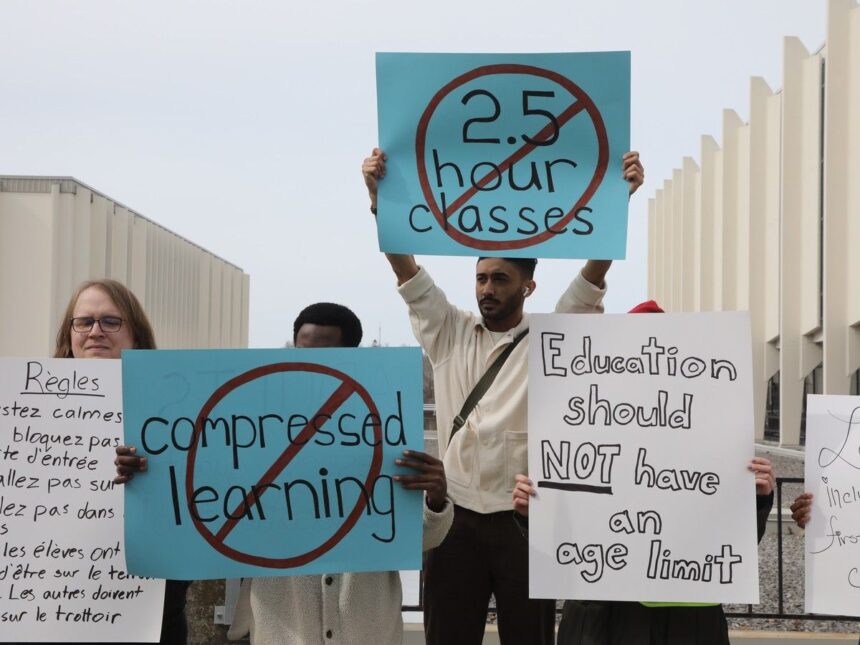
But big changes are coming to the Adult High School that could reshape how these students learn. Starting next September, the school is ditching its traditional semester system for something called a quadmester format. Students over 21 will now take two courses at once, with classes stretching to two and a half hours each. The Ottawa-Carleton District School Board says this brings them in line with provincial standards for continuing education.
Diane Pernari, spokesperson for the OCDSB, explained the rationale in a recent statement. The new system will offer four different start dates throughout the year instead of the usual two semesters. That flexibility means students can begin their studies more often, which sounds good on paper. All classes will stay in person, and student supports aren’t going anywhere, according to Pernari.
The timing raises eyebrows though. The OCDSB has been under provincial supervision since last June, dealing with an $11.5 million deficit that refuses to disappear. Board officials are scrambling to find between $15 million and $20 million in savings. These program changes happen to coincide with those financial pressures, though the board frames them as alignment with provincial standards.
Ottawa’s Adult High School stands out provincially. Most school boards offer programs for students aged 18 to 21 who need to finish graduation requirements. But dedicated in-person schools entirely for adult learners? Those are rare. Programs for students over 21 vary wildly across Ontario, ranging from fully online to mixed formats to nothing at all.
The funding structure explains some of this scarcity. Students over 21 fall into a different funding category, receiving lower per-pupil money from the province. School boards face financial disincentives for maintaining robust adult programs, which makes Ottawa’s dedicated facility even more unusual.
Behind the scenes, staffing changes are happening too. A small number of teachers will relocate to other secondary schools in the district, Pernari confirmed. Qualified replacements will fill those positions, but with a significant difference. The Ontario Secondary School Teachers’ Federation points out that instructors for over-21 students will now be paid as continuing education teachers, not regular secondary teachers. That’s a different salary category altogether.
Stephanie Kirkey, president of OSSTF District 25, estimates between 20 and 25 teachers at the Adult High School will be reassigned under these changes. The union is working with the board to ensure fairness during the transition, but the scale of movement suggests substantial restructuring.
Students themselves aren’t convinced longer classes will work for them. Nura Evans Li returned to school five years after leaving, determined to qualify for Algonquin College’s life sciences program. She finds the current 75-minute classes intense enough. The thought of two and a half hour sessions feels overwhelming to her. Coming back after five years away from academics requires serious mental stamina, and she worries about exhaustion.
Fiona Driedger graduates this spring under the existing system at age 23. She’s disappointed by the changes because she hoped to return for chemistry and additional science courses. Learning feels fun to her, and these modifications dampen her enthusiasm. Driedger previously completed Algonquin’s heritage carpentry and joinery program at the Perth campus using equivalency tests, so she values flexible educational pathways.
She’s watching those pathways narrow across the region. Algonquin is closing its Perth campus in August due to its own deficit struggles. Seeing educational opportunities disappear repeatedly frustrates her deeply. The pattern feels relentless.
Shane Delcourt graduated from the Adult High School about a decade ago. He remembers doubting he’d ever get his diploma when he first enrolled. What made the difference for him was the unique student population. People from completely different backgrounds and age groups studying together created an environment nothing like traditional high schools. Having classmates in their fifties alongside young adults built a peer community that supported continuation of education.
That intergenerational mixing matters more than administrators might realize. Adult learners often carry baggage from previous educational experiences. Being surrounded by peers who also took unconventional paths reduces stigma and builds confidence. The Adult High School has cultivated that culture for years.
Whether the quadmester format preserves this community remains unclear. Two and a half hour classes might work brilliantly for some students and prove disastrous for others. Adult learners juggle jobs, families, and other responsibilities that teenagers typically don’t face. Longer class sessions could actually reduce scheduling conflicts for working students. Or they could make attendance impossible for parents coordinating childcare.
The board promises ongoing communication with students and staff as the transition unfolds. Pernari emphasized their commitment to keeping the school community informed and supported. Those are appropriate words, but students like Evans Li and Driedger want more than reassurance. They want evidence that decision-makers understand adult learning differs fundamentally from conventional secondary education.
I’ve covered enough education stories in Ottawa to recognize when financial pressures drive pedagogical decisions. Sometimes those decisions work out surprisingly well. Other times they hollow out programs that served vulnerable populations. The Adult High School has given thousands of Ottawans second chances at education over the years. Its students include newcomers improving English skills, workers seeking career changes, and people who struggled in traditional school environments.
Four start dates yearly genuinely increases flexibility compared to September and February intakes. That’s a tangible benefit. But flexibility means nothing if the program becomes harder to complete. Adult students already face higher dropout risks than teenagers. Making classes significantly longer could tip that balance the wrong way.
The board faces legitimate financial constraints under provincial supervision. Nobody disputes that reality. But squeezing savings from programs serving the most vulnerable students raises uncomfortable questions about priorities. Students over 21 receive less provincial funding, making their programs easy targets when budgets tighten.
Come September, we’ll see whether this transition strengthens or weakens adult education in Ottawa. The answer will reveal what we genuinely value as a community beyond budget spreadsheets.