

I’ve been covering stories across Alberta for years, and some hit harder than others. The housing crisis in Conklin isn’t just another policy failure. It’s tearing apart a Métis community that’s been rooted in northeastern Alberta for generations. And the ripple effects are reaching Edmonton in ways most people don’t see.
Joanne Rita Richards doesn’t mince words when she talks about what’s happening in her hometown. She’s watched neighbors, friends, and family members pack up and leave Conklin because finding a safe place to live became impossible. Many end up in Fort McMurray, Lac La Biche, or here in Edmonton. But the transition isn’t what anyone hopes for.
Richards says the housing crisis has forced people to choose between cultural identity and basic necessities. Heat, running water, and reliable electricity shouldn’t be luxuries. Yet in Conklin, those amenities remain out of reach for far too many families. When people move to urban centers like Edmonton, they often arrive without support networks or resources. Some fall into addiction. Others end up on the streets. The pattern repeats itself with heartbreaking regularity.
I’ve spent time talking to social workers and community advocates in Edmonton who see these displaced families arrive. They’re dealing with trauma layered on top of housing insecurity. The move to the city was supposed to solve problems, but it often creates new ones.
The numbers from Conklin paint a stark picture. A recent community report found that 86% of survey respondents face housing insecurity. That means their homes are inadequate, unsafe, or unstable. Children and elders live in conditions that compromise their health and safety. The urgency couldn’t be clearer.
Richards describes a frustrating reality on the ground. New homes exist in Conklin, but access remains limited. She says employment status, connections to leadership, and favoritism determine who gets housing. Five brand new homes sat vacant since last June while families remained homeless. The logic doesn’t track for anyone struggling to keep a roof overhead.
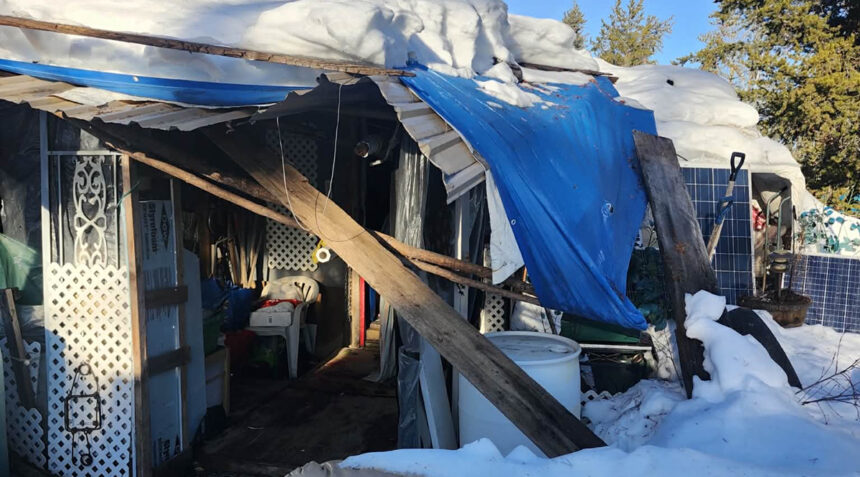
I asked Richards about her own situation. She’s been fighting for stable housing for over a decade. In 2012, she bought an old mobile home and started fixing it up. Before she could finish, the roof caved in on her previous home. She moved into the unfinished mobile prematurely in 2014. This past winter, that roof caved in too. She’s still living without adequate shelter.
The emotional toll extends beyond physical safety. Richards talks about how housing inequity has changed social dynamics in Conklin. People who secured new homes sometimes look down on those still struggling. Lifelong friendships have fractured. The community fabric is fraying.
Elders face particularly difficult circumstances. Richards mentions seniors stuck in Fort McMurray hospitals because their off-grid living situations are deemed unhealthy. Medical staff won’t discharge them to homes without modern utilities. Her own mother is among those caught in this impossible situation. Families are separated not by choice but by infrastructure failures.
Some progress has happened. In November 2024, the Conklin Resource Development Advisory Committee celebrated the opening of 15 new homes. Funding came through Cenovus and the Government of Alberta’s Indigenous Housing Initiative. The program targets Indigenous communities near oil sands operations. Millions of dollars have been committed to build hundreds of homes across the region.
Richards acknowledges the initiative but says it hasn’t reached the people most in need. She claims families who already had homes moved into the new units. Meanwhile, those experiencing homelessness remain without options. The distribution process lacks transparency and accountability, according to her observations.
Community members rarely get meaningful input into development decisions, Richards says. One family controls the leadership board that manages Conklin’s funding allocation. Local residents are hired only for temporary day jobs once or twice monthly. Their ideas and expertise go untapped. Planning meetings allow attendance but prohibit community members from speaking. Attempts to contribute result in halted proceedings.
I’ve covered enough municipal politics in Edmonton to recognize these patterns. When decision-making concentrates in too few hands, outcomes rarely serve the broader community. Diverse voices improve planning. Conklin residents know their needs better than anyone. Excluding them from conversations almost guarantees failed solutions.
Richards points out the irony of Conklin’s situation. Six major oil and gas companies operate in the surrounding area. Employment opportunities should abound. Instead, most residents remain jobless, homeless, or both. The wealth generated from their traditional territory doesn’t translate into community prosperity.
She believes new leadership could change trajectories. Fresh perspectives might open employment pathways for locals. Self-sufficiency and independence could return. Most importantly, housing could reach those who genuinely need it rather than those with connections.
I think about the families arriving in Edmonton from places like Conklin. They come seeking what their home community couldn’t provide. Our city’s resources are already strained. Shelters operate beyond capacity. Social services struggle to meet demand. Addressing root causes in rural communities would benefit everyone.
Housing isn’t just about buildings or square footage. It’s the foundation for everything else. Stable housing allows children to focus on education. It gives families space to practice cultural traditions. It provides elders with dignity and safety. Without it, communities can’t thrive.
Richards has lived on Crown land since 2017, squatting because no other option existed. Nearly a decade later, nothing has changed for her. The frustration in her voice is palpable. She’s not asking for handouts. She’s asking for fairness and basic human dignity.
Cultural continuity depends on people remaining connected to their homelands. When Conklin residents scatter to urban centers, traditional knowledge and practices become harder to maintain. Language transmission suffers. Relationships with the land weaken. The losses compound across generations.
I’ve heard similar stories from other Indigenous communities facing housing crises. The specifics differ, but patterns emerge. Inadequate funding, poor planning, lack of community input, and systemic inequities create perfect storms. Solutions exist, but they require political will and genuine partnership.
Richards remains hopeful despite everything. She believes Conklin residents hold the capacity to solve these problems if given the chance. Their knowledge, skills, and commitment to community are powerful assets. What’s missing is opportunity and support.
The housing crisis in Conklin isn’t an isolated rural issue. It connects directly to challenges Edmonton faces. Understanding those connections helps us build better responses. Every person deserves safe, stable housing. That’s not radical. It’s basic human rights.
As I wrap up my reporting on this story, I keep thinking about Richards and others like her. They’re not statistics. They’re people trying to survive impossible circumstances with grace and determination. Their voices deserve amplification. Their needs demand action.