
I still remember sitting rinkside at the Bell Centre last winter, watching a Canadiens player take a brutal hit along the boards. The crowd went silent. Everyone seemed to hold their breath, waiting to see if he’d get up. That collective anxiety reveals something profound about how our relationship with sports has changed here in Montreal and across North America.
We’ve come a long way from the days when players were expected to shake off head injuries without question. Yet despite increased awareness, the culture surrounding concussions in sports remains deeply troubling. Athletes still face enormous pressure to play through pain, often at the cost of their long-term health and well-being.
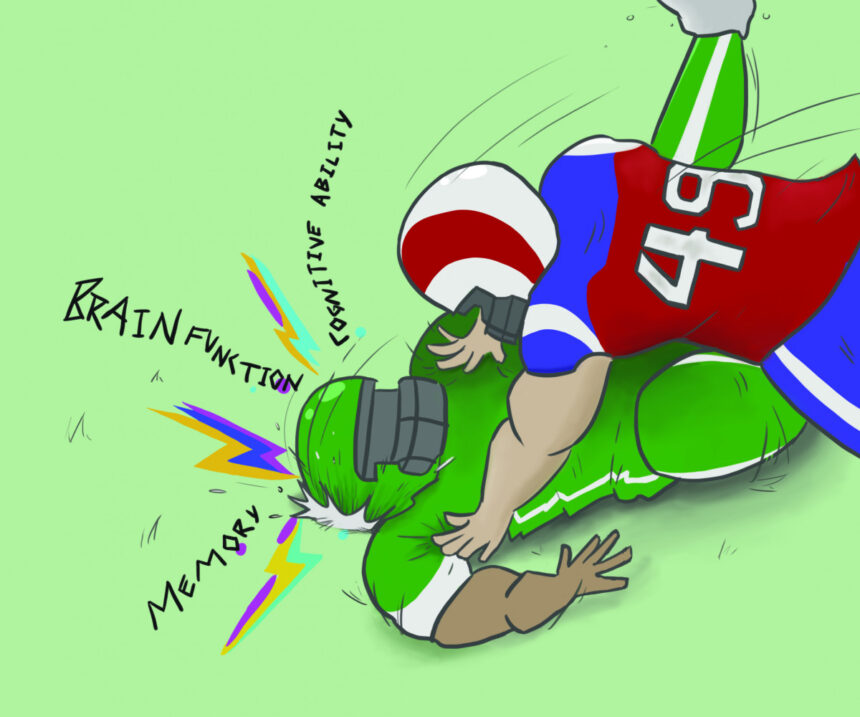
Concussions are mild traumatic brain injuries caused by blows to the head. Symptoms include headaches, nausea, fatigue, blurred vision, confusion and memory loss. Unlike a broken bone, these injuries remain invisible to observers and teammates.
Victoria D’Amours, a former competitive figure skater from Montreal, explained this detection challenge clearly. “If you break your ankle, your ankle’s going to be swollen and blue,” she told me. “There is no denying that there is some sort of injury. But with a concussion, it’s not symptoms that you can see.”
This invisibility creates dangerous situations. Athletes might minimize their symptoms or hide them entirely from coaches and medical staff. The competitive drive to return to play often overrides common sense and self-preservation.
The conversation around head injuries in professional sports exploded in the early 2010s. Dr. Bennet Omalu first observed chronic traumatic encephalopathy in deceased NFL players who had taken their own lives. His discovery changed everything we thought we knew about contact sports.
By 2012, the NFL faced lawsuits representing over 2,000 players. They accused the league of negligence and failing to warn them about long-term brain injury risks. The settlement reached $765 million. It wasn’t until 2016 that a senior NFL official finally acknowledged the link between football and degenerative brain disorders.
The fact that it took multiple player suicides and brain studies for this acknowledgment disturbs me deeply. How many athletes suffered in silence before the sports world took these injuries seriously?
Chronic traumatic encephalopathy represents the most frightening aspect of repeated head trauma. This degenerative brain disease kills nerve cells gradually over time. There’s no cure. Diagnosis only happens after death through brain examination.
Symptoms include memory loss, impulsive behavior, depression, suicidal thoughts, substance abuse and movement problems. A 2017 study examined 111 deceased NFL players’ brains. Shockingly, 110 showed signs of chronic traumatic encephalopathy.
The disease doesn’t only affect football players. Boxers face significant risks due to repeated head impacts. Hockey players, soccer players and athletes in numerous other sports all face potential long-term consequences.
Research from Boston University’s CTE Center revealed something crucial. The disease stems from cumulative head injuries over time, not just the dramatic collisions we see on highlight reels. This means that preventing the big hits isn’t enough. We need to address the repeated smaller impacts athletes absorb throughout their careers.
Here in Montreal, I’ve spoken with local athletes about their experiences. Èvelyn Parry, goalkeeper for Concordia University’s women’s soccer team, has suffered two concussions. She described the psychological aftermath with striking honesty.
“One thing athletes do, in every aspect of our life, is if we don’t talk about it, it doesn’t exist,” Parry explained. “Concussions are kind of the same thing where there’s a stigma about it. If I ignore it or don’t really face the truth, then it’s not true, it’s not real.”
Three months after her second concussion, Parry’s team practiced the same drill that had caused her injury. “My body genuinely had a reaction to it,” she said. “I had realized that I’d been kind of holding back because of that fear of that injury happening again.”
This trauma response extends beyond professional athletes. A recent poll found that 19.5 percent of NFL players admitted hiding concussion symptoms from doctors. At lower football levels, that number jumped to 26 percent.
The pressure comes from multiple directions. Coaches sometimes push players to return too quickly. Brian Daboll, former New York Giants head coach, actually interrupted quarterback Jaxson Dart’s concussion protocol to ask if he could keep playing. That kind of behavior sends a dangerous message to athletes at every level.
Sometimes the pressure comes from within. Athletes push themselves to play through injuries because they fear losing their position or disappointing teammates. The competitive mindset that makes someone excel in sports can become their greatest vulnerability.
D’Amours offered perspective that every young athlete should hear. “When you’re a growing athlete, all you care about is your sport,” she said. “But there is a life after sports. The life you’re going to live once your sport is over is hopefully longer than the time you spent with your sport.”
Youth sports present additional challenges. D’Amours pointed out that adults might not believe young athletes reporting concussion symptoms. The symptoms can seem generic or exaggerated to skeptical coaches or parents.
Contact sports aren’t the only concern. Adrien Chaput, a former flag footballer at Marianopolis College here in Montreal, experienced multiple head injuries playing flag football and basketball. Neither sport typically involves helmets or heavy contact.
Six months after his first concussion, Chaput thought he experienced a minor head injury. His original symptoms returned immediately and intensified. Doctors diagnosed him with post-concussion syndrome, where symptoms persist far longer than expected.
Today, Chaput still struggles with dizziness and poor sleep quality. “It limits my participation and ability to learn at the same level in sports and school,” he told me. He also expressed frustration with physicians who seemed dismissive because he wasn’t a professional athlete.
D’Amours agreed that any sport carries concussion risk. “In reality, you can get a concussion just from falling on your butt,” she explained from her figure skating experience.
The NHL expanded its concussion protocols and broadened Rule 48 in 2011 to prohibit all illegal checks to the head. The NFL updated its concussion protocols in 2022 and modified kickoff rules in 2024. These changes represent progress but may not address the underlying problem of cumulative impacts.
Research on soccer players found that concussions make up seven percent of all injuries in women’s international soccer. In men’s international soccer, that figure drops to three percent. These statistics raise important questions about how different populations experience and report head injuries.
Walking through Montreal’s sports complexes and watching youth hockey at community rinks, I think about all the young athletes absorbing impacts without fully understanding the risks. Parents cheer from the stands, coaches diagram plays, and kids dream of making it to professional leagues.
D’Amours suggested that education should focus on recognition and proper protocols rather than fear tactics. “I think we need to target our effort into recognizing the signs and ensuring that the proper protocols are put in place,” she said. “People need to be directed towards the right resources.”
The challenge lies in changing athletic culture itself. The mentality that celebrates playing through pain and dismisses invisible injuries puts athletes in danger. Until we fundamentally shift how we value long-term health over short-term performance, athletes will continue suffering in silence.
Medical professionals need better training to recognize and treat concussions in non-professional athletes. Chaput’s experience with dismissive physicians shouldn’t be normal. Every athlete deserves comprehensive care regardless of their competitive level.
Sports leagues must continue evolving their safety protocols based on emerging research. Guardian caps and modified kickoff rules represent steps forward, but we need sustained commitment to player safety over entertainment value and profit.
Parents and coaches carry responsibility too. Creating environments where young athletes feel safe reporting symptoms requires conscious effort. When we celebrate toughness above all else, we teach children to ignore their bodies’ warning signals.
I’ve covered Montreal sports for years and witnessed incredible athletic achievements. The dedication, skill and passion athletes bring to their sports inspires me constantly. But none of that matters if we’re sacrificing their futures for temporary glory.
The athletes I spoke with all expressed hope that awareness will continue growing. They want future generations to benefit from lessons learned through their experiences and struggles.
As our understanding of brain injuries deepens, we face a moral choice. Do we prioritize the spectacle of violent collisions and relentless competition? Or do we value the long-term health and quality of life for people who dedicate themselves to sports?
The answer seems obvious when you consider the human cost. Former athletes struggling with memory loss, depression, substance abuse and suicidal thoughts. Families watching loved ones deteriorate from a disease with no cure. Young people whose educational and career opportunities diminish because of persistent symptoms.
Montreal’s sports culture runs deep. Hockey, soccer, football and countless other sports bring our communities together. We don’t need to abandon sports, but we must approach them with greater wisdom and compassion.
The conversation about concussions has evolved significantly over the past decade. Yet awareness alone isn’t enough. We need systemic changes that protect athletes at every level, from youth leagues to professional sports.
D’Amours’ reminder about life after sports resonates powerfully. The greatest athletes in the world eventually retire. Their identities expand beyond their sport. Their brains need to function for decades after their playing days end.
Until we truly embrace that perspective collectively, concussion culture will continue claiming victims. The invisible injuries will keep accumulating. And athletes will keep paying prices they never fully understood when they first stepped onto the field.