
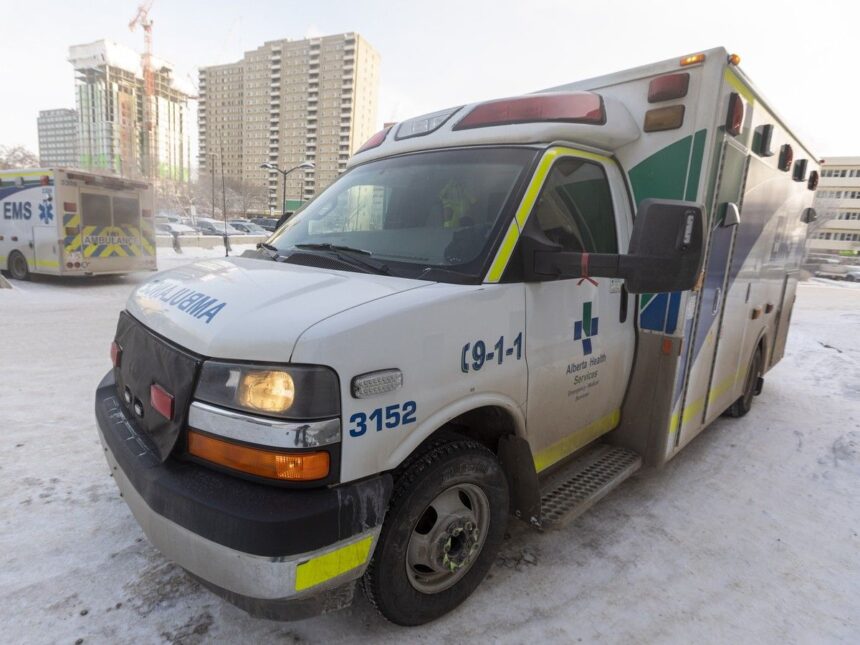

I’ve watched emergency vehicles race through Edmonton streets for years, and something new is catching my eye. Bright ambulances with different markings are appearing across the city. These vehicles represent a significant shift in how Alberta responds to medical emergencies.
Alberta Health Services recently launched a pilot project that adds specialized health response vehicles to the emergency medical system. The program operates in both Edmonton and Calgary, bringing fresh resources to communities that desperately need them. I spoke with paramedics and healthcare administrators who explained how these additions could change emergency care.
The new vehicles don’t replace traditional ambulances. Instead, they work alongside existing resources to address specific types of medical calls. This approach recognizes that not every emergency requires a full ambulance response. Some situations need specialized attention that these new units can provide more efficiently.
Emergency Health Services officials confirmed the pilot project targets particular call categories. Mental health crises, lower-acuity medical situations, and community health concerns often fall into this category. The specialized vehicles carry equipment and personnel trained for these specific scenarios. This targeted approach allows traditional ambulances to remain available for life-threatening emergencies.
I’ve covered healthcare stories in Edmonton for over a decade. The strain on emergency services has grown increasingly visible during that time. Wait times have stretched longer, and paramedics have shared their frustrations about resource shortages. This pilot project acknowledges those challenges and attempts to address them through innovation.
The vehicles themselves differ from standard ambulances in important ways. They’re equipped with medical supplies appropriate for their specific mission profiles. Personnel staffing these units receive specialized training beyond traditional paramedic certification. This combination creates response teams capable of handling situations that might otherwise tie up full ambulance crews.
Alberta Health Services representatives explained the program’s geographic focus. Edmonton and Calgary were selected because of their population density and call volumes. These cities experience the highest demand for emergency medical services across the province. The pilot project allows officials to gather data in environments where impact can be measured most effectively.
Community health advocates have welcomed this development. I interviewed local healthcare workers who emphasized the importance of appropriate responses to different emergency types. A mental health crisis requires different expertise than a cardiac emergency. These new vehicles acknowledge that reality and respond accordingly.
The timing of this expansion reflects broader healthcare challenges across Alberta. Emergency departments have faced unprecedented pressure in recent years. Ambulance offload delays have kept paramedics waiting at hospitals instead of responding to new calls. Any initiative that reduces system strain deserves attention and careful evaluation.
Financial details about the pilot project remain somewhat limited. Alberta Health Services has not publicly disclosed the complete budget for these additional vehicles. However, officials have emphasized that the program represents an investment in system efficiency rather than simple expansion. Better resource allocation can improve outcomes without proportionally increasing costs.
I reached out to Edmonton paramedics who shared their perspectives on the program. Most expressed cautious optimism about the additional resources. They noted that appropriate responses to different emergency types have long been a professional concern. These specialized vehicles represent recognition of that concern at the policy level.
The pilot project includes evaluation metrics to assess effectiveness. Response times, patient outcomes, and system efficiency will all receive scrutiny during the trial period. This data-driven approach ensures that decisions about permanent implementation rest on evidence rather than assumptions. I appreciate that methodical evaluation in an era when healthcare changes often happen reactively.
Calgary’s participation in the pilot project creates opportunities for comparison. Edmonton and Calgary share similarities but also have distinct demographic and geographic characteristics. Observing how the program functions in both cities will provide valuable insights. That comparative data will inform decisions about potential provincial expansion.
Mental health response represents a particularly important aspect of this program. Traditional emergency responses to mental health crises haven’t always served patients or communities well. Specialized vehicles staffed with mental health training offer alternatives that may produce better outcomes. I’ve covered too many stories where appropriate mental health resources could have changed trajectories.
The vehicles also address what healthcare professionals call low-acuity calls. These situations require medical attention but don’t involve immediate life threats. A specialized response can provide necessary care while keeping full ambulances available for critical emergencies. This tiered approach mirrors systems used successfully in other jurisdictions.
Community response to the pilot project has been generally positive. Residents I spoke with appreciate efforts to improve emergency medical services. Many recalled personal experiences with long wait times or strained resources. Any initiative that addresses those frustrations earns public support.
Implementation challenges inevitably accompany new programs of this scope. Coordination between different vehicle types requires clear communication protocols. Personnel training demands time and resources. Equipment procurement and maintenance add logistical complexity. Alberta Health Services officials acknowledged these challenges while expressing confidence in their management.
The pilot project’s duration hasn’t been precisely defined publicly. Officials indicate that sufficient time must pass to gather meaningful data. Seasonal variations, changing call volumes, and other factors require observation over extended periods. Rushed evaluations could produce misleading conclusions.
I’m particularly interested in how this program might evolve. Successful pilots often expand beyond their original scope. If these specialized vehicles prove effective in Edmonton and Calgary, smaller Alberta communities might eventually receive similar resources. That potential represents meaningful improvement for rural and remote areas.
Emergency medical services represent essential infrastructure that most people rarely think about until they need it. This pilot project demonstrates that innovation remains possible even in established systems. The willingness to try new approaches and evaluate them honestly reflects professional commitment to continuous improvement.
As someone who has chronicled Edmonton’s healthcare evolution for years, I recognize the significance of this moment. Small changes in emergency response can ripple through entire healthcare systems. These new vehicles might seem like modest additions, but their impact could prove substantial. I’ll be watching closely as this pilot project unfolds across our city.