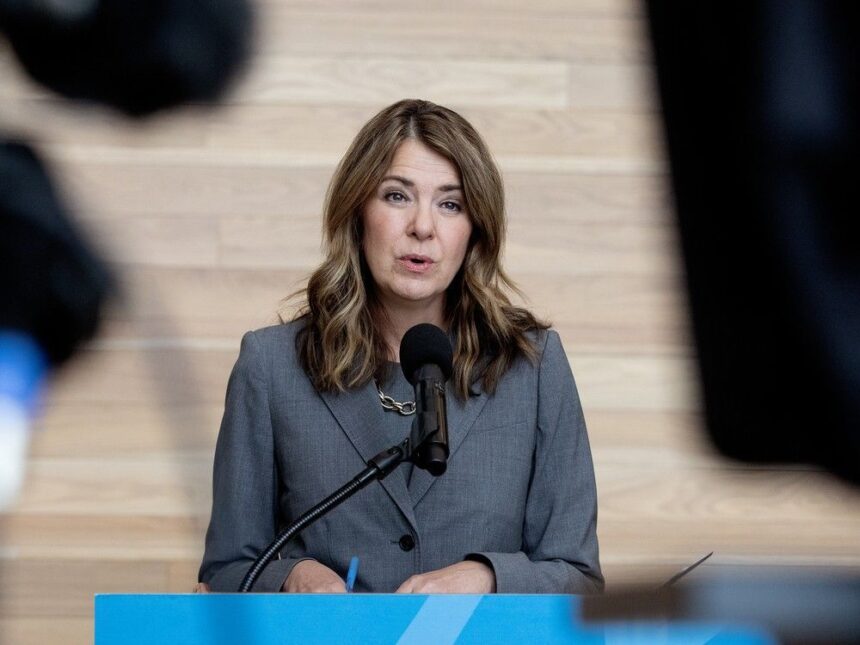

Walking through downtown Edmonton this past weekend, I couldn’t help but think about how deeply personal healthcare decisions have become increasingly political in our province. Premier Danielle Smith’s Saturday radio show sparked exactly that conversation, one that many Albertans are grappling with right now.
Smith defended her government’s planned restrictions to Medical Assistance in Dying during her weekly broadcast. A Calgary caller challenged her stance, insisting that access to MAID represents fundamental freedom. The exchange highlighted tensions simmering across Alberta as provincial and federal governments clash over end-of-life care.
The premier’s position centers on Bill 18, Alberta’s legislative response to federal changes arriving in March 2027. Those federal changes would decriminalize MAID when mental illness alone drives someone’s request. Smith’s government wants none of it.
Under Alberta’s proposed exception, a patient’s “natural death” must be expected within twelve months to qualify for MAID. That’s a considerably tighter restriction than federal guidelines allow. Smith argues current measures have already overstepped reasonable boundaries.
“The intention was that you have a condition for which death is reasonably foreseeable,” Smith explained during her show. “Being depressed or having PTSD, that’s recoverable, and we should be giving people hope.”
She pointed to statistics showing MAID deaths in Alberta have doubled recently. The premier believes Albertans deserve mental health support and renewed enthusiasm for life rather than assisted death as an option for psychological suffering.
Smith outlined how Alberta plans to enforce these restrictions through professional regulations and licensing. “Our power here is that we don’t want to pay for it, we don’t want to license it,” she stated clearly. Doctors performing MAID outside provincial rules would face mandatory professional sanctions under the proposed legislation.
The province controls substantial levers in this dispute. Healthcare delivery, medical licensing, professional college oversight, policing, and justice administration all fall under provincial jurisdiction. Smith emphasized Alberta intends to use every available tool.
“That’s how we’re going to exercise it, because we think that we’ve heard from people they don’t want us to go down this pathway,” the premier said.
She confirmed this week that Alberta will defend these restrictions in court if necessary. If litigation fails, the province could invoke the notwithstanding clause to override federal regulations. That’s a significant constitutional maneuver reserved for exceptional circumstances.
The radio conversation intensified when Pam from Calgary called in with a different perspective. She praised federal government approaches and hopes they eventually permit advance directives. These directives allow people diagnosed with degenerative conditions to request MAID once their illness reaches predetermined severity levels.
“I want to be able to take advantage of this if I were to get in an Alzheimer’s or a dementia diagnosis,” Pam explained. “I want to live. I don’t want to exist.”
Her comments resonated with many facing similar fears about losing cognitive capacity. She articulated a desire for dignity and control that numerous Albertans share when contemplating potential futures with dementia or Alzheimer’s disease.
“Alberta is all about freedom,” Pam continued. “So I want the freedom to be able to decide for myself, set up an advanced directive with my personal directive agent, and have my wishes carried out.”
Smith thanked the caller but stood firm. Her government intends to pull back from current MAID policies rather than expand them. She noted that federal measures don’t currently permit advance requests, and only Quebec has moved in that direction.
“Quebec is going to the step that you’re talking about, but they’re going outside the criminal code provisions that the federal government has articulated,” Smith responded.
The premier consulted with Dr. Ramona Coelho, a family physician serving on Ontario’s MAID review committee. Coelho has expressed serious concerns about current procedures across Canada. She believes MAID should remain exceptional, reserved strictly for end-of-life situations.
In a letter published Friday by Postmedia, Coelho outlined troubling patterns. “Coroner reviews and case analyses across the country have identified instances where capacity assessments were brief or poorly documented, family concerns were sidelined,” she wrote.
Her letter described situations where patients received virtual assessments without comprehensive chart reviews. Some received minimal or completely absent palliative care before accessing MAID. These procedural shortcomings raise legitimate questions about safeguards protecting vulnerable people.
Statistics from Alberta Health Services show MAID usage climbing steadily since legalization in 2016. The province recorded 1,242 medically assisted deaths in 2023, more than double the 594 deaths in 2021.
Federal statistics indicate Alberta’s median MAID recipient age in 2024 was 76.3 years, consistent with other provinces. Cancer accounted for 702 cases, while neurological conditions represented 156 cases. Respiratory issues drove 95 requests, cardiovascular problems 177, organ failure 44, and various other conditions 382.
I’ve covered healthcare stories throughout Edmonton for years now. This debate feels different because it touches something profoundly intimate. People want agency over their final chapters while also fearing vulnerable individuals might face pressure or inadequate support.
Walking through Edmonton’s hospitals and care facilities, I’ve witnessed both perspectives. Terminal patients seeking peaceful endings with dignity. Families grateful for more time after initial despair. Elderly Albertans navigating complex healthcare systems that sometimes fail them.
The constitutional clash brewing between Alberta and Ottawa represents more than political positioning. It reflects genuinely conflicting values about life, death, suffering, autonomy, and collective responsibility. Neither side lacks compassion or sincerity.
Smith’s position emphasizes protecting vulnerable people from premature death when recovery remains possible. Her critics emphasize personal autonomy and preventing prolonged suffering. Both concerns deserve serious consideration from anyone genuinely listening.
As this legislation moves through Alberta’s legislature, Edmontonians should pay close attention. These decisions will shape end-of-life options for ourselves, our parents, and our communities for years ahead. The conversation Pam started on Saturday’s radio show deserves continuation in living rooms and coffee shops across our city.