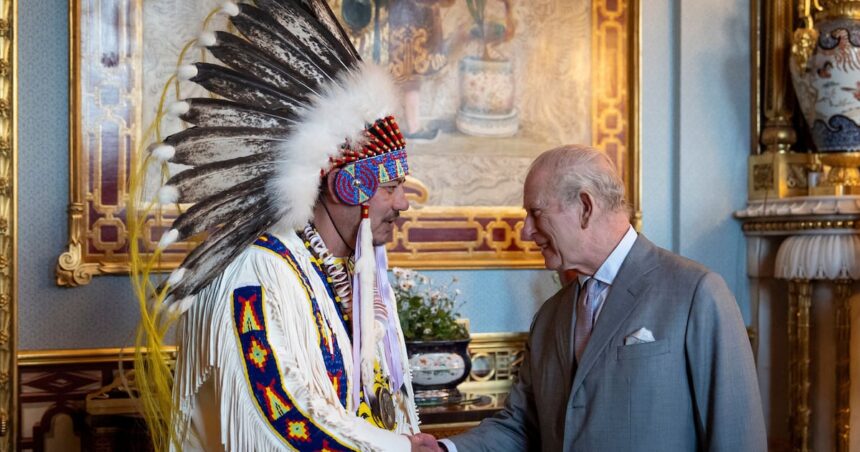

I’ve spent years covering Edmonton’s diverse communities, and this week brought news that stopped me in my tracks. Treaty 6 Chiefs traveled across the ocean to speak directly with King Charles about growing concerns over Alberta separation talks. The weight of this moment stretches far beyond politics.
The meeting happened at Buckingham Palace, where Indigenous leaders presented their worries about what Alberta leaving Canada might mean for Treaty rights. These aren’t abstract concerns debated in boardrooms. They touch the lives of thousands of families right here in our province.
Treaty 6 territory covers much of central Alberta and Saskatchewan. It includes Edmonton, where I write these words. The Treaty was signed in 1876 between the Crown and First Nations. That relationship forms the foundation of Indigenous rights today.
Chief Tony Alexis from Alexis Nakota Sioux Nation led the delegation. He told reporters the Chiefs needed clarity about Treaty obligations if Alberta separates. “Our Treaties are with the Crown,” he explained during a press conference. “We need to understand what happens to those promises.”
The separation conversation has gained momentum over the past two years. Some Albertans feel frustrated with federal policies on energy and resources. Premier Danielle Smith has discussed exploring greater provincial autonomy. She hasn’t called for full independence, but the talk makes many people nervous.
I’ve covered community forums where this topic sparks heated debate. Some residents see separation as economic freedom. Others worry about dividing families and disrupting lives. Indigenous communities face unique stakes in this conversation.
Grand Chief George Arcand Jr. from the Confederacy of Treaty Six First Nations accompanied the delegation. He emphasized that Treaties aren’t just historical documents. They’re living agreements that guarantee rights to education, healthcare, and land use. “These promises don’t expire,” he said firmly.
The Chiefs raised specific questions with King Charles. What happens to federal funding for Indigenous programs? How would land rights transfer? Who enforces Treaty obligations without federal oversight? These questions demand answers before any separation talk goes further.
Dr. Hadley Friedland, a law professor at the University of Alberta, has studied Treaty relationships for years. She notes that Treaties create obligations between Indigenous nations and the Crown. “The Crown means the federal government in our constitutional structure,” she explained in a recent interview. Separation would fundamentally alter that structure.
Walking through Edmonton’s river valley last week, I thought about what connects us here. The North Saskatchewan River flows through Treaty 6 territory. It connected communities long before Canada existed. Those connections run deeper than provincial boundaries.
The economic arguments for separation focus on oil revenue and federal transfers. Alberta contributes significantly to national coffers. But Indigenous communities point out they never agreed to provincial jurisdiction replacing Crown obligations. Their consent matters legally and morally.
Chief Vernon Saddleback from Samson Cree Nation joined the London meetings. He stressed that First Nations must participate in any constitutional discussions. “Nothing about us without us,” he said, echoing a principle that should guide all government decisions affecting Indigenous peoples.
The timing of this meeting carries significance. King Charles has shown interest in reconciliation with Indigenous peoples. He met with residential school survivors during his 2022 Canadian visit. The Chiefs hoped his influence might encourage serious dialogue.
I’ve interviewed Treaty 6 members who express frustration with being overlooked. Separation debates often focus on economics and politics. Indigenous rights get mentioned as afterthoughts. This delegation made sure their concerns reached the highest levels.
Legal experts say separation would require constitutional amendments. That process demands provincial and federal agreement. Indigenous nations argue they deserve a seat at that table. Their Treaties predate Confederation itself.
The financial implications run deep. Federal funding supports Indigenous healthcare through the Non-Insured Health Benefits program. Education funding flows from Crown obligations. Child welfare services receive federal support. Who assumes these responsibilities after separation?
Some separation supporters argue Alberta could honor Treaties independently. But Chiefs remain skeptical. They’ve watched provincial governments cut services and challenge rights. Federal Treaty obligations provide crucial protections.
Elder Margaret Goodtrack from Enoch Cree Nation shared her perspective with local media. She remembered stories her grandmother told about Treaty negotiations. “Our ancestors made agreements in good faith,” she said. “We expect those agreements to be honored.”
The delegation returned to Alberta with no concrete answers. Buckingham Palace issued a brief statement acknowledging the meeting. It mentioned the King’s continued commitment to reconciliation. Specific policy discussions remain between Indigenous leaders and Canadian governments.
Premier Smith’s office responded cautiously to the London trip. A spokesperson said the province respects Treaty relationships. They emphasized no formal separation process has begun. The statement felt careful, almost evasive.
I’ve noticed how separation talk ebbs and flows with commodity prices and federal elections. But for Treaty 6 communities, this isn’t political theater. Their rights and futures hang in the balance. They’re demanding to be heard before any irreversible decisions get made.
The broader Canadian public should pay attention to these concerns. Indigenous rights aren’t regional issues. They reflect our national character and constitutional foundations. How we address Treaty obligations during constitutional debates reveals our commitment to reconciliation.
Moving forward, meaningful consultation must happen. Indigenous leaders need places at negotiating tables. Their legal rights and historical agreements deserve respect. Any separation discussion that ignores these voices lacks legitimacy.
This story continues developing. The Chiefs have requested formal meetings with federal officials. They want written guarantees about Treaty protections. They’re also building alliances with other Indigenous nations facing similar uncertainties.
Standing in Churchill Square yesterday, I watched families from dozens of backgrounds sharing public space. Edmonton’s diversity includes deep Indigenous roots and newcomer dreams. Whatever our political future holds, we must build it together, honoring the agreements that made this place possible.