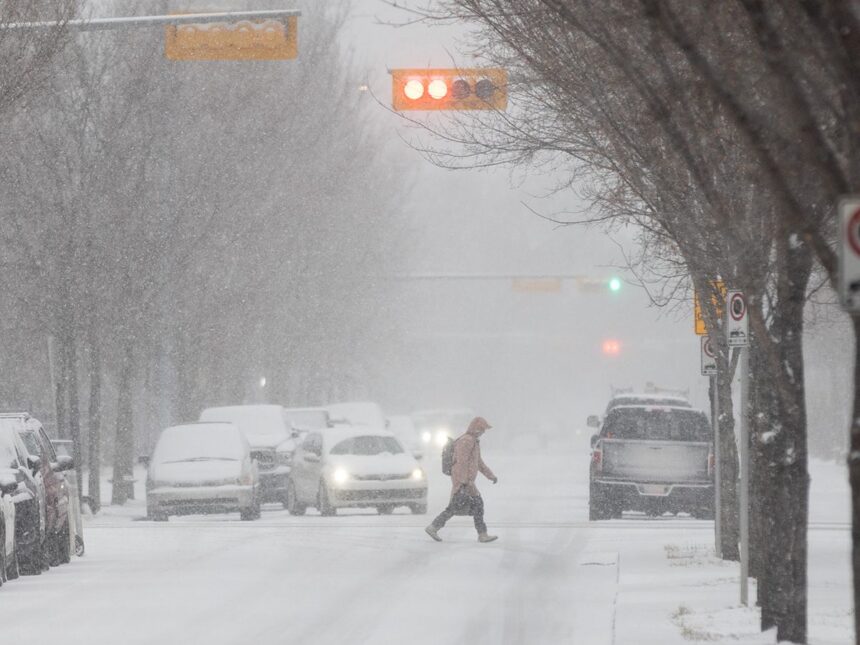

The special weather statement that had Calgary residents bracing for another spring snowstorm has officially ended. Environment and Climate Change Canada lifted the warning after much of the anticipated storm moved through the city overnight.
I’ve covered enough Calgary weather events to know this city never quite escapes winter’s grip easily. This particular storm threatened to dump up to 20 centimeters of snow across the metro area by Monday. The overnight hours brought the heaviest accumulation, with conditions improving as Monday morning progressed.
The weather agency’s initial statement warned of poor travel conditions throughout the city and surrounding regions. Highway 1 and Highway 2 corridors west of Calgary faced the brunt of the system. Those major arteries always seem to catch the worst when these spring storms roll through from the west.
Foothills communities and central Alberta still face additional snowfall. Environment and Climate Change Canada forecasts another five to 10 centimeters for those areas by Monday afternoon. The mountain shadow effect creates unpredictable patterns across our region.
ECCC meteorologist Erin Staunton emphasized the challenge of pinpointing exact snowfall locations. “It could potentially impact Calgary or surrounding areas, but it is going to be very, very localized,” she explained during the warning period. “Some areas might see kind of little to no snow, but other areas might see some very quick accumulations of heavy snow.”
That localized nature of spring storms feels familiar to longtime Calgarians. One neighborhood gets buried while another barely sees flurries. I’ve driven from bone-dry pavement in the southwest to snow-packed roads in the northwest countless times during these events.
The variation even occurs within city limits. Staunton warned that different Calgary neighborhoods could experience dramatically different conditions. “Areas that do end up under those heavy snow bands could see potentially 15 to 25 centimeters if those heavy bands do linger in one area for any length of time,” she noted.
Monday’s 5 a.m. forecast brought better news. Snow was expected to taper off by late morning. Temperatures hovered slightly below freezing, typical for Calgary’s unpredictable spring weather patterns.
The weather agency advised commuters to budget extra travel time for Monday morning. Conditions on Calgary roads can shift rapidly during these systems. What starts as clear pavement can become treacherous within minutes.
“Be sure to drive according to conditions, and also do be aware that conditions could change quite quickly over a short distance,” Staunton cautioned. That’s sound advice I’ve learned to follow after covering too many weather-related accidents over the years.
Mayor Jeromy Farkas reassured residents through social media that city crews were monitoring conditions closely. Anti-icing materials would be deployed across Calgary roads as needed. The city’s response protocol kicks into gear quickly when weather threatens.
“During snowfall, crews focus on plowing and applying material to major roads like Crowchild Trail, Glenmore Trail, Macleod Trail and Memorial Drive,” Farkas posted on X. Those arterial routes carry the bulk of our commuter traffic during rush hours.
City crews also maintain vigilance over trouble spots. Bridges freeze first, creating hazardous conditions before surrounding roadways deteriorate. Hills throughout Calgary’s varied terrain present additional challenges. Key intersections across the city receive priority attention during active snowfall.
Calgary Transit issued warnings about bus detours due to snowy conditions. Public transit routes adjust when roads become impassable. Regular commuters know to check for service updates during winter weather events.
Spring snowstorms test this city’s resilience every year. We’ve seen May snowfalls before, though they never stop surprising newcomers. Long-term residents have learned to keep winter tires on longer than the calendar might suggest.
The economic impact of these storms extends beyond immediate travel disruptions. Construction projects face delays. Outdoor events get postponed. Local businesses along affected corridors see reduced foot traffic during the worst conditions.
Climate patterns across Alberta have shown increasing variability in recent years. Spring weather swings between unseasonably warm and winter-like conditions more frequently. The predictability that older generations remember seems less reliable now.
Environment and Climate Change Canada’s forecasting technology has improved dramatically. Meteorologists can identify potential storm systems days in advance. However, pinpointing exact snowfall amounts and locations remains challenging with these localized spring systems.
The lifting of the special weather statement signals improving conditions. Calgary residents can expect gradual clearing through Monday afternoon. Temperatures should climb above freezing in coming days, helping melt accumulated snow.
Road crews will continue monitoring conditions even after snowfall ends. Melting and refreezing cycles create black ice hazards. Those invisible patches cause accidents when drivers assume roads are safe.
This storm serves as another reminder of Calgary’s unique climate challenges. We occupy a geographic position where prairie meets mountains. Weather systems interact unpredictably across that transition zone. Arctic air masses collide with Pacific moisture, creating dramatic swings.
The resilience Calgary shows during these events reflects decades of experience. Infrastructure investments in snow removal equipment pay dividends during storms. Public communication systems keep residents informed and prepared.
As the weather statement ends, life returns to normal across Calgary. Snow melts, roads clear, and the city moves forward. Until the next system approaches, we enjoy whatever weather comes our way.