
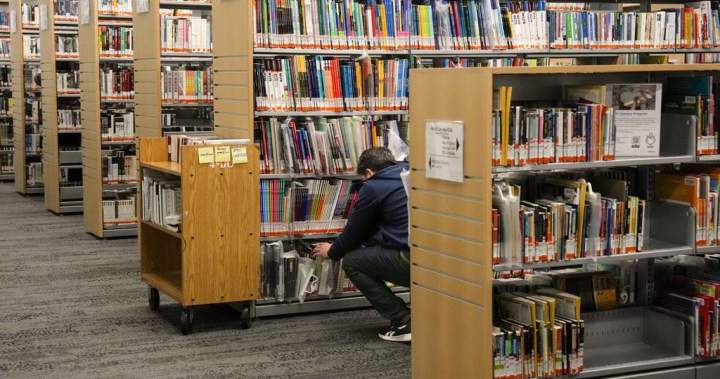

The province dropped new rules Thursday that will change how Calgary’s public libraries handle certain books. It’s a move that’s stirring up plenty of debate across the city.
Municipal Affairs Minister Dan Williams stood before reporters and made his pitch clear. No books will disappear from shelves entirely. But some material showing explicit sexual images will need different handling. Kids fifteen and under won’t be able to grab these books off shelves anymore.
Williams held up examples of what he’s talking about. Graphic sexual content that he says doesn’t belong in the hands of children browsing library aisles. His solution involves putting these materials behind counters or in restricted sections. Staff would control access.
I’ve covered plenty of legislative announcements over the years. This one hit different. The room felt tense as Williams explained the bill’s mechanics. He kept emphasizing balance between protecting kids and keeping libraries functioning as they always have.
The government already made similar moves in school libraries months back. Some books got pulled then. Now they’re extending that approach to public spaces where families spend Saturday afternoons.
Calgary Mayor Jeromy Farkas told reporters his team is still digging through the legislation’s details. He’s trying to figure out exactly what this means for our city’s library system. From what he’s heard in conversations with provincial ministers, standalone municipal libraries might not face the same restrictions.
Farkas expressed relief about that possibility. Municipal autonomy matters here. Calgary runs its own show when it comes to community services. He doesn’t want provincial overreach mucking up local decision-making.
The mayor found plenty to like in other parts of the bill though. New accountability frameworks for city councillors got his endorsement right away. These measures would create enforceable conduct standards and bring in third-party investigators when serious misconduct allegations surface.
Salary disclosure requirements also made the cut. Municipalities will need to publicly reveal compensation above certain thresholds. Farkas supports that transparency. Calgarians deserve to know how their tax dollars flow.
Opposition NDP Leader Naheed Nenshi wasn’t having any of it. He tore into Williams’ proposal with sharp criticism at the legislature. His mockery focused on the practical absurdity he sees in enforcement.
Nenshi painted a picture of government library inspectors roaming through facilities. He questioned what they’d wear, how they’d work, whether they’d need librarian training. The whole concept struck him as government overreach gone wild.
The NDP leader connected this legislation to bigger concerns about personal freedom. He accused the Smith government of dictating what Albertans can read, see, and think. Human rights take a backseat when government controls access to information, Nenshi argued.
The deficit came up too. Alberta’s facing a nine-point-four billion dollar shortfall. Nenshi questioned spending money on library monitoring when fiscal responsibility should dominate priorities.
I’ve watched plenty of political theater in my years covering Calgary news. This exchange captured something deeper than typical partisan sparring. Two fundamentally different visions for how government should operate clashed in real time.
Williams sees reasonable safeguards protecting children in public spaces. Parents bringing kids to libraries shouldn’t worry about stumbling across explicit material. His framework tries threading that needle.
Nenshi views the same proposal as authoritarian impulse dressed up in family-friendly language. Who decides what’s appropriate? Where does restriction end? Those questions drive his opposition.
Calgary’s library system serves diverse communities across the city. Families use these spaces differently. Some want maximum protection for young readers. Others trust parents and librarians to guide choices without government intervention.
The bill doesn’t just affect Calgary either. Every municipality with public libraries across Alberta faces these changes. Implementation details remain fuzzy though. How will libraries actually separate materials? What training will staff need? Who covers additional costs?
Local librarians haven’t issued official responses yet. Behind the scenes, conversations are happening about logistics and implications. These professionals built careers around connecting people with information. New restrictions complicate that mission.
I reached out to several library board members for comment. Most declined to speak publicly until they review the full legislation. One told me off the record that concerns run deep about workload increases and unclear guidelines.
The timeline for implementation hasn’t been announced. Williams said municipalities will get guidance on compliance expectations. But specifics about deadlines and enforcement mechanisms remain unclear.
Calgary faces unique considerations too. Our library system ranks among Canada’s busiest. Millions of items circulate annually. The central downtown branch alone sees thousands of visitors weekly.
Retrofitting operations across multiple locations will take coordination and resources. Farkas acknowledged these practical challenges when discussing the legislation. He’s waiting for clearer provincial direction before committing to specific local responses.
This debate touches nerves because it connects parenting, freedom, and government power. No easy answers exist when competing values collide. Williams believes he’s protecting kids. Nenshi thinks he’s protecting liberty.
Calgary residents will ultimately judge whether these restrictions serve community interests. Public feedback tends to shape policy implementation more than initial announcements suggest.
The coming weeks will reveal how this plays out locally. Council discussions, library board meetings, and community forums will all factor into Calgary’s response. Mayor Farkas signals openness to provincial direction while protecting municipal autonomy.
One thing’s certain after covering Alberta politics for years. Controversies like this rarely fade quietly. Expect ongoing debate as implementation details emerge and real-world impacts become clear.