
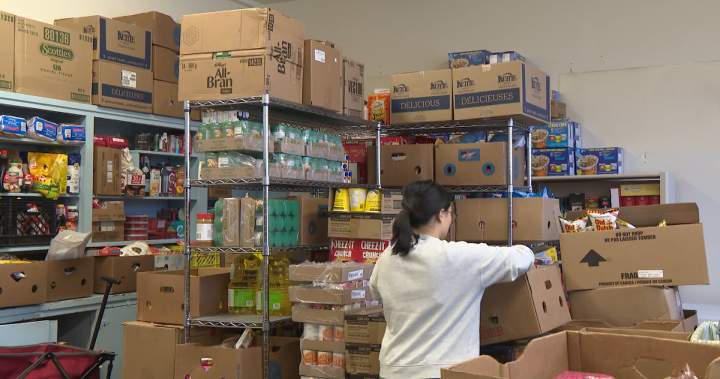

The line outside the Calgary Food Bank tells a story I’ve covered too many times lately. Families waiting. Seniors clutching shopping bags. Young professionals who never imagined needing help.
This isn’t just a Calgary problem anymore. From Moose Jaw to Toronto, food banks across Canada are buckling under weight they were never designed to carry. And they’re making impossible choices about who gets fed.
Melissa From runs the Calgary Food Bank. She also sits on the board of Food Banks Alberta. When she talks about unprecedented demand, she’s not exaggerating. Last month alone, 132,402 Albertans needed food bank assistance. More than a third were children.
“We have some food banks that are having to make the decision to give less food to more people,” From told reporters recently. She’s watched smaller communities struggle the most. They have fewer donors. Less money. No easy answers.
The numbers paint a grim picture. Four years ago, Moose Jaw’s food bank served a manageable crowd. Today, visits have jumped 150 percent. The organization recently announced it can only distribute food once monthly now. They used to offer twice-monthly pickups.
From traces the crisis back to COVID-19. The pandemic created what she calls a pivotal moment. Jobs disappeared overnight. Incomes became uncertain. Then inflation hit like a second wave. Mortgages climbed. Gas prices soared. Grocery bills doubled for some families.
I’ve reported on Calgary’s economy for years. The boom-and-bust cycle isn’t new here. But this feels different. The people showing up at food banks aren’t just between jobs. Many are working full-time and still can’t make ends meet.
Ontario faces identical pressures. Feed Ontario reports serving over one million people in 2025. Those individuals accessed services more than 8.7 million times. Think about that. Someone needing help nearly nine times to get through one year.
Carolyn Stewart leads Feed Ontario. She surveyed her network recently. Only 33 percent of food banks said they could actually meet demand. The rest had to adapt or cut back.
“Whether that be having to adapt their services, reduce from every single week to visiting twice a month,” Stewart explained. Some locations now provide five days of food instead of seven. Others eliminated wraparound support programs entirely.
The adaptation sounds clinical. The reality is brutal. A family that once received a week’s worth of groceries now gets enough for five days. Then what?
Stewart shared something that stuck with me. Some food bank employees are buying food with their own money. They’re supplementing their programs because donations have dried up. Previous donors are struggling too. The circle of need keeps expanding.
Toronto and Calgary share this burden despite their differences. Both cities have strong economies on paper. Both attract ambitious workers. Yet both are watching residents line up for basic necessities.
Kirstin Beardsley runs Food Banks Canada nationally. She pointed to housing costs as a major driver. Rent in Calgary has climbed steadily. Toronto remains one of the country’s most expensive cities. When half your income goes to housing, food becomes negotiable.
“This isn’t a problem for one part of the country or one type of community,” Beardsley said. She’s right. Vancouver sees the same patterns. So does tiny Truro, Nova Scotia.
Food Banks Canada’s latest Hunger Count report revealed troubling details. More than half of food banks gave out less food than usual in 2025. Nearly a quarter ran completely out before meeting demand.
Imagine managing a food bank. You open the doors knowing you can’t help everyone. You make calculations about who needs it most. A senior on fixed income? A single parent with three kids? The newly unemployed worker?
From emphasized this reality. “We have some folks who are having to figure out how to triage the clients that are coming to them and who needs support the most,” she said. Triage is a medical term. It shouldn’t apply to feeding people.
Despite the strain, Stewart delivered an important message. Don’t let embarrassment or fear keep you away. “If you’re in need and you’re in need of food, please come in the door,” she urged.
I’ve interviewed countless Calgarians who delayed seeking help. Pride got in the way. They thought things would improve. They worried about taking food from someone needier. But hunger doesn’t wait.
Beardsley believes government action at all levels is essential. Affordable housing policies. Food price regulations. Income support programs. But she cautions against simple solutions.
“The thing about food insecurity is there isn’t sort of a silver bullet or a one-size-fits-all,” Beardsley noted. Calgary’s oil-driven economy requires different approaches than Toronto’s finance sector. Rural Saskatchewan faces unique challenges.
I’ve covered enough city council meetings to know policy moves slowly. Provincial budgets get debated endlessly. Federal programs take years to implement. Meanwhile, food banks operate in crisis mode daily.
The pandemic exposed cracks in our social safety net. Inflation widened those cracks into chasms. Now we’re watching essential services ration basic necessities.
Walking past the Calgary Food Bank recently, I noticed something. The line included people in business casual clothing. Construction workers still in their gear. Students with backpacks. This crisis doesn’t discriminate.
From knows her organization can’t solve systemic poverty. Food banks were meant as emergency stopgaps. They’ve become permanent infrastructure. That should concern everyone.
Toronto’s situation mirrors Calgary’s in uncomfortable ways. Both cities pride themselves on opportunity. Both attract newcomers seeking better lives. Yet both are watching food insecurity spread like wildfire.
Feed Ontario’s statistics show 8.7 million visits in one year. That’s not 8.7 million people. That’s repeat visits. People coming back again and again because their circumstances haven’t improved.
The donation decline creates a vicious cycle. Food banks need more resources as demand grows. But potential donors face their own financial pressures. Corporate contributions shrink during economic uncertainty. Individual giving drops when budgets tighten.
Beardsley’s call for multi-level government intervention makes sense. But political will moves at its own pace. Elections change priorities. Economic forecasts shift focus. Food insecurity remains constant.
I’ve reported on Calgary long enough to recognize patterns. Economic downturns hit hard here. But recoveries usually follow. This time feels less predictable. The factors driving food bank demand aren’t temporary.
Housing costs won’t suddenly drop. Inflation might ease but prices rarely retreat. Jobs may return but wages lag behind living costs. The gap between income and expenses keeps growing.
From’s observation about smaller communities resonates. Calgary has resources. Corporate donors. Foundation grants. Rural food banks operate on shoestring budgets and volunteer energy. When demand doubles, they simply can’t keep up.
The choice facing food banks is impossible. Serve fewer people fully or more people partially? Turn away those who don’t meet arbitrary thresholds? Watch shelves empty while people wait?
Stewart’s reminder to seek help matters. Stigma shouldn’t prevent anyone from eating. But overcoming that stigma requires courage many don’t have. Especially in cities like Calgary and Toronto where success is expected.
This story isn’t ending anytime soon. Food banks will continue adapting. Demand will likely keep growing. And communities across Canada will grapple with a reality nobody wanted.
The question isn’t whether we can afford to address food insecurity. It’s whether we can afford not to.