
Walking through the Stollery Children’s Hospital feels different lately. There’s a quiet pride in the hallways. Staff members smile a bit wider when discussing their work. Parents clutching coffee cups in waiting rooms have started hearing something remarkable about the care their children receive here in Edmonton.
The hospital’s ECMO program just earned something extraordinary. Global recognition arrived for technology that literally keeps the tiniest hearts beating when nothing else can. This isn’t just another medical milestone. It represents years of dedication from doctors and nurses who refused to accept that some children were too sick to save.
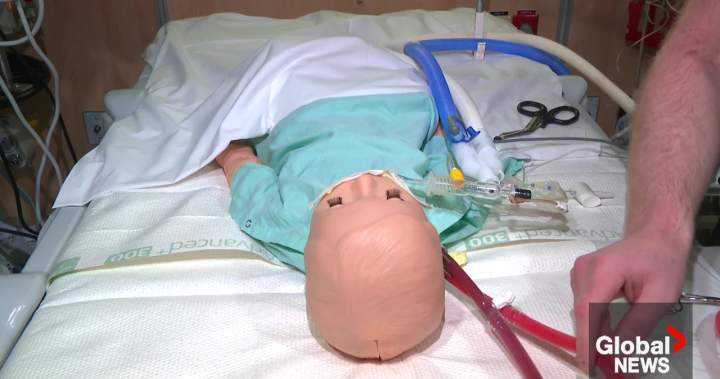
ECMO stands for extracorporeal membrane oxygenation. The name sounds complicated because the technology is sophisticated. Think of it as a temporary artificial heart and lung system. When a child’s organs can’t supply enough oxygen to keep them alive, ECMO takes over that crucial job. The machine pumps blood outside the body, adds oxygen, removes carbon dioxide, then returns it. This gives damaged organs precious time to heal.
Dr. Ari Joffe leads the Stollery’s pediatric intensive care unit. He explained the significance of this recognition during a recent conversation. “We’re now among elite programs worldwide,” he said. His voice carried weight when he added that only a handful of Canadian hospitals operate pediatric ECMO programs. The Stollery serves all of Northern Alberta and beyond.
The program treated over sixty children last year alone. Each case required round-the-clock monitoring from specialized teams. Nurses train for months before touching ECMO equipment. One small mistake could prove fatal. The pressure never lets up when you’re responsible for a child’s heartbeat.
I spoke with Lindsay Schmidt, a respiratory therapist who works directly with ECMO patients. She described the emotional reality behind the statistics. “You’re looking at parents who’ve been told their child might not survive,” she shared. “Then you watch that same child walk out of here weeks later.” Her eyes got misty remembering specific families. She couldn’t share names due to privacy rules, but the impact was obvious.
The recognition came from the Extracorporeal Life Support Organization. This international body sets standards for ECMO programs globally. They evaluate everything from equipment quality to staff training protocols. Hospitals must demonstrate consistent success rates and follow strict safety guidelines. The Stollery met every benchmark.
What makes this achievement particularly meaningful is the program’s growth trajectory. Ten years ago, the Stollery performed ECMO on fewer than twenty children annually. Today that number has tripled. The increase doesn’t reflect more sick children necessarily. Instead, it shows expanding capabilities and growing regional trust in the program’s expertise.
Dr. Gonzalo Garcia Guerra serves as the ECMO program director. He emphasized how collaboration drives their success. “Our cardiologists, surgeons, intensivists, nurses, and therapists function as one organism,” he explained. This teamwork matters because ECMO patients often face multiple organ failures simultaneously. Treating one system affects all the others.
The financial investment behind this program is substantial. Each ECMO machine costs roughly two hundred thousand dollars. The Stollery operates several units simultaneously during busy periods. Disposable circuits used for each patient run about ten thousand dollars. Then factor in specialized staff salaries and ongoing training expenses. Alberta Health Services committed these resources because outcomes justify every dollar spent.
Parents rarely understand ECMO when doctors first mention it. The technology seems like science fiction. Jenny Morrison experienced this firsthand two years ago when her daughter needed emergency heart surgery. Complications during recovery left the girl’s heart unable to pump effectively. Doctors suggested ECMO as a bridge solution.
“I didn’t even know this existed in Edmonton,” Morrison recalled when I reached her by phone. She’s since become an advocate for pediatric cardiac care. “They basically told us the machine would be her heart until hers could recover.” Four terrifying days passed with her daughter connected to tubes and monitors. Then the little heart started beating stronger. Today she’s a healthy seven-year-old who loves soccer.
These stories accumulate in the memories of Stollery staff members. They represent why people choose pediatric intensive care despite the emotional toll. The wins matter more because the stakes are so high. Every child who leaves the ICMU represents countless hours of expertise applied at critical moments.
The global recognition also highlights Edmonton’s broader medical reputation. Our city sometimes gets overlooked in conversations about Canadian healthcare excellence. Toronto and Vancouver typically dominate those discussions. But specialized programs like this prove that world-class care happens right here on University Avenue.
Dr. Joffe mentioned something important about what recognition means for future development. “It attracts talent,” he noted. Young doctors and nurses seeking ECMO experience now view the Stollery as a destination program. This creates a positive cycle where expertise draws more expertise.
The program also contributes to medical research advancing ECMO technology globally. Stollery physicians publish findings in international journals. They present at conferences where colleagues from Sydney to Stockholm compare techniques. Edmonton’s cold winters might keep some people away, but our medical innovations draw respect worldwide.
Looking ahead, program leaders envision expanding capabilities even further. New ECMO technologies emerge constantly. Smaller, more portable machines could allow earlier intervention. Better monitoring systems might predict complications before they become critical. The Stollery team stays current with every development.
For families facing medical crises, knowing this level of care exists locally provides immense comfort. Nobody wants their child in intensive care. But if that nightmare arrives, having access to globally recognized expertise makes the unbearable slightly more bearable. That’s what this recognition ultimately represents. Not just institutional pride, but genuine hope for families when they need it most.