
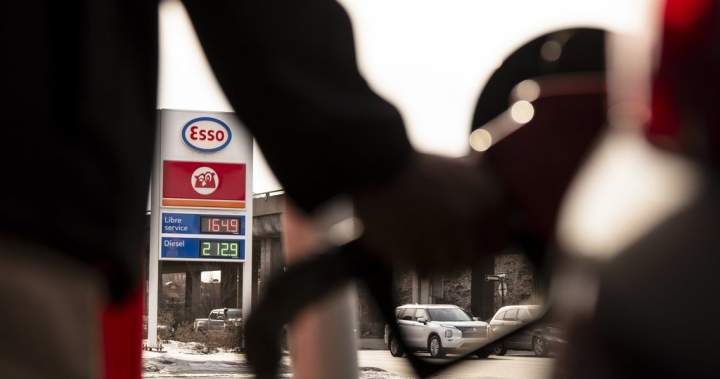

Driving across Toronto this morning, I noticed something that made my stomach sink. The gas station on Yonge Street flashed numbers I hadn’t seen in years. The price board showed figures that would make any commuter wince.
Easter weekend is approaching fast. Families across the Greater Toronto Area are planning trips to visit relatives. But there’s a harsh reality waiting at every pump. Gas prices are climbing again, and experts say relief isn’t coming anytime soon.
Patrick De Haan works as a petroleum analyst at GasBuddy. He’s been tracking these increases closely. His assessment isn’t encouraging for anyone planning a road trip.
“The price of oil obviously made a big jump up today, up about 10 per cent and that is quite likely to fuel gas prices that continue to rise over the course of the weekend,” De Haan explained in a recent statement.
The national average has already hit 180.8 cents per litre. That’s nearly nine cents higher than just last week. Toronto drivers are feeling this pinch acutely. The city’s already expensive fuel costs are climbing even higher.
The situation stems from escalating tensions in the Middle East. War involving Iran began on February 28. Since then, oil markets have been in turmoil. The Strait of Hormuz, a critical shipping channel, has become a flashpoint.
Iran has restricted shipping traffic through this narrow waterway. About 20 percent of the world’s oil passes through there. When that flow gets disrupted, prices spike globally. Canada feels those shocks immediately.
I’ve covered economic stories for years in this city. This feels different from past price fluctuations. There’s an uncertainty hanging over the market. Nobody knows when normalcy might return.
Diesel prices are setting records too. De Haan predicts they could surpass 225 cents per litre within 48 hours. That’s devastating news for Toronto’s logistics industry. Trucking companies move goods throughout the region daily. Higher diesel costs mean higher prices for everything.
“Canadians want a way to get out of the mess that we’re witnessing. They’re going to have to spend more on airfare because the price of jet fuel has nearly doubled,” De Haan noted. “From things that are part of the economy, diesel is that fuel.”
The Canadian Automobile Association tracks these numbers nationally. Their current data shows 178.5 cents per litre as the national average. The lowest recent price occurred on March 3, hitting 134.2 cents.
That difference is staggering. In just over a month, prices have jumped more than 44 cents per litre. For a typical sedan with a 50-litre tank, that’s an extra $22 per fill-up.
Toronto has historically paid premium prices compared to other Canadian cities. February data from Statistics Canada showed the city at 132.2 cents per litre. That was before the crisis escalated. Now we’re looking at numbers substantially higher.
The increases aren’t uniform across Canada. Geography plays a surprising role in how severely each region gets hit. Coastal areas are experiencing the worst spikes.
“The markets that are more prone are markets where oil can be easily diverted elsewhere,” De Haan explained. “Essentially, Canada and the coastal regions of Canada are having now to compete with oil and refined products like gasoline and diesel that can easily be shipped away from Canada.”
British Columbia, Quebec, and the Maritime provinces are seeing particularly harsh increases. Vancouver was already at 171.3 cents in February. Those numbers have climbed significantly since then. Montreal started at 150.0 cents and has risen steadily.
Toronto sits in a middle zone. We’re not as isolated as Alberta. But we’re not as exposed as Vancouver either. Still, the increases hurt local families and businesses deeply.
Alberta enjoys the lowest prices nationally. Edmonton and Calgary benefit from proximity to oil production. They also have lower provincial taxes on fuel. Edmonton was at 118.5 cents in February. Calgary sat at 122.1 cents.
“Inland areas like Alberta are the cheapest. They have lower taxes, and that product can’t easily be exported,” De Haan said. Those regions experience “tamer” increases because they don’t compete as directly on global markets.
The political dimension adds complexity. Federal Conservatives are calling for tax cuts on gasoline. They argue Canadians need relief from these mounting costs. The government faces pressure to act.
But the root cause sits thousands of kilometers away. U.S. President Donald Trump addressed the nation recently. He didn’t mention his earlier deadline for Iran to reopen the Strait of Hormuz. He offered no clear solution for the supply disruptions.
That silence spooked markets. Oil prices surged Thursday in response. Traders saw no plan emerging to restore normal shipping. Without that, prices will keep climbing.
“The U.S. president has not come up with a plan to address the fact that the Strait of Hormuz is essentially blocked by the risk of attack by Iran,” De Haan observed. “Oil prices, gasoline and diesel prices will probably continue to go up the longer that there’s really no plan in sight.”
Canada has stayed out of the conflict officially. But we can’t escape the economic consequences. Global oil markets don’t respect national neutrality. When supply shrinks anywhere, prices rise everywhere.
“Canada doesn’t want to get drawn into the situation at hand,” De Haan said. “Until somebody figures out a way that ships can start sailing through the Strait, the global economy is going to continue to be impacted by a massive surge of diesel.”
Walking through downtown Toronto yesterday, I spoke with several small business owners. A florist on Queen Street told me delivery costs are eating into her margins. A restaurant owner in the Distillery District worries about food supplier price increases.
These ripple effects touch every corner of our economy. Diesel powers the trucks bringing goods to Toronto stores. Higher fuel costs mean higher prices on grocery shelves. It means more expensive restaurant meals. It affects everything.
Governments worldwide are urging citizens to drive less. Work-from-home policies are being reconsidered. Transit ridership might see increases as commuters seek alternatives. But for many Torontonians, driving remains essential.
Easter weekend travel plans now come with difficult calculations. Do families absorb the extra fuel costs? Do they cancel trips altogether? These aren’t easy choices.
Statistics Canada will release March data on April 20. Those numbers will show the full impact of this crisis. The picture likely won’t be pretty. We’re living through an energy crunch with no clear end date.
De Haan’s warning resonates. “This is very problematic, and it will continue to be problematic, and it’ll grow more problematic every day until it is addressed.”
Toronto has weathered economic storms before. This city adapts and perseveres. But this situation tests that resilience in new ways. We’re connected to global markets whether we like it or not.
The gas pumps tell that story clearly. Every time those numbers tick higher, we’re reminded how events halfway around the world reach directly into our wallets.