
I’ve been covering Toronto’s infrastructure debates for years, but the showdown over this proposed high-speed rail line feels different. This isn’t just another transit squabble. It’s a clash between two competing visions for Canada’s future, and Toronto sits right in the crosshairs.
Conservative Leader Pierre Poilievre stood in Peterborough this week and called the massive rail project a “boondoggle.” He wants the federal government to scrap the entire plan. The proposed line would connect Toronto to Quebec City, passing through Peterborough, Ottawa, Montreal, and several other communities. Poilievre argues the project would waste taxpayer money and disrupt local lives. He specifically mentioned farmland seizures and property expropriations that would affect people who wouldn’t even benefit from nearby stations.
The numbers behind this project are staggering. Alto, the Crown corporation running the show, estimates costs between $60 billion and $90 billion. That’s not pocket change. Construction on the first phase linking Montreal and Ottawa would start around 2029 or 2030. The full 1,000-kilometer network includes seven mandatory stops: Toronto, Peterborough, Ottawa, Laval, Montreal, Trois-Rivières, and Quebec City. I’ve walked past Union Station countless times imagining what this could mean for Toronto’s connectivity.
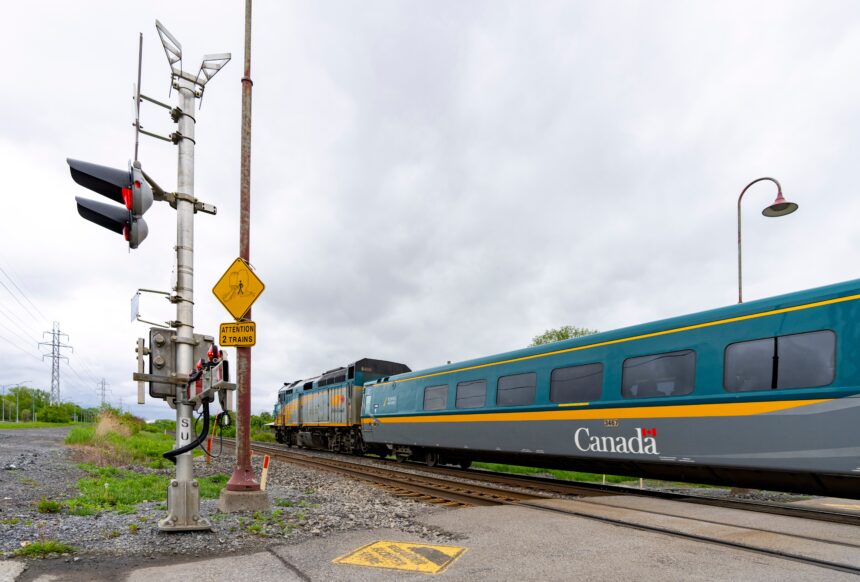
The proposed system would run 72 trains daily on dedicated electric tracks. Speeds would hit 300 kilometers per hour. Travel time between Toronto and Montreal would drop to three hours. Montreal to Ottawa would take under an hour. For anyone who’s endured the current Via Rail experience, those numbers sound almost fantastical. I’ve spent too many delayed hours on those aging trains not to feel the appeal.
Transport Minister Steven MacKinnon fired back at Poilievre on social media Tuesday. He accused the Conservative leader of lacking vision for job creation and economic growth. MacKinnon called the project a “generational investment” that would transform travel and connect communities across the corridor. The government claims it would boost GDP by $35 billion annually and create over 51,000 well-paying jobs. MacKinnon suggested Poilievre was “turning his back” on everyone from Quebec City to Toronto.
But here’s where the story gets complicated. Not everyone along the proposed route shares MacKinnon’s enthusiasm. A grassroots coalition has formed including farmers, small-town residents, and municipal councillors. They argue the rail corridor would slice through their communities and force hundreds of property expropriations. These folks see few benefits and massive disruption. I’ve spoken with rural residents over the years about similar projects, and their concerns deserve serious attention.
At least five townships and municipalities in eastern Ontario have passed resolutions opposing the southern route option. One has rejected the northern alternative too. Both the Ontario Federation of Agriculture and Quebec’s Union des producteurs agricoles want the project suspended. Three Facebook groups opposing the plan or raising concerns have attracted more than 14,000 members combined. That’s not insignificant grassroots organizing.
Alto is considering two possible corridors through eastern Ontario. One draws a direct line between Ottawa and Peterborough. The other follows a more southern arc. Kingston city council voted overwhelmingly last month to support the southern route, but with two conditions. They want Kingston included as a stop and the route following Highway 401 to avoid environmentally sensitive areas. Neither condition is currently part of the plan.
Poilievre highlighted existing Via Rail delays at his press conference. He suggested using the allocated funds to reduce debt, lower taxes, and fight inflation instead. “This $90-billion Liberal boondoggle does not make sense and it does not make dollars,” he declared. He also noted nobody would board this train until 2037 and pointed out the Canadian Pacific Railway took only four years to build.
That comparison deserves scrutiny though. Discussions about building a rail line across Canada began before Confederation in 1867. British Columbia joined Canada in 1871 partly because of promises for a railway connection within a decade. Actual construction started in 1881 and finished in 1885. But the human cost was enormous. Thousands of Chinese labourers were brought to Canada in the early 1880s to build the railroad. They received only a dollar daily, half what white workers earned. Hundreds died from accidents or illness due to dangerous work and poor living conditions.
Walking through Toronto’s diverse neighborhoods today, I think about those historical parallels. Major infrastructure projects always involve tradeoffs. They create winners and losers. They displace some communities while connecting others. The question isn’t whether this project is perfect. Nothing this large ever is. The question is whether the benefits justify the costs and disruptions.
From my vantage point covering Toronto’s business and development scene, I see legitimate arguments on both sides. High-speed rail could genuinely transform the Quebec City-Windsor corridor. It could strengthen Toronto’s economic connections to Montreal and Ottawa. It could reduce carbon emissions and highway congestion. Those aren’t small considerations in an era of climate change and urban growth.
But I also understand the farmers watching their land face expropriation. I sympathize with small-town residents who’ll endure construction disruption without gaining access to stations. The project’s $60 billion to $90 billion price tag is genuinely staggering in a country struggling with affordability and debt. And Via Rail’s current reliability issues don’t inspire confidence in government-run rail operations.
Toronto stands to gain significantly if this project succeeds. Better connections to Montreal and Ottawa would strengthen business ties and cultural exchange. The economic boost could ripple through our city’s economy. But we can’t ignore the costs imposed on communities outside major urban centers. Those voices matter too.
This debate will likely intensify as we move closer to potential construction dates. Political battle lines are already drawn. The outcome will shape Canada’s infrastructure landscape for generations. As a journalist watching this unfold, I’m reminded that the biggest infrastructure decisions are rarely simple. They’re about competing values, different visions, and whose priorities count most. Toronto’s stake in this fight is enormous, but so is everyone else’s along the proposed corridor.