
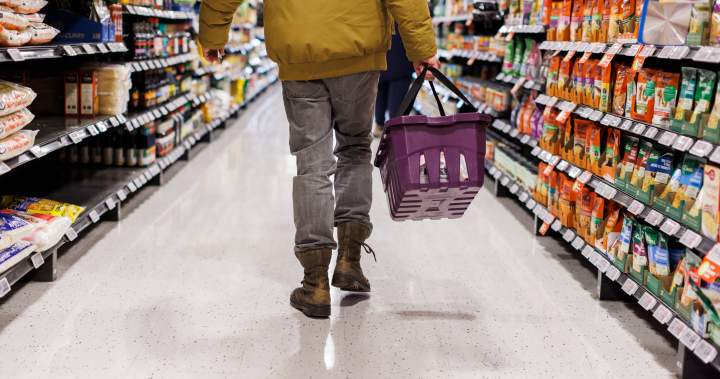

I’ve been watching rice prices at my local No Frills for months now, and something felt off. That familiar yellow bag of basmati seemed to creep up by a few cents every week. I chalked it up to typical inflation until a source at a major grocery distributor told me the real story. Geopolitical tensions halfway across the world are quietly reshaping what Canadians pay at checkout.
The conflict involving Iran isn’t just a distant headline anymore. It’s hitting Toronto grocery stores in ways most shoppers don’t realize. Rice, one of the most essential staples in kitchens across our city, faces serious supply chain disruptions. The situation demands attention because it affects everyone from students cooking in cramped apartments to families planning weekly meals on tight budgets.
Iran produces roughly 2.5 million metric tons of rice annually, according to the United Nations Food and Agriculture Organization. That’s a massive chunk of global supply. When tensions escalate in the region, shipping routes through the Strait of Hormuz become unreliable. About 21 percent of global petroleum passes through that narrow waterway, but so do countless cargo ships carrying agricultural products destined for North American markets.
Sylvia Martinez, a procurement manager at a Toronto-based food import company, explained the cascading effects during our conversation last week. “We’re seeing delays of up to three weeks for shipments that normally take ten days,” she told me. “Insurance costs have tripled for vessels traveling through the Persian Gulf, and those expenses get passed directly to consumers.” Her company imports basmati and jasmine rice varieties popular with Toronto’s diverse communities.
The disruption extends beyond Iranian rice exports. India and Pakistan, two of the world’s largest rice producers, rely on stable regional shipping lanes. When conflict threatens those routes, exporters demand higher prices to offset risk. Canadian importers then face a difficult choice: absorb the costs and hurt profit margins, or pass them along to grocery stores. The answer, unfortunately, usually lands on shoppers.
I spoke with David Chen, owner of three independent grocery stores in Scarborough, about price changes he’s witnessed. “Basmati rice jumped 18 percent since December,” he said while walking me through his warehouse. “My customers notice. They’re buying smaller bags or switching to cheaper varieties they don’t really want.” Chen’s stores serve predominantly South Asian and Middle Eastern communities where rice isn’t optional. It’s the foundation of nearly every meal.
The conflict affects more than just rice. Dried fruits, nuts, and pistachios from the region face similar supply problems. Iran ranks as the world’s largest pistachio producer, controlling about 47 percent of global exports according to the International Nut and Dried Fruit Council. Toronto’s specialty food stores, particularly along Yonge Street and in North York, stock these products heavily. Owners report customers expressing frustration at shrinking package sizes and rising prices.
Statistics Canada data from February shows grocery prices increased 3.4 percent year-over-year nationally. That figure masks sharper spikes in specific categories. Rice and grain products saw jumps closer to 7 percent in some regions. Toronto, with its reliance on imported foods to serve diverse populations, experiences these pressures more acutely than cities with less varied culinary needs.
The implications reach beyond immediate grocery bills. Food security experts worry about long-term access issues if conflicts persist. Dr. Rachel Hoffman, a food policy researcher at Toronto Metropolitan University, shared her concerns during a phone interview. “We’re seeing early signs of what climate change and geopolitical instability will mean for urban food systems,” she explained. “Cities like Toronto depend entirely on global supply chains. When those chains break, vulnerable populations suffer first and suffer most.”
I’ve noticed restaurants adjusting too. A Persian restaurant owner in North York, who asked to remain anonymous for fear of affecting supplier relationships, told me he’s reformulated menu items. “We can’t keep raising prices,” he said. “Customers have limits. So we use less saffron, smaller portions of certain rice dishes, and substitute ingredients where possible.” His struggle reflects a broader trend across Toronto’s restaurant industry.
Currency fluctuations compound the problem. The Canadian dollar’s weakness against the US dollar makes all imports more expensive. When geopolitical tensions drive up baseline commodity costs, the exchange rate multiplies the pain. A product that cost a Canadian importer 100 dollars last year might cost 125 dollars today, even if the supplier’s price only increased marginally.
Alternative suppliers can’t easily fill gaps. Canada imports rice primarily from the United States, India, Thailand, and Pakistan. When Middle Eastern sources become unreliable, demand shifts to other exporters. But those countries face their own challenges, from drought conditions to export restrictions protecting domestic supplies. Thailand experienced significant rice production declines last year due to irregular rainfall patterns, according to the Thai Rice Exporters Association.
Toronto’s food banks report increased demand for rice donations. Daily Bread Food Bank distributed 12 percent more rice in the first quarter of this year compared to the same period in 2024. Executive Director Neil Hetherington told me affordability pressures force more families to seek assistance. “When staple foods become unaffordable, people make impossible choices,” he said. “We’re seeing working families, not just unemployed individuals, relying on food banks now.”
The situation demands policy attention. Canada’s federal government could explore strategic grain reserves or subsidize essential food imports during crises. Some European countries maintain buffer stocks of staples to prevent price shocks. Ottawa hasn’t seriously considered similar measures, leaving Canadian households exposed to every global disruption.
I asked several grocery chains about their strategies for managing costs. Most declined to comment on record. One buyer at a major chain, speaking confidentially, admitted the situation feels unsustainable. “We’re squeezing suppliers and cutting costs everywhere possible,” the buyer said. “But there’s only so much we can do when fundamental supply problems exist.”
Shoppers can take small steps to mitigate impact. Buying larger quantities when prices dip helps, though not everyone has storage space or upfront cash. Exploring different rice varieties offers savings. Parboiled rice or medium-grain options often cost less than basmati or jasmine. Ethnic grocery stores sometimes offer better prices than major chains because of direct supplier relationships.
The broader lesson concerns vulnerability. Toronto’s food system, like most urban centres, operates on just-in-time delivery principles. Stores maintain minimal inventory. When disruptions occur, shelves empty quickly and prices spike. Building resilience requires rethinking how cities source and store essential goods.
I’ll keep watching those rice prices at No Frills. Each increase tells a story about global connections we usually ignore. A conflict thousands of kilometres away reaches into Toronto kitchens, affecting what families eat and how much they pay. That’s the reality of our interconnected world, for better and increasingly, it seems, for worse.