
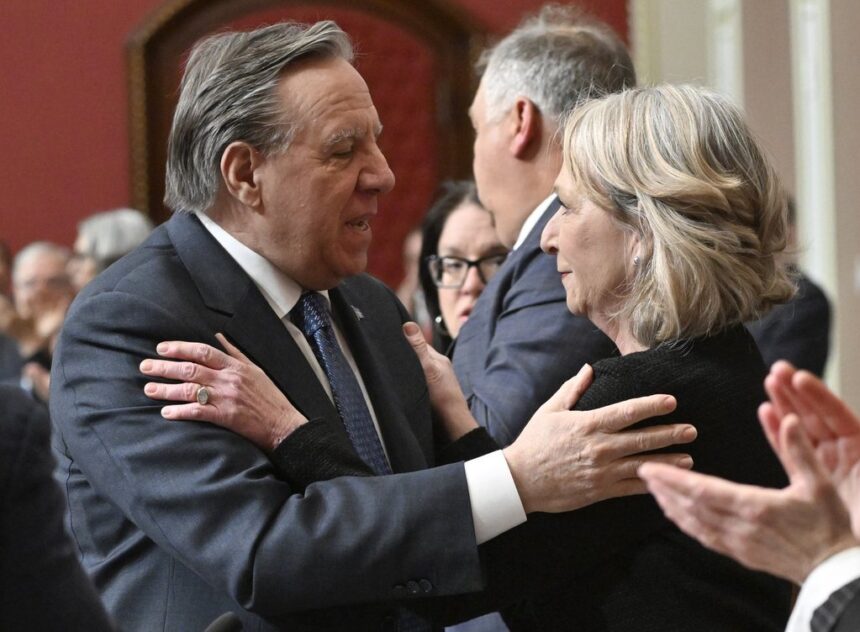

François Legault walked through the halls of the National Assembly this week knowing his time as premier draws to a close. The air felt different, perhaps heavier with history. After six years leading Quebec, his final sitting carries weight.
I’ve covered countless political transitions in this city. Few feel as significant as this moment. Legault transformed Quebec’s political landscape when he swept into power in 2018. His Coalition Avenir Québec ended decades of Liberal and Parti Québécois dominance.
The National Assembly enters recess next week. When legislators return, Quebec will have a new leader. The CAQ scheduled its leadership convention for April 12. Either Christine Fréchette or Bernard Drainville will take the oath of office shortly after that weekend gathering.
Legault’s journey from airline entrepreneur to premier reads like a uniquely Quebec story. He co-founded Air Transat in 1987, building it into a major carrier. That business acumen shaped his political vision. He entered politics in 1998 under Parti Québécois premier Lucien Bouchard. The PQ gave him his first taste of governance.
But Legault saw a different path forward. He founded the CAQ in 2011. The party positioned itself between federalism and sovereignty. Quebec needed economic growth and practical solutions, he argued. The traditional political debate felt exhausted to many Quebecers.
His 2018 victory shocked the establishment. The CAQ won seventy-four seats. Liberals fell to official opposition. The PQ collapsed to just ten seats. Quebec wanted change, and Legault delivered the message clearly.
Walking through Old Montreal last month, I heard residents debating his legacy. Opinions varied sharply. Some praised his pandemic leadership. Others criticized his approach to immigration and language laws. This complexity defines his tenure.
COVID-19 became Legault’s defining challenge. His approval ratings soared above eighty percent during the early pandemic months. Daily briefings became must-watch television across the province. Quebecers appreciated his direct communication style. He spoke plainly about difficult decisions.
The pandemic tested Quebec severely. Long-term care homes suffered devastating losses. Legault appeared visibly emotional addressing these tragedies. His government implemented strict measures. Curfews, business closures, and vaccine mandates followed. Some applauded decisive action. Others condemned government overreach.
Immigration policy created persistent friction with Ottawa. Legault consistently demanded greater provincial control over immigration levels. He argued Quebec needed to protect French language and culture. Federal Liberals pushed back against these demands. Tensions escalated regularly between Quebec City and Ottawa.
Bill 21 remains perhaps his most controversial legacy. The secularism law prohibits public sector workers from wearing religious symbols. Teachers, police officers, and judges face restrictions. Supporters call it essential for Quebec’s secular values. Critics see discrimination against religious minorities.
The law sparked fierce debate across Montreal. I’ve interviewed Montrealers on both sides. A teacher in Verdun told me she supports separation of religion and state. A Muslim student in Côte-des-Neiges described feeling excluded. These divisions run deep.
Federal courts challenged the law’s constitutionality. Legault’s government invoked the notwithstanding clause. This constitutional tool shields legislation from certain Charter challenges. The move intensified national attention on Quebec’s approach.
Language legislation also marked his tenure. Bill 96 strengthened French language protections. The law expanded French requirements for businesses and services. English-language institutions expressed concerns about access. Francophone groups praised efforts to protect Quebec’s linguistic character.
Montreal’s business community experienced mixed results under Legault. His government reduced business taxes and streamlined regulations. Economic growth remained steady before the pandemic. Some sectors thrived while others struggled.
The cultural sector benefited from increased investment. Quebec film and television production attracted major international projects. I’ve watched Montreal’s entertainment industry expand significantly. Studios opened across the metropolitan area. Jobs multiplied for local artists and technicians.
Climate policy presented contradictions. Legault supported electric vehicle adoption and battery manufacturing. His government invested heavily in green technology. Yet he also backed the contentious third link highway project near Quebec City. Environmental groups criticized this apparent inconsistency.
His successor faces significant challenges. Healthcare system backlogs remain enormous. Emergency rooms overflow regularly. Staff shortages plague hospitals across Quebec. The next premier inherits these pressing problems.
Housing affordability has reached crisis levels in Montreal. Rental vacancy rates hover near zero. Prices climbed dramatically during Legault’s tenure. Young Quebecers struggle to find affordable housing. The issue demands urgent attention.
Both leadership candidates promise continuity with some changes. Fréchette brings municipal government experience from her time as Sherbrooke mayor. Drainville served in Legault’s cabinet, managing education and French language files. Their visions differ on specifics but maintain CAQ principles.
Legault plans to remain as elected member for L’Assomption until October’s general election. His presence in the legislature continues. The transition period allows institutional knowledge transfer. Quebec benefits from this stability during leadership change.
I remember interviewing him shortly after his 2018 victory. He spoke passionately about Quebec’s potential. Economic nationalism drove his vision. He wanted Quebec competing globally while protecting its distinct identity. That ambition never wavered.
His legacy will fuel debate for years. Economic performance, pandemic management, language protection, and federal relations define his record. Quebecers will judge these accomplishments and failures. History requires distance for proper perspective.
Sitting in a café near the National Assembly yesterday, I overheard two civil servants discussing the transition. They wondered about policy continuity. Change creates uncertainty even within the same party. Quebec enters a new chapter.
The political landscape Legault leaves differs dramatically from what he inherited. The CAQ established itself as Quebec’s dominant force. Traditional parties struggle for relevance. October’s election will test whether this transformation endures.
As Legault takes his final questions in the legislature, Quebec watches closely. Leadership transitions matter profoundly in parliamentary systems. Power transfers peacefully but significantly. Democracy’s machinery continues turning.