
I’ve been watching Montreal drivers circle blocks hunting for cheaper gas stations lately, and it’s become something of an urban ritual. We’re all feeling the pinch at the pump, especially after those brutal price spikes we saw earlier this year. But the provincial government just rolled out something that might actually make our lives a bit easier.
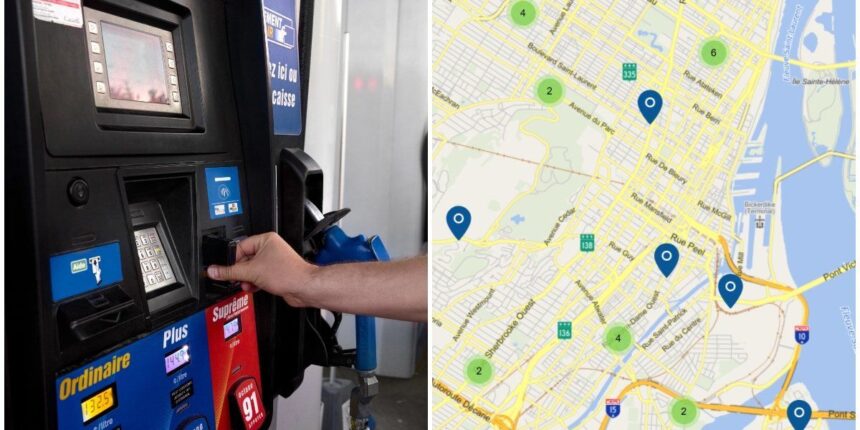
The Régie de l’énergie launched a free interactive map this week called Régie essence Québec. It’s basically a live tracker showing gas prices across the entire province. More than 2,500 service stations are feeding their prices into the system, including those Costco locations we all love.
What caught my attention is how this differs from apps like GasBuddy. This isn’t crowdsourced information that may or may not be accurate. Since April 1, every gas retailer in Quebec is legally obligated to report their prices to this platform. That means the data you’re seeing is current and comprehensive, not just whatever someone remembered to update.
The tool lives at regieessencequebec.ca. You can access it from your phone or computer without creating an account or signing up for anything. Just open the site, look at your area, and tap any station to see live prices for regular, super, and diesel.
Quebec’s energy board says this is part of new legislation aimed at bringing transparency to the provincial gas market. It’s actually the first tool of its kind anywhere in Canada. Other provinces might be watching to see how this works out.
I’ve been covering Montreal long enough to remember when gas prices felt predictable. Those days seem gone. Earlier this year, we watched per-litre costs jump nearly 30% in about three weeks. The spike came from global oil market chaos tied to escalating conflict involving the U.S., Iran, and Israel.
Prices haven’t really come back down to where they were. I still wince a little every time I pull up to a pump. And I know I’m not alone in that reaction.
What’s interesting about this moment is how quickly checking gas prices has become automatic behavior. I used to just go to whichever station was convenient. Now I find myself mentally calculating whether it’s worth driving an extra few blocks to save three or four cents per litre.
The math actually does add up when you’re filling a tank regularly. Over a month, those pennies become real money. For families managing tight budgets, or anyone doing significant driving for work, this kind of tool isn’t just convenient. It’s genuinely helpful.
Montreal’s geography makes this particularly useful here. We’ve got stations clustered in some neighborhoods and spread out in others. Prices can vary significantly even within a few kilometres. I’ve seen differences of eight to ten cents per litre between stations that are practically within sight of each other.
The mandatory reporting requirement is what gives this teeth. Station owners can’t just opt out or forget to update. They have to comply, which means the information stays reliable. That’s a pretty significant shift from voluntary systems.
I checked the map myself yesterday afternoon. The interface is clean and straightforward, which matters when you’re trying to use it quickly. You can zoom in on your neighborhood or search a specific area if you’re planning a trip.
What you’ll notice immediately is the price variation. Even in a single arrondissement, there’s often a surprising spread. Some stations seem to price more aggressively than others, and now that information is completely visible.
The transparency element feels important beyond just saving money. When prices are public and easy to compare, there’s at least some competitive pressure to stay reasonable. Stations know customers can instantly see if they’re charging significantly more than neighbors.
I spoke with a few people at a dépanneur near my place yesterday. Most hadn’t heard about the tool yet, but everyone was interested once I explained it. One woman told me she’s been using GasBuddy for years but finds it hit-or-miss for accuracy.
That’s the advantage here. Crowdsourced tools depend on users caring enough to report prices. This system just runs automatically because retailers have no choice. It updates throughout the day as stations adjust their pricing.
From a practical standpoint, this is the kind of government digital service that actually makes sense. It’s solving a real problem people face regularly. There’s no bureaucracy or complexity. You just go to the site and get the information you need.
Quebec has been pushing various transparency initiatives in recent years. This fits into that broader pattern of trying to give consumers better information about markets that affect their daily lives. Gas pricing has always felt a bit opaque, so pulling back that curtain serves a legitimate public interest.
The timing matters too. With inflation still affecting household budgets and transportation costs eating up a bigger chunk of income, small savings accumulate. If using this tool saves someone even ten dollars a month, that’s meaningful.
I’ll definitely be bookmarking the site myself. As someone who drives around Montreal regularly for work, I’m constantly filling up. Being able to quickly check which station along my route has the best price just makes practical sense.
The tool isn’t going to solve the fundamental issue of gas being expensive. Prices are driven by international markets and factors well beyond provincial control. But it does give us better information to work with, and information is its own kind of power.
What I’m curious about is whether this will change station pricing behavior over time. When everyone can instantly compare prices, do stations compete more aggressively? Or do prices eventually level out across a given area? That’ll be interesting to watch.
For now, Montreal drivers have a new resource that’s free, easy to use, and actually reliable. In a city where we’re always looking for ways to stretch our budgets a bit further, that’s worth knowing about.