
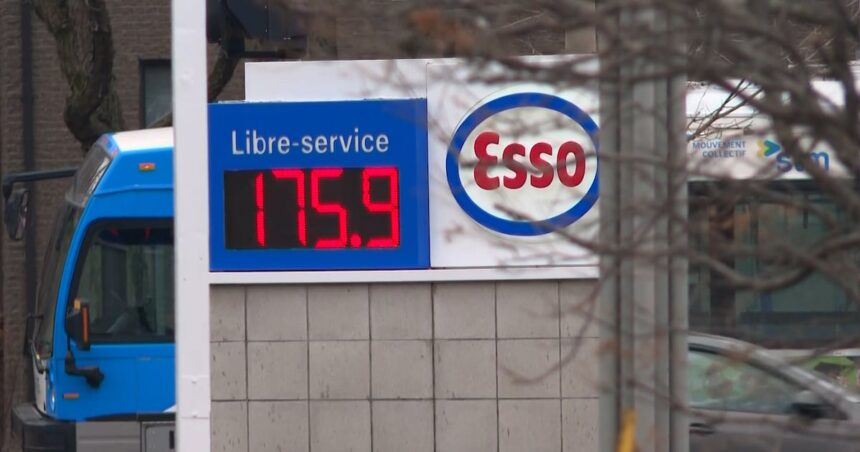

I’ve been driving the same route to my office downtown for years now, and lately I’ve noticed something that makes me wince every time I pass a gas station. The prices seem to climb higher each week. It’s not just my imagination. Montreal drivers are paying significantly more at the pump than people in other Canadian cities, and the reasons go deeper than most realize.
According to recent data from CTV News Montreal, our city consistently ranks among the most expensive places to fill up in the country. The average price hit $1.85 per litre in early 2023, while Toronto drivers paid around $1.70. That fifteen-cent difference adds up quickly when you’re filling a tank every week.
The provincial gas tax structure plays a major role in this disparity. Quebec imposes a tax of 19.2 cents per litre on gasoline. This doesn’t include the federal excise tax of 10 cents per litre that applies across Canada. When you add the carbon tax and GST, nearly 40 percent of what we pay goes directly to various levels of government.
I spoke with Jean-François Tremblay, a petroleum analyst based here in Montreal. He explained something that surprised me. “Montreal’s geographical position actually works against us,” he said during our conversation at a café on Saint-Laurent. “We’re farther from major refineries than cities in Ontario and Western Canada.”
Transportation costs matter more than most people think. Gasoline must travel longer distances to reach Montreal’s distribution networks. This adds several cents per litre before the fuel even arrives at local stations. The infrastructure required to move petroleum products across Quebec increases operational expenses that get passed directly to consumers.
Environmental regulations in Quebec add another layer of complexity to pricing. Our province mandates stricter fuel standards than many other regions. These requirements force refiners to use more expensive production processes. The cleaner fuel benefits our air quality, but it comes with a price tag attached.
Montreal also implements a specific metropolitan tax that other cities don’t charge. This 3-cent-per-litre transit tax funds public transportation infrastructure across the greater Montreal area. The Autorité régionale de transport métropolitain collects this revenue to maintain and expand our bus and metro systems. Every time I fill up my car, I’m contributing to the very transit network I sometimes use instead of driving.
The competitive landscape among gas stations in Montreal differs from other major cities. Marie-Claude Bibeau, a transportation economist at Université de Montréal, shared some interesting insights with me. “Montreal has fewer independent gas stations compared to markets like Calgary or Vancouver,” she noted. “This reduced competition can lead to higher baseline prices across the board.”
Seasonal variations hit Montreal particularly hard because of our climate. Winter gasoline requires different additives to perform in extreme cold. These special blends cost more to produce and distribute. I remember filling up during last January’s cold snap and seeing prices jump overnight by nearly ten cents per litre.
The global oil market fluctuations affect everyone, but Montreal feels these impacts more intensely. Our refineries process specific crude oil types that sometimes trade at premium prices. When international tensions disrupt supply chains, Montreal’s distance from alternative sources means we experience longer price adjustment periods.
Currency exchange rates create another variable that influences what we pay. Canada imports significant amounts of refined gasoline from the United States. When the Canadian dollar weakens against the American dollar, importing fuel becomes more expensive. These currency shifts ripple through to pump prices within days.
I’ve watched friends and neighbours change their driving habits because of these increases. Carpooling has become more common in my building. Some colleagues now take the metro three days a week instead of driving daily. These adjustments represent real lifestyle changes forced by economic pressures.
The Quebec government has discussed various relief measures to address rising fuel costs. Finance Minister Eric Girard mentioned potential tax holidays during particularly severe price spikes. However, implementing such programs involves complex political and economic considerations that slow down action.
Local business owners feel the pressure differently than individual drivers. I interviewed Philippe Deschamps, who runs a delivery service in Rosemont. “Fuel costs represent nearly 30 percent of my operating expenses now,” he explained. “I’ve had to raise prices for customers, which makes us less competitive against larger companies.”
Public transit ridership has increased notably since gas prices climbed above $1.80 per litre. The STM reported a 12 percent increase in weekly metro trips during the spring of 2023. This shift demonstrates how pricing pressures influence transportation choices across our metropolitan area.
Environmental advocates see a silver lining in higher gas prices. Reduced driving means lower emissions and improved air quality. Montreal’s commitment to reducing greenhouse gases aligns with policies that make fossil fuels more expensive. The tension between economic impact and environmental goals creates ongoing debate in community meetings I attend.
Some Montreal drivers have turned to electric vehicles as a long-term solution. Quebec offers substantial rebates for EV purchases, making the switch more affordable. Charging infrastructure continues expanding across the city, though cold weather still challenges battery performance during our harsh winters.
Looking ahead, experts predict gas prices will remain volatile throughout 2023 and beyond. Global supply dynamics, climate policy developments, and economic recovery patterns all contribute to uncertainty. Montreal drivers should expect continued fluctuations rather than significant price decreases.
I’ve started tracking my own fuel expenses more carefully now. Small changes like planning errands efficiently and maintaining proper tire pressure actually make noticeable differences. These practical adjustments help offset some of the financial strain from higher pump prices.
The reality is that Montreal’s unique combination of taxes, geography, regulations, and market structure creates a perfect storm for elevated gas prices. Understanding these factors doesn’t make filling up any cheaper, but it does explain why we consistently pay more than drivers in other Canadian cities.