
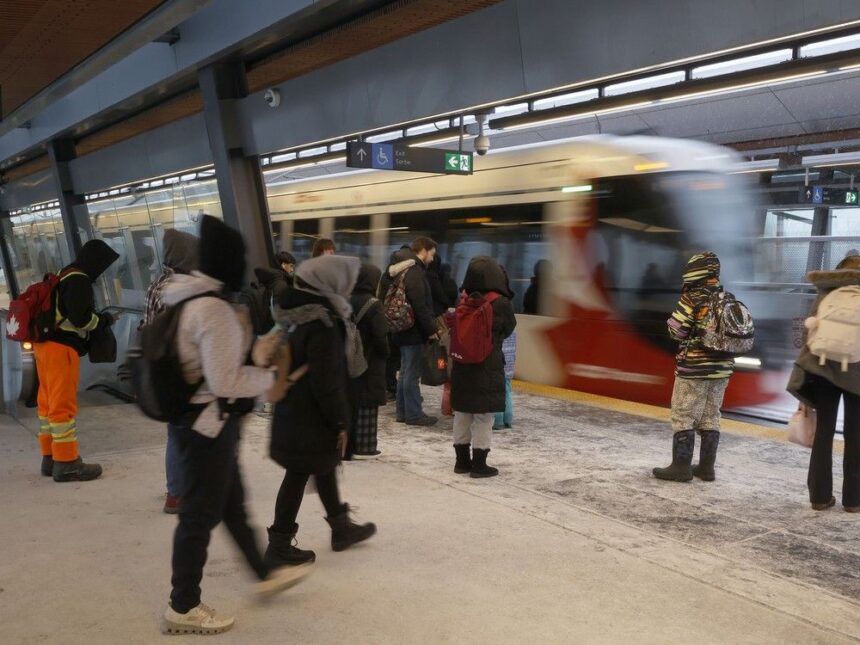

The morning commute felt different yesterday, and not in a good way. Ottawa transit riders woke up to discover their light rail system wasn’t running at full capacity, leaving many scrambling for alternative routes to work and school. The interruption came after ice accumulation wreaked havoc on the Confederation Line overnight, forcing OC Transpo to reduce service levels significantly.
Transit officials confirmed that crews worked through the early morning hours addressing ice-related damage on the LRT system. The winter storm that swept through the city deposited layers of ice on critical infrastructure, creating conditions that made normal operations unsafe. OC Transpo spokesperson Renée Amilcar explained that the transit agency prioritizes rider safety above all else, which meant temporarily scaling back service until repairs could be completed.
Regular riders know this isn’t the first time weather has complicated LRT operations. Since the Confederation Line opened, winter conditions have presented ongoing challenges for the system. Ice accumulation particularly affects the overhead power lines and track switches, components essential for safe train movement. When these systems fail, the entire line can experience significant disruptions.
Transit Commission Chair Glen Gower spoke about the situation during a brief media availability at City Hall. He acknowledged rider frustration while emphasizing that maintenance crews responded quickly to the situation. The city’s transit department deployed specialized equipment designed to remove ice from catenary wires and heating elements near track switches. These tools have become increasingly important as Ottawa adjusts to operating modern rail transit in harsh Canadian winters.
The anticipated return to full service was expected by afternoon, according to transit officials monitoring repair progress. OC Transpo confirmed that R1 replacement buses continued running throughout the morning to accommodate stranded passengers. The replacement service covered the entire Confederation Line route, though bus travel naturally takes longer than train service. Many commuters experienced delays ranging from thirty minutes to over an hour during peak morning travel times.
City Councillor Shawn Menard raised concerns about the frequency of weather-related disruptions affecting the LRT system. During a council meeting last month, he questioned whether sufficient winterization measures had been implemented when the system was constructed. His comments reflect broader community frustration about service reliability, particularly during months when Ottawa residents depend most heavily on indoor, heated transit options.
Transit experts point out that light rail systems in other cold-weather cities have successfully managed similar challenges. Edmonton’s LRT system, for example, operates year-round despite comparable winter conditions. The difference often comes down to infrastructure design choices and ongoing maintenance protocols. Ottawa’s system uses overhead catenary wires rather than a third rail, which presents specific ice-related vulnerabilities that require specialized maintenance approaches.
Statistics Canada data shows that over seventy thousand riders use the Confederation Line on typical weekdays. When service disruptions occur, the ripple effects extend throughout the city’s transportation network. Bus routes become overcrowded, roads experience increased congestion, and many people arrive late to important commitments. The economic impact of these delays affects employers, employees, students, and the broader Ottawa economy.
Weather Network meteorologist Chris Scott noted that the ice storm conditions yesterday were particularly challenging. Freezing rain combined with fluctuating temperatures created ideal conditions for ice accumulation on metal surfaces. These weather patterns are expected to become more common as climate conditions shift, presenting ongoing challenges for infrastructure managers across the region.
The Rideau Transit Group, responsible for maintaining the Confederation Line under a thirty-year contract, deployed additional crews to expedite repairs. RTG spokesperson Karen Boyce confirmed that maintenance teams identified specific problem areas along the line where ice buildup was most severe. Targeted interventions focused on these locations allowed for faster restoration of normal operations compared to addressing the entire system simultaneously.
Local business owners near LRT stations reported noticeably lighter foot traffic during morning hours. Coffee shops and breakfast spots that typically serve commuters experienced reduced customer volumes. These businesses have become inadvertent stakeholders in transit reliability, as their revenue streams connect directly to consistent LRT operations.
Ottawa Mayor Mark Sutcliffe addressed the situation briefly during a scheduled appearance at a community event. He expressed confidence in transit staff working to resolve the issues while acknowledging that residents deserve reliable service regardless of weather conditions. The mayor indicated that city staff would review yesterday’s incident to identify potential improvements for future winter weather responses.
Transit riders took to social media throughout the morning to share experiences and frustrations. Many posted photos of crowded bus stops and delayed trains. Others offered practical advice about alternative routes and real-time service updates. This informal information network has become an essential resource for navigating unexpected transit disruptions in Ottawa.
The afternoon restoration timeline provided some relief for commuters planning their journeys home from work. OC Transpo confirmed through its official channels that testing would continue throughout midday to ensure trains could safely resume normal scheduling. The agency emphasized that service would only be fully restored once safety checks confirmed all systems were functioning properly.
Looking ahead, questions remain about long-term solutions for improving winter reliability on the Confederation Line. Some transit advocates have called for infrastructure upgrades specifically designed to handle ice accumulation more effectively. Others suggest enhanced monitoring systems that could predict weather-related problems before they cause service disruptions.
For now, Ottawa commuters continue adapting to the realities of light rail transit in a winter city. Yesterday’s disruption served as another reminder that modern transit systems require constant attention and maintenance, particularly when operating in challenging climatic conditions. The afternoon return to service couldn’t come soon enough for thousands of residents depending on reliable public transportation.