
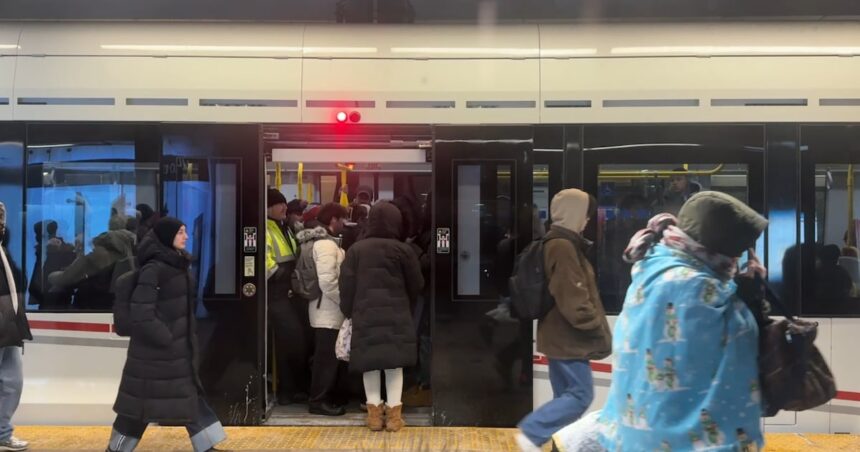

Riders waiting on platforms across Ottawa can breathe a bit easier this week. The trains keep rolling, even if they’re running lighter than usual.
OC Transpo has confirmed there are no immediate plans to shut down the troubled O-Train Line 1. This comes after weeks of uncertainty surrounding mechanical issues that have plagued the east-west light-rail transit line. The city’s main rapid transit artery continues operating with reduced service while engineers work to resolve persistent problems with the train axles.
Single-car trains have become the new normal since late January. That’s when transit officials first reported a spalling defect in the axle assembly. The technical term sounds complicated, but the issue is straightforward. Metal components are flaking and deteriorating faster than expected. This creates safety concerns that cannot be ignored.
Transit officials imposed a strict 100,000 kilometre limit on all cartridge bearing assemblies. Think of it like a vehicle recall where certain cars can’t be driven until they’re fixed. Once a train hits that mileage threshold, it gets pulled from service for inspection and possible repairs.
The union representing OC Transpo operators received an update this week. Amalgamated Transit Union Local 279 President Noah Vineberg shared the news with CTV News Ottawa. Management told union representatives on Wednesday that service would continue as is. No major changes are coming in the immediate future.
“No imminent change to what’s happening,” Vineberg confirmed. His words offer some reassurance to the thousands of commuters who depend on Line 1 daily.
Last week told a different story. Mayor Mark Sutcliffe and transit officials wouldn’t rule out an extended shutdown. They discussed contingency plans during public statements that left many riders worried. The possibility of replacing trains with buses across the entire line hung in the air like an unwelcome cloud.
Those contingency plans remain on standby. But for now, the trains keep moving.
As of Friday, twenty-one vehicles remain below the critical 100,000 kilometre limit. These trains form the active fleet keeping the line operational. It’s not enough for full service, but it keeps the system running. Trains arrive every three to four minutes during morning and afternoon rush hours.
Troy Charter serves as director of Transit Service Delivery and Rail Operations. He acknowledged that available vehicles fluctuated throughout last week. Some days see more trains in service than others. The unpredictability creates challenges for both operators and passengers trying to plan their commutes.
Behind the scenes, negotiations and technical work continue. OC Transpo is collaborating with Rideau Transit Group and Alstom to finalize a revised containment plan. The goal is straightforward: safely increase the number of vehicles available for service. Everyone wants more trains on the tracks without compromising passenger safety.
The containment plan represents a temporary solution while long-term fixes are developed. Engineers need time to fully understand why these components are failing prematurely. The LRT system launched with promises of reliability and efficiency. Reality has proven considerably more complicated.
This latest issue adds another chapter to the O-Train’s troubled history. Since opening, the line has faced repeated shutdowns and service disruptions. Door malfunctions, wheel problems, and now axle defects have tested the patience of Ottawa residents. Each problem gets fixed, then something new emerges.
I’ve covered municipal politics and transit issues for years now. This pattern feels frustratingly familiar to anyone paying attention. The optimistic promises at ribbon-cutting ceremonies seem distant now. Commuters just want reliable service they can count on.
The upcoming transit committee meeting on April 9 should provide more clarity. Vineberg expects officials to present an update on progress adding trains back to active service. Committee members will likely press for specific timelines and concrete solutions. Residents deserve answers about when normal service might resume.
Single-car trains mean longer waits and more crowded conditions. Platform crowding increases during peak hours when everyone tries boarding the same limited number of vehicles. Social distancing becomes impossible when bodies pack together like sardines. The reduced capacity affects quality of life for thousands of daily riders.
Winter presented additional challenges with single-car service. Passengers who couldn’t squeeze onto packed trains faced frigid waits for the next arrival. Spring weather now makes the situation slightly more bearable. But crowded platforms remain a daily reality for Line 1 users.
OC Transpo ridership has rebounded significantly since pandemic lows. More people are returning to downtown offices and public transit. The timing of these mechanical issues couldn’t be worse. Growing demand meets reduced capacity in an uncomfortable collision.
Transit advocates worry about the long-term impacts on ridership. People who experience unreliable service often switch to other transportation options. Getting them back requires rebuilding trust that takes years. Every prolonged disruption risks pushing riders permanently toward cars or other alternatives.
The financial implications extend beyond immediate repairs. Reduced ridership means lower fare revenues for the transit system. The city already subsidizes transit operations significantly. Extended problems could create budget pressures affecting service across the entire network.
City councillors face difficult questions from constituents frustrated with ongoing transit problems. They approved the LRT contract expecting smooth operations. Instead, they’re managing public disappointment while demanding accountability from contractors. The political pressure continues mounting with each new issue.
For now, the status quo continues. Trains run on reduced schedules while engineers work behind the scenes. Riders adjust their routines and build extra time into their commutes. It’s not ideal, but it beats a complete shutdown.
The April 9 committee meeting will be worth watching closely. Transit officials need to demonstrate real progress if they want to maintain public confidence. Vague promises won’t satisfy anyone at this point. Concrete timelines and transparent communication are essential.
Ottawa deserves a transit system that works reliably. The O-Train represents a massive public investment meant to serve the city for decades. Getting it right matters for environmental goals, urban development, and quality of life. Everyone hopes the current problems represent temporary growing pains rather than fundamental design flaws.
Until then, single-car trains continue their routes across the city. Riders pack into available space and hope for better days ahead. The wheels keep turning, even if the journey remains bumpy.