
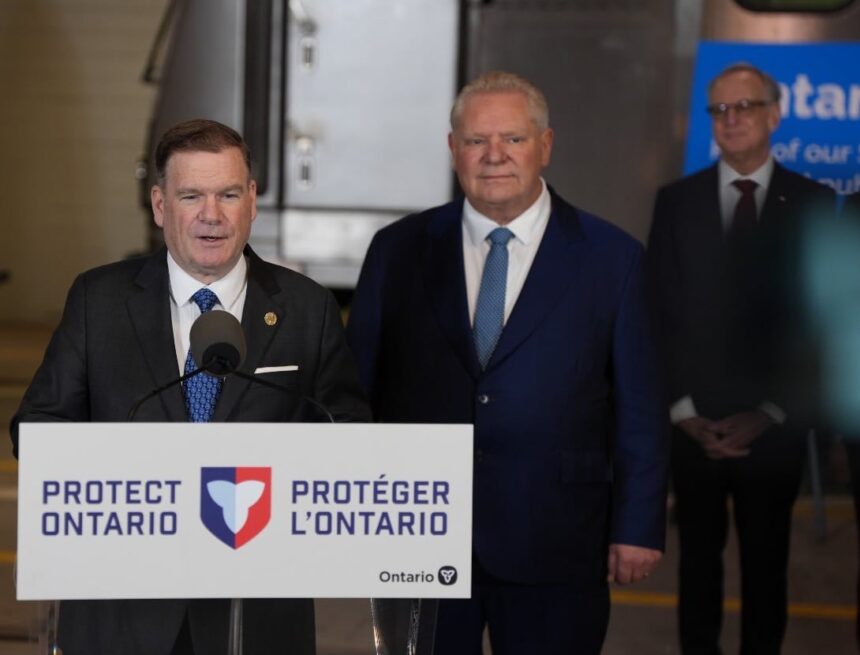

The Ontario government’s latest push to merge conservation authorities across the province has sparked fierce resistance from environmental groups, municipal leaders, and longtime residents who fear the changes will weaken flood protection and natural heritage preservation in communities like ours here in Toronto.
I’ve covered municipal politics for over a decade, and I can’t recall seeing this level of unified opposition to a provincial environmental policy. Walking through the Don Valley last week, I met with local conservation staff who spoke candidly about their concerns. Their worry isn’t abstract. It’s rooted in decades of work protecting our ravines and waterways.
The Ford government announced plans to consolidate thirty-six conservation authorities into just nine regional bodies. Environment Minister David Piccini defended the move as a cost-saving measure that would eliminate duplication and streamline operations. He projected annual savings of forty-three million dollars across the province. Those numbers sound impressive on paper, but the people doing the actual work paint a different picture entirely.
Toronto and Region Conservation Authority manages sixteen watersheds spanning nine municipalities. Under the proposed merger, it would fold into a massive Great Lakes West authority. Staff members told me they’re already stretched thin managing current responsibilities. Adding more territory seems counterintuitive when flooding incidents have increased by thirty-two percent in the Greater Toronto Area over the past five years alone.
Municipal leaders aren’t holding back their criticism either. Toronto Mayor Olivia Chow called the merger plan shortsighted and dangerous during a press conference last Thursday. She pointed to the devastating floods that hit parts of Etobicoke and North York two summers ago. Those events caused over two hundred million dollars in property damage and displaced hundreds of families temporarily.
York Region Chair Wayne Emmerson echoed similar concerns from his municipality. He emphasized that local conservation authorities understand the unique geography and environmental challenges of their specific areas. A centralized regional body simply can’t replicate that intimate knowledge. He’s right about that. The Humber River behaves very differently than the Rouge River, even though they’re relatively close geographically.
I spoke with Sarah Chen, executive director of Environmental Defence’s Toronto chapter. She’s been monitoring conservation policy changes closely for the past three years. Chen described the merger proposal as part of a broader pattern of weakening environmental oversight. She cited recent changes to wetland protections and streamlined development approvals as evidence of this trend.
The financial argument deserves closer examination too. While the province promises forty-three million in savings, critics argue those calculations ignore hidden costs. Conservation authorities currently employ over two thousand specialized staff across Ontario. Many possess deep institutional knowledge about local ecosystems, flood plains, and wildlife corridors that took years to develop.
James Morrison, a senior watershed scientist with twenty-three years experience, shared his perspective with me over coffee near his Scarborough office. He explained how conservation work requires understanding subtle environmental factors that vary dramatically even within small geographic areas. Soil composition, drainage patterns, and vegetation types all influence flood risk and ecological health. Centralizing operations could mean losing that granular understanding.
The proposal also raises questions about democratic accountability. Currently, conservation authority boards include municipal representatives from affected communities. These local politicians answer directly to residents when flooding occurs or development decisions impact natural areas. A regional super-authority would create additional distance between decision-makers and the communities bearing consequences of those decisions.
Timing adds another layer of concern. Climate scientists project that extreme weather events will intensify across Southern Ontario over the next two decades. The Insurance Bureau of Canada reported that water damage claims in the Greater Toronto Area increased forty-eight percent between 2019 and 2024. This seems like precisely the wrong moment to disrupt existing flood management systems.
Community groups have mobilized quickly against the merger plan. Over fifteen thousand people attended town halls across the province during the past month. I covered one at the Evergreen Brick Works that drew nearly eight hundred concerned residents. The frustration in that room was palpable. People shared stories about conservation authority staff who helped them navigate flood risks or protected green spaces near their homes.
The political dynamics are interesting too. Several Progressive Conservative MPPs from suburban ridings have privately expressed reservations about the merger. They’re hearing strong opposition from constituents who care deeply about local environmental protection. Whether that internal pressure influences the government’s approach remains to be seen.
Alternative solutions exist that could address legitimate concerns about efficiency without dismantling existing structures. Several conservation authorities have already initiated shared services agreements for specialized functions like geographic information systems and laboratory testing. Expanding those collaborative arrangements could generate savings while preserving local operational capacity.
The province has scheduled final consultations through the end of this month before making a final decision. Environmental groups are urging supporters to submit feedback through the Environmental Registry. Municipal councils across the region have passed resolutions opposing the merger and calling for meaningful consultation rather than predetermined outcomes.
Standing on the banks of the Humber River yesterday afternoon, watching the steady flow of water that conservation staff monitor constantly, I thought about what we risk losing. These authorities emerged after Hurricane Hazel killed eighty-one people in 1954. That disaster taught us painful lessons about respecting natural systems and investing in flood protection.
The current debate ultimately comes down to whether we value local environmental knowledge and democratic accountability or prioritize centralized efficiency above all else. Given the climate challenges ahead, weakening proven protective systems seems like a dangerous gamble for communities throughout Ontario.