
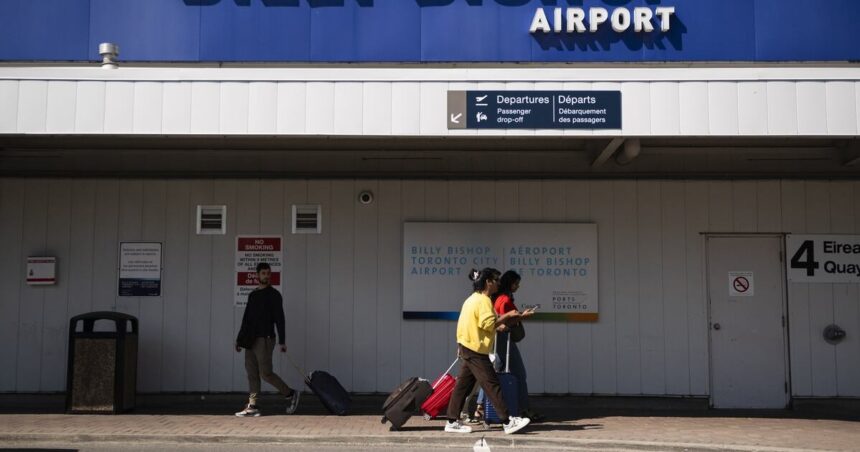

I’ve been covering Toronto’s waterfront developments for years, and this latest move caught even seasoned city watchers off guard. The provincial government just announced it’s taking control of Toronto’s stake in the lands surrounding Billy Bishop Airport, and the implications reach far beyond property lines.
Premier Doug Ford’s administration revealed plans to assume the city’s 25 percent ownership stake in PortsToronto. This isn’t just a paperwork shuffle. It fundamentally changes who makes decisions about one of Toronto’s most valuable and controversial pieces of real estate.
The timing feels significant to anyone following local politics. Mayor Olivia Chow’s office received notification about this provincial takeover with minimal advance warning. City officials scrambled to understand what this means for Toronto’s control over its own waterfront destiny.
PortsToronto manages Billy Bishop Toronto City Airport and surrounding lands. The federal government holds 50 percent ownership. The Toronto Harbour Commission Foundation controls another 25 percent. Toronto’s quarter stake provided the city meaningful influence over development decisions affecting the waterfront.
That influence just evaporated overnight.
I spoke with waterfront stakeholders who expressed deep concern about this shift. Sarah Mackenzie, a downtown resident active in waterfront advocacy, told me the move “strips Toronto of its voice in determining how these crucial lands get developed.” She’s lived near the harbour for fifteen years and watched countless development battles unfold.
The provincial announcement cited streamlining governance and accelerating infrastructure improvements as primary justifications. Transportation Minister Prabmeet Sarkaria stated the change would “ensure more efficient decision-making for critical transportation assets.” The government framed this as modernization rather than a power grab.
But city council members see it differently. Several councillors questioned the constitutionality of the province unilaterally seizing municipal assets without consultation or compensation. Councillor Gord Perks called it “another example of the province treating Toronto like a subordinate rather than a partner.”
The Billy Bishop lands represent extraordinary economic potential. Real estate analysts estimate the waterfront parcels could generate billions in development revenue. Hotels, condos, retail spaces, and public amenities have all been floated as possibilities for future expansion.
Who controls those decisions now carries enormous weight for Toronto’s fiscal future. The city’s budget already faces significant pressures. Losing control over potentially lucrative waterfront assets compounds those challenges in ways that will echo for decades.
Environmental groups also raised alarms about the provincial takeover. The waterfront ecosystem remains fragile despite years of remediation efforts. Development decisions require careful balancing between economic interests and ecological preservation.
Toronto’s government historically prioritized environmental considerations in waterfront planning. Whether Queen’s Park maintains that commitment remains uncertain. Provincial development track records in sensitive areas have environmentalists worried about relaxed standards and accelerated approvals.
The airport itself generates ongoing controversy among Toronto residents. Some view Billy Bishop as an essential transportation hub connecting the city to business centres across North America. Others see it as a noisy intrusion incompatible with waterfront residential growth.
Expansion debates have raged for years. The airport currently operates under restrictions limiting jet aircraft and flight volumes. Development of surrounding PortsToronto lands could potentially facilitate expanded operations or create pressure to relax existing limitations.
City control over its ownership stake provided residents some assurance their concerns would factor into expansion discussions. Provincial control introduces uncertainty about whose interests will drive future decisions.
I walked the waterfront yesterday near the airport terminal. Tourists photographed the skyline while locals jogged past. The CN Tower loomed overhead. Ferries chugged toward the Islands. Everything felt remarkably normal given the political earthquake happening in boardrooms and council chambers.
That disconnect strikes me as emblematic of how these decisions unfold. Ordinary Torontonians go about their lives while politicians and bureaucrats reshape fundamental power structures determining the city’s future.
Legal experts I consulted suggested the city has limited recourse against provincial actions. Ontario’s constitutional authority over municipalities grants Queen’s Park extensive power to override local decisions. Toronto could challenge the move in court, but success seems unlikely given existing precedents.
The financial implications remain murky. Did the province compensate Toronto for assuming its ownership stake? Will the city receive ongoing revenue sharing from future developments? Official announcements provided no clarity on these crucial questions.
City budget chief Shelley Carroll emphasized the need for transparent accounting. “Toronto taxpayers deserve to know what they’re giving up and what, if anything, they’re getting in return,” she said during a hastily arranged press conference.
This move follows a pattern of provincial intervention in Toronto affairs. Queen’s Park recently imposed changes to city council composition and override municipal zoning decisions to accelerate housing development. Each action chips away at local autonomy.
Supporters argue provincial involvement brings needed resources and decisiveness to complex urban challenges. Critics counter that distant bureaucrats in Queen’s Park lack the local knowledge and accountability that city government provides.
The waterfront represents Toronto’s identity in ways that transcend property values. Generations of planning, investment, and community advocacy transformed industrial wastelands into vibrant public spaces. Those efforts reflected distinctly local priorities and values.
Whether provincial control honours that legacy or charts a different course will reveal itself in coming months and years. Development proposals will provide the first test of how Queen’s Park exercises its new authority.
For now, uncertainty dominates. Waterfront communities don’t know what comes next. City officials scramble to understand their diminished role. The province offers reassurances without specifics.
I’ve reported on enough Toronto political stories to recognize patterns. Initial announcements rarely tell the full story. The real implications emerge gradually as decisions get made and projects move forward.
This airport lands takeover will reshape Toronto’s waterfront for generations. Whether that change serves the city well depends entirely on how Queen’s Park wields its newly acquired power.