
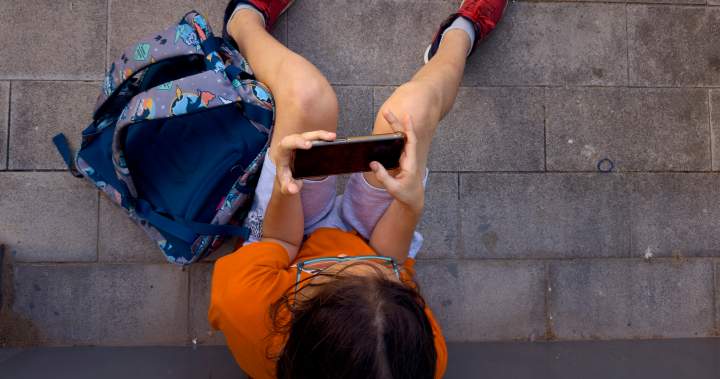

Walking through the halls of Parliament Hill last week, I overheard two MPs debating something that’s become impossible to ignore. The question hanging in the air wasn’t about budgets or policies. It was simpler and somehow more urgent: should we ban kids from social media?
The answer from Canadians appears overwhelmingly clear. A new Angus Reid Institute poll shows three-quarters of us support keeping anyone under 16 off social media platforms entirely. That’s 75 percent saying yes to a full ban.
These numbers hit differently when you’re a parent. I’ve watched friends struggle with this exact dilemma at Ottawa coffee shops and community centers. Do you hand your 13-year-old a phone and hope for the best? The poll suggests most parents are just as concerned as everyone else, with 70 percent supporting restrictions.
Australia made headlines in November 2024 by becoming the first country to actually ban social media for kids under 16. Nearly five million teenage accounts disappeared within a month. That’s not a small experiment. That’s a massive shift in how a country thinks about childhood.
Now Canadians are wondering if we should follow suit. The support spans the entire country. British Columbia leads at 81 percent, followed by Alberta at 77 percent. Ontario sits at 74 percent, while Quebec registers 73 percent support. Even our most spread-out regions show strong agreement, with Atlantic provinces at 76 percent.
The concerns driving these numbers aren’t abstract. When 94 percent of Canadians worry about negative mental health impacts, that’s nearly everyone. The same percentage fears addiction to these platforms. Another 92 percent worry about misinformation reaching young minds.
Cyberbullying concerns 90 percent of those surveyed. Explicit content worries 85 percent. These aren’t fringe anxieties. These are mainstream parental nightmares keeping people awake.
Certain platforms generate more worry than others. TikTok tops the list at 88 percent of Canadians wanting it banned for under-16s. The platform formerly known as Twitter, now called X, comes in at 86 percent. Snapchat follows at 84 percent. Even YouTube, often considered more educational, faces calls for restriction from 48 percent of respondents.
Here’s where consensus breaks down, though. Canadians can’t agree on the right age for social media access. About one-third pick 16 as the magic number. But nearly equal portions suggest 10 to 12 years old, 14 years old, or 15 years old. We know something needs to change. We just can’t pinpoint exactly when childhood ends and digital adulthood begins.
This isn’t just a Canadian conversation. An Ipsos poll from September 2025 surveyed 30 countries. It found 71 percent believe children under 14 shouldn’t access social media. Among parents with school-age kids, that number climbs to 74 percent. A quarter of all respondents called social media a top challenge for young people.
Ontario school boards aren’t waiting for legislation. Four boards launched a $4-billion lawsuit in March 2024 against Meta, Snapchat owner Snap Inc., and TikTok owner ByteDance Ltd. By May 2024, five more school boards and two private schools joined the fight.
The lawsuit alleges these platforms were negligently designed for compulsive use. According to litigation firm Neinstein LLP and the school boards, this compulsive use created an attention crisis. It spawned a learning crisis. It triggered a mental health crisis among students.
I’ve covered education stories in Ottawa for years. Teachers tell me they’ve watched attention spans shrink. Students describe feeling anxious without their phones. Parents report battles over screen time that leave everyone exhausted.
The courts are starting to pay attention. On March 24, 2026, a New Mexico jury found Meta harmful to children’s mental health. The verdict said the company violated state consumer protection laws. Meta was ordered to pay $375 million in civil penalties for hiding what it knew about child sexual exploitation and mental health impacts.
One day later, another jury delivered an even more specific verdict. On March 25, 2026, Meta and Google-owned YouTube were found liable in a groundbreaking lawsuit. The plaintiff testified about becoming addicted to social media as a child. She explained how that addiction made her mental health struggles worse.
The jury determined both companies were negligent in designing and operating their platforms. They concluded this negligence substantially caused harm. Even more damning, the jury found both companies knew their platforms could be dangerous for minors. They failed to adequately warn users of that danger.
TikTok and Snapchat faced similar accusations in that lawsuit. Both settled before trial. The terms weren’t disclosed, but the message was clear. These companies recognize legal liability.
Some provincial leaders are watching closely. Saskatchewan Premier Scott Moe posted on X that Canada should consider limiting social media use by minors. Other premiers have expressed similar interest in following Australia’s example.
The challenge isn’t just legal or technical. It’s cultural. Social media has become how teenagers communicate, organize, and understand their world. Banning it feels both necessary and impossible to many parents.
I think about the kids I see around Ottawa. They’re growing up in a fundamentally different world than previous generations. Their friendships exist partly in group chats. Their social status gets measured in followers and likes.
But the evidence keeps mounting. Courtrooms are confirming what parents suspected. These platforms were designed to be addictive. Companies knew the risks and prioritized profits over wellbeing.
Whether Canada follows Australia remains uncertain. What’s clear is that the conversation has shifted. This isn’t about paranoid parents anymore. This is about three-quarters of the country saying enough.
The question isn’t whether social media affects kids. The question is what we’re willing to do about it.