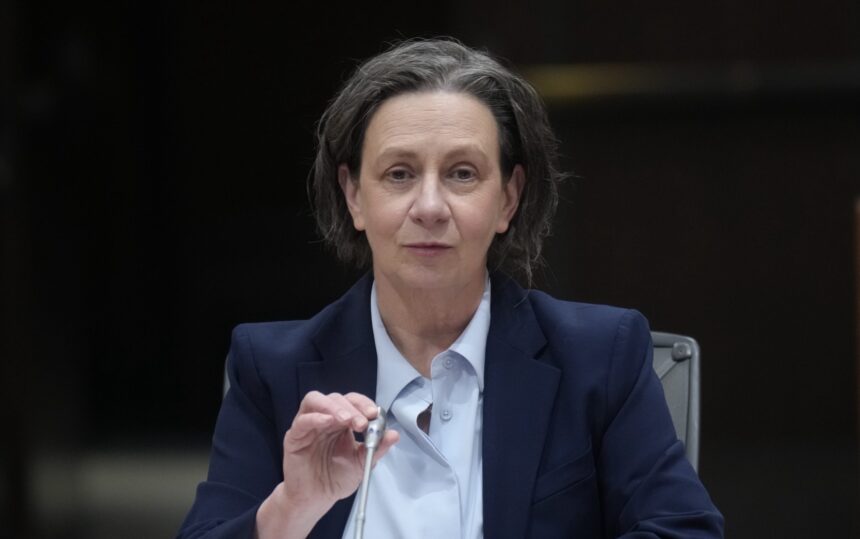

Annette Ryan sat before parliamentarians this week knowing every word would be weighed carefully. The woman tapped to become Ottawa’s next fiscal watchdog faced a room full of skeptical MPs Monday afternoon, each with their own reasons to question her independence.
I’ve covered enough of these committee hearings to know when someone walks into a politically charged atmosphere. This was one of those moments. Ryan came prepared with promises of what she called “pointy analysis” and a pledge not to pull punches when examining government spending.
The longtime public servant currently works as deputy director at Fintrac, Canada’s financial intelligence agency. Cabinet announced her as their choice to lead the Office of the Parliamentary Budget Officer earlier this month. But before she can take the job, both the House of Commons and Senate need to approve her nomination.
Ryan made her position clear from the start. She told MPs she intends to provide high-quality, independent analysis so they can hold the prime minister and his ministers accountable. That’s exactly what parliamentarians want to hear, though whether they believe it is another matter entirely.
The shadow of Jason Jacques hung over the entire proceeding. Jacques served as interim budget watchdog until his term expired earlier this month. Conservative MPs made no secret of their preference for him to get the permanent position instead.
Sandra Cobena, a Conservative MP, told reporters her party plans to vote against Ryan’s nomination. Cobea described the decision not to renew Jacques’ six-month term as essentially firing him. Jacques earned Conservative praise for his critical stance on Liberal finances during his brief tenure.
Multiple MPs opened their questions by expressing satisfaction with Jacques’ work. Ryan responded each time with what she called her “deep respect” for Jacques and those who came before him in the role. The political dance was obvious to anyone watching.
Jean-Denis Garon from the Bloc Québécois said after the hearing that he arrived with an open mind. His party hasn’t decided yet whether to support Ryan’s nomination. Garon criticized the closed selection process, saying he would have preferred comparing Ryan against other candidates.
He raised a point I’ve heard repeatedly in my years covering Parliament Hill. Questions about these appointments rarely focus on qualifications. The real concern centers on independence. Garon acknowledged Ryan defended herself well on that front.
Conservative MP Jasraj Singh Hallan pressed Ryan on whether she’d speak up if pressured to adjust her analysis. Her answer came back firm. She sees parliamentarians collectively as her boss, not whichever party holds power. She promised to deliver exactly the kind of pointed analysis the role demands.
Ryan went further than expected with one commitment. She pledged to seek only a single term as budget watchdog. The move appears designed to eliminate any suggestion she might soften her analysis hoping for reappointment through partisan favors.
She promised to hold government feet to the fire on spending decisions. At the same time, Ryan argued that fiscal sustainability transcends partisan politics. Nobody’s agenda succeeds if you hit the fiscal wall, she noted. That’s hard to dispute.
Jacques made waves early in his interim role with particularly strong language. He called the Liberal debt trajectory “stupefying” and unsustainable. He later said he regretted using such stark terms.
Ryan indicated she’ll take a different approach. She plans to present fiscal analysis clearly showing the implications of spending decisions. But she said she’ll leave the dramatic language to elected politicians. That strikes me as a smart distinction for someone trying to build credibility as an impartial analyst.
Multiple MPs asked for her assessment of current federal finances. Ryan mostly deferred to existing analyses from organizations like the International Monetary Fund. Those reports generally describe Ottawa’s debt levels as sustainable.
Even Jacques shifted his tone by November. After the Liberals tabled their fall budget, he said the debt trajectory was sustainable long-term. He did warn that federal officials had eaten into their fiscal cushion for absorbing future economic shocks.
Singh Hallan pushed Ryan on whether abandoning previous fiscal anchors creates risk. Those anchors related to the debt-to-GDP ratio. Ryan acknowledged the risk exists. Her willingness to concede that point likely registered with Conservative MPs, though probably not enough to change their votes.
Ryan’s background shows deep roots in Atlantic Canada. She grew up in Newfoundland and Labrador, then later in Prince Edward Island. She earned her credentials as a Rhodes Scholar with degrees from Acadia University and Oxford University. Her public service career spans multiple departments and roles.
Her opening statement included a strategic element. Ryan listed ministers she’s supported across partisan lines throughout her Ottawa career. The list included current Conservative Leader Pierre Poilievre. The message was clear: she’s worked for all sides.
One potentially awkward question involved Prime Minister Mark Carney. Both attended Oxford in the early 1990s, though their time there overlapped. Ryan explained they knew each other as Canadians abroad but moved in different social circles.
Their paths crossed again in Ottawa years later. Ryan worked as chief economist at Industry Canada while Carney led the Bank of Canada. She said most interactions happened through his office rather than directly. They apparently had no contact after Carney left to run the Bank of England.
The detail matters because any perceived relationship could fuel questions about her independence. Ryan handled it deftly by acknowledging the connection while minimizing its significance.
Watching this unfold reminded me how politically fraught these oversight positions have become. The budget watchdog role exists specifically to provide Parliament with independent fiscal analysis. Yet the selection process itself becomes a political football.
Ryan faces an uphill confirmation battle with Conservatives already opposed. The Bloc remains undecided. Liberal and NDP support would likely push her nomination through, but the controversy weakens her position before she even starts.
Jacques set a high bar during his brief tenure by taking strong public stances. Whether Ryan’s more measured approach serves Parliament better remains to be seen. Sometimes stark language cuts through political spin. Other times it undermines credibility.
The question ultimately comes down to trust. Can Ryan provide truly independent analysis while navigating the political minefield that comes with the job? Her credentials suggest competence. Her promises sound right. But actions matter more than words in Ottawa.
I’ll be watching closely to see whether MPs approve her nomination and how she handles the role if confirmed. The office serves a crucial function in our democracy. Parliamentarians need reliable fiscal analysis to make informed decisions and hold government accountable.
Ryan promised pointy analysis. Ottawa will find out soon enough whether she delivers.