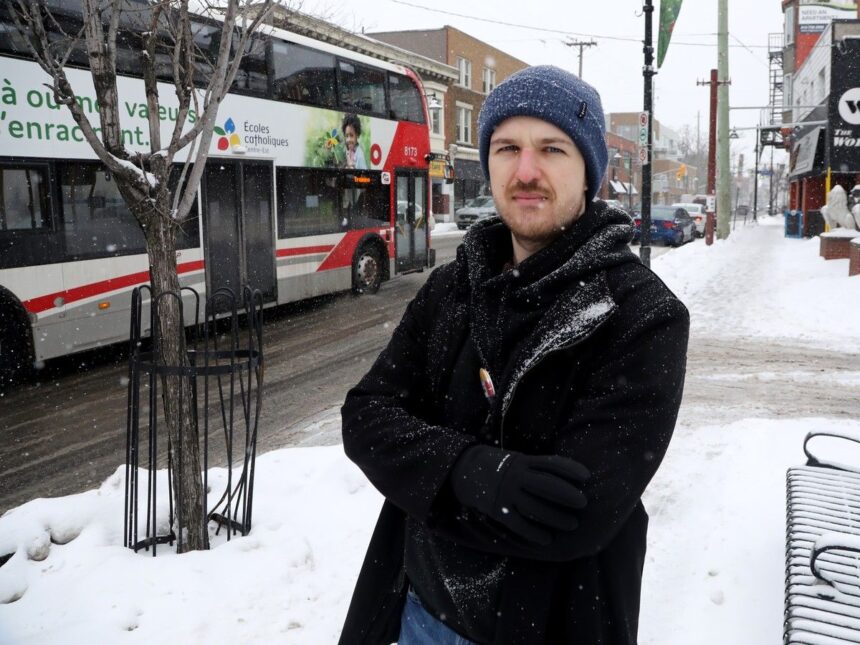

The morning rush on Bank Street tells a familiar story. Cars inch forward while OC Transpo buses sit trapped in traffic. Frustrated commuters check their watches as minutes tick by. This daily scene might soon change if city planners get their way.
Ottawa officials are proposing peak-period bus-only lanes along Bank Street through the Glebe. The 15-month pilot project aims to boost transit reliability on one of the city’s busiest corridors. But the plan has sparked a heated debate pitting transit advocates against local business owners.
A committee will review the proposal on March 30. The stakes feel high for everyone involved.
What City Hall Has Planned
The proposed pilot would create dedicated bus lanes during rush hours. Northbound lanes would operate from 7 to 10 a.m. Southbound restrictions would run from 3 to 6 p.m. The affected stretch runs between Highway 417 and the Rideau Canal.
City staff also want four permanent 24-hour bus segments. These would be located near Fourth, Holmwood and Aylmer avenues. Creating these segments means removing 17 on-street parking spaces.
The timeline seems ambitious but achievable. If council approves the plan, implementation would start in summer 2027.
I’ve covered city transportation debates for years now. This one strikes me as particularly contentious because both sides make valid points. Transit reliability matters deeply to thousands of daily commuters. Yet small businesses genuinely depend on accessible parking.
The Transit Numbers Tell A Story
More than 6,900 people ride through this corridor on weekdays. Routes 6 and 7 carry most of these passengers. Both rank among the city’s highest-ridership routes.
But reliability has become a serious problem. In February 2026, both routes posted delivery rates just below 93 per cent. They ranked among OC Transpo’s top three for undelivered trips. Data presented to the transit committee on March 12 confirmed these troubling figures.
Peak traffic sees up to 720 vehicles per hour. Northbound traffic dominates mornings while southbound flow increases in afternoons. City staff report that intersections operate under capacity. Yet delays still happen as drivers turn left or navigate parking maneuvers.
Bank Street serves multiple purposes simultaneously. Cars share space with buses, pedestrians and cyclists. Lansdowne Park events add another complication. Charge, Redblacks, Atlético and Rapid games bring thousands of additional people to the area.
Advocates Want More Aggressive Action
Strong Towns Ottawa believes the city proposal falls short. The advocacy group wants 24-hour bus lanes instead of peak-period restrictions.
Marko Miljusevic serves on the organization’s board. He argues that part-time bus lanes won’t solve the underlying problems.
“What we’ve been pushing for is to have that parking lane turned into a bus lane for a substantial period of time,” Miljusevic explained. “You’d get a huge benefit through the reliability of your transit system.”
His criticism focuses on how temporary lanes might create new issues. During off-peak hours, parking returns to those lanes. Buses must then merge in and out at every stop. This constant weaving causes significant delays.
“They actually get slowed down quite substantially after hours,” Miljusevic said. The parking-to-travel-lane conversion forces buses into awkward merging patterns.
The trade-off seems clear but difficult. Full-time bus lanes would require removing most on-street parking. City data shows parking spaces get heavy use. Weekday daytime usage sits between 50 and 60 per cent. Weekday evenings see 70 to 85 per cent occupancy. Weekend usage exceeds 90 per cent.
Miljusevic counters that alternative parking exists nearby. Side streets offer options along with facilities like the Second Avenue garage.
The city report acknowledges this divide. Staff note that extending bus lanes “must carefully weigh the tradeoffs associated with reducing on-street parking and curbside availability.”
Business Community Sounds The Alarm
The Glebe Business Improvement Association represents about 400 businesses and property owners. Executive director Darrell Cox warns that parking reductions would hurt local commerce.
The permanent loss of 17 spaces concerns him. But he worries more about the extended peak restrictions. Roughly 70 spaces on each side would become unavailable for an additional hour daily.
“It’s not just 17 spots we’d be losing,” Cox said. “It’s the potential of a couple hundred customers per day using those spaces.”
Those customers shop in stores and support the local economy. Cox emphasizes that parking spaces experience high turnover throughout the day. Many also function as essential loading zones for deliveries.
The afternoon restrictions particularly trouble him. The 3 to 6 p.m. window represents prime shopping time. Losing an hour of parking during those peak business hours could significantly impact revenue.
“We do support improvements to active transportation and transit,” Cox acknowledged. “But it has to be balanced, and it can’t be at the expense of the business community.”
The project carries a $2 million price tag. Additional costs for signage and pavement markings will push expenses higher. Cox would prefer directing those funds toward different neighbourhood priorities. He specifically mentioned increased police presence.
“The Glebe is clearly recognized as a local, city-wide and regional destination,” Cox said. “It’s not designed to be a transit corridor.”
He wants to preserve the main street character that draws people to the area. Accessible parking feels essential to maintaining that community atmosphere.
Balancing Competing Interests
This debate reflects a broader challenge facing Ottawa. The city must balance transit efficiency against business viability. Neither concern should be dismissed lightly.
Transit reliability affects thousands of daily commuters. People depend on buses to reach work, school and appointments. Unreliable service creates cascading problems throughout their days. Missing a bus might mean arriving late to work or missing a childcare pickup.
Yet small businesses operate on thin margins. Parking access directly impacts their bottom lines. Customers who can’t find parking often shop elsewhere. Loading zones allow businesses to receive inventory and supplies.
Walking through the Glebe on weekend afternoons, I see both realities. Buses crawl through traffic while passengers wait impatiently. Simultaneously, cars circle repeatedly searching for elusive parking spots. Every stakeholder experiences genuine frustration.
City staff face an unenviable task. Any solution will disappoint someone. The pilot project represents a middle-ground approach. Peak-period restrictions target the worst traffic times. Permanent segments address specific problem areas.
Whether this compromise satisfies anyone remains uncertain. Transit advocates want comprehensive changes. Business owners resist any parking reductions.
What Comes Next
The public works and infrastructure committee meets March 30. Members will review the staff report and hear from stakeholders. Expect passionate testimony from both sides.
If the committee approves the proposal, it moves to full council. Council could approve, modify or reject the plan entirely. The political calculus seems tricky given the strong opinions involved.
Approval would trigger detailed planning and design work. Summer 2027 implementation allows time for thorough preparation. Staff would need to finalize lane markings, install signage and communicate changes to the public.
The 15-month pilot period allows for real-world testing. City staff can collect data on transit performance and traffic patterns. They’ll also monitor impacts on local businesses and parking availability.
That evidence will prove crucial when deciding whether to make changes permanent. Hard data might help resolve ideological disagreements. Or it might simply give each side new ammunition.
Ottawa’s transportation future depends on getting these decisions right. The city needs functional transit to reduce car dependency. But viable commercial districts require reasonable vehicle access. Finding that balance will determine whether neighbourhoods like the Glebe thrive or struggle.
For now, Bank Street remains caught between competing visions. March 30 brings the next chapter in this ongoing story.