
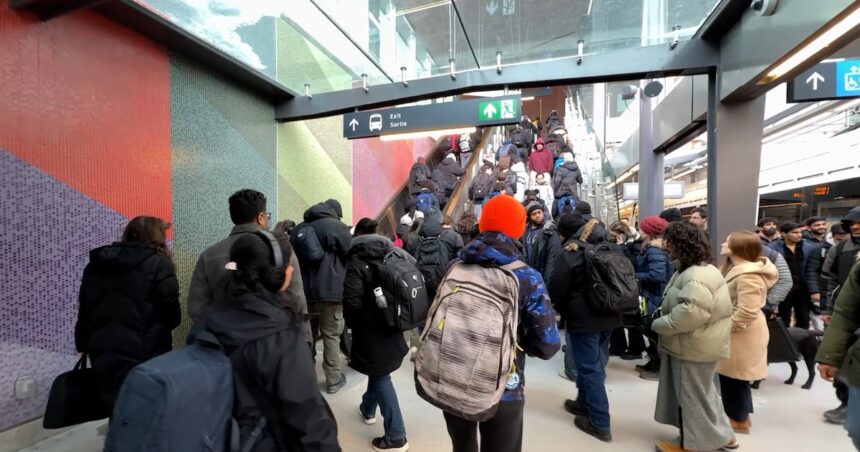

The cramped platforms along Ottawa’s Confederation Line tell a story that commuters know all too well. Riders squeeze shoulder to shoulder during rush hour while transit officials grapple with ongoing infrastructure problems that continue shrinking the system’s carrying capacity.
Recent reports confirm that spalling concrete issues persist across multiple stations. This deteriorating material forces OC Transpo to limit how many trains can operate simultaneously. Fewer trains mean longer waits and more crowded platforms for thousands of daily riders.
The concrete degradation problem isn’t new to Ottawa’s light rail system. Engineers first identified these structural concerns months ago at several downtown stations. Small chunks of concrete falling from overhead structures created serious safety hazards that transit officials couldn’t ignore.
OC Transpo responded by reducing train frequency on affected sections. Maintenance crews installed protective netting and barriers in problem areas. These temporary fixes keep riders safe but create significant operational constraints that ripple through the entire network.
Transit commission members heard troubling updates at recent public meetings. Station platforms designed to handle steady passenger flow now see dangerous crowding during peak periods. Commuters arriving at Rideau or Parliament stations often find themselves pressed against safety lines while waiting for the next available train.
City councillors expressed frustration with the recurring technical problems. Rideau-Vanier representative Mathieu Fleury noted that constituents regularly contact his office about overcrowded conditions. He emphasized that reliable transit remains essential for downtown residents who depend on the system for daily commuting.
The capacity squeeze affects more than just downtown professionals heading to work. Students traveling to the University of Ottawa face extended travel times. Healthcare workers commuting to the Civic Campus often miss connections because of irregular scheduling caused by reduced train availability.
Weather conditions compound the existing infrastructure challenges. Winter temperatures cause additional concrete stress in affected areas. Transit engineers monitor these sections constantly but acknowledge that permanent repairs require extensive work that can’t happen during regular operating hours.
Ridership data from OC Transpo shows interesting patterns despite the operational constraints. Monthly passenger counts remain below pre-pandemic levels but continue climbing steadily. More riders returning to the system while capacity shrinks creates a troublesome equation for transit planners.
City staff presented repair timelines that extend well into the coming months. Comprehensive fixes require specialized materials and extensive coordination with the original construction consortium. Legal complexities surrounding warranty obligations add layers of bureaucracy to an already complicated technical situation.
Mayor Mark Sutcliffe addressed the ongoing challenges during a recent press conference. He acknowledged commuter frustrations while defending the city’s response to unexpected infrastructure problems. The mayor stressed that safety considerations must guide all operational decisions affecting the transit system.
Transit union representatives voiced concerns about working conditions for operators and station staff. Employees deal with frustrated passengers daily while managing overcrowded platforms with limited resources. Union officials called for additional personnel during peak hours to improve safety and customer service.
The maintenance consortium responsible for the Confederation Line provided technical explanations for the delays. Spokespersons pointed to complex engineering requirements and specialized repair procedures. They insisted that rushing permanent fixes could compromise long-term structural integrity.
Alternative transportation options see increased demand as commuters seek reliable ways to navigate downtown. Para Transpo services report higher booking requests. Bicycle commuting numbers climbed even during colder months according to pathway usage statistics.
Business owners along the Confederation Line corridor notice the ripple effects. Retail establishments near affected stations report fluctuating customer traffic patterns. Some merchants adapted operating hours to match revised transit schedules and changing commuter flows.
Environmental considerations add urgency to resolving the capacity problems. Ottawa’s climate action plans depend heavily on robust public transit usage. Extended infrastructure issues that push commuters back toward private vehicles undermine municipal sustainability targets.
Budget implications loom large for city financial planners. Unexpected repair costs strain transportation department allocations. Council members debate whether to reallocate funds from other capital projects or seek additional provincial support for light rail maintenance.
Provincial transportation officials monitor Ottawa’s situation closely. Similar light rail systems in other Ontario municipalities watch for lessons applicable to their own infrastructure planning. The concrete spalling issues raise broader questions about construction standards and long-term maintenance protocols.
Community advocates emphasize equity dimensions of the ongoing capacity crunch. Lower-income residents in eastern and western neighborhoods depend most heavily on affordable transit options. Service disruptions disproportionately affect those with fewest transportation alternatives.
Looking ahead, transit planners face difficult decisions about balancing immediate safety needs against long-term system reliability. Temporary capacity reductions protect riders from concrete hazards but create their own risks through dangerous platform crowding.
Technical experts suggest that comprehensive solutions require months of coordinated effort. Permanent repairs demand careful engineering assessment followed by methodical implementation across multiple station locations. Quick fixes might address visible symptoms without resolving underlying structural concerns.
The situation tests Ottawa’s commitment to building a world-class public transit network. Light rail promised efficient, reliable transportation linking diverse neighborhoods. Persistent infrastructure problems challenge that vision and erode public confidence in the system’s future.
Commuters checking their phones for real-time arrival information hope for improvement. They deserve transit infrastructure that works as promised. Until engineers complete proper repairs, crowded platforms and constrained capacity remain frustrating realities for Ottawa riders navigating their daily routines.