
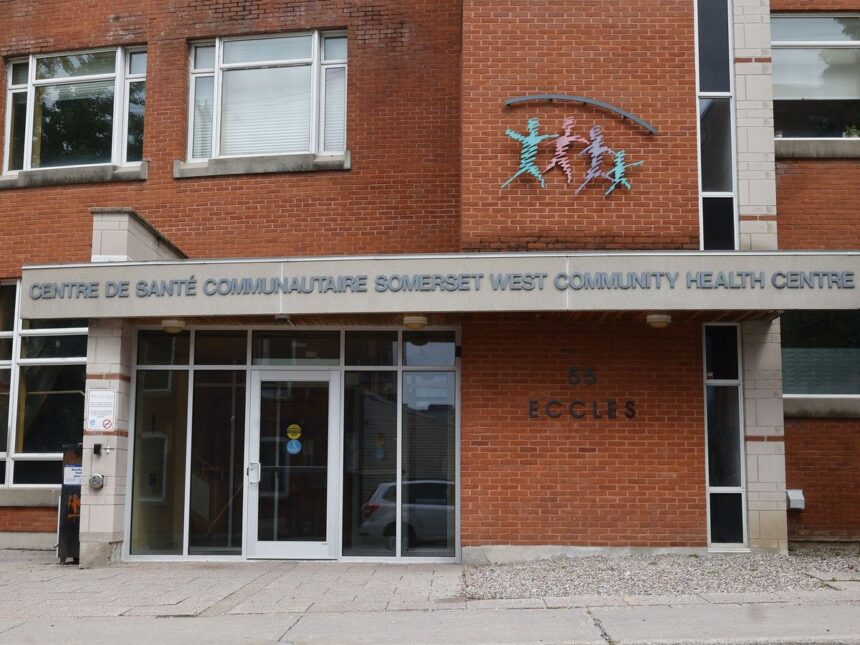

Walking through Somerset West these days, you notice things have changed. More people using drugs openly on sidewalks. More paramedic calls echoing through residential streets. More worry lines on the faces of parents walking their kids to school.
This is what happens when you close a supervised consumption site without a real plan to replace it. I’ve covered Ottawa politics long enough to know that good intentions don’t always lead to good outcomes. Right now, we’re watching that lesson play out in real time.
One year ago, the Ontario government shut down nine supervised consumption sites across the province. The first to close was right here in Ottawa, at the Somerset West Community Health Centre. Since then, the neighbourhood has become exactly what experts warned it would become: less safe, not more.
Councillor Ariel Troster represents Somerset Ward. She doesn’t mince words about what she’s witnessed. The closure hasn’t pushed drug use away from families and children. It’s brought it closer. People who once consumed drugs in a supervised medical setting now do it in alleyways, parks, and doorways.
“I really want to challenge the idea that closing supervised consumption sites makes neighbourhoods safer,” Troster said at a recent news conference. “It has actually made my neighbourhood a lot less safe.”
The numbers back her up. Gillian Kolla, a public health researcher at Memorial University in St. John’s, has been tracking what happened after those nine sites closed. Emergency calls for opioid overdoses jumped by nearly seventy percent. Emergency department visits for the same reason rose by sixty-seven percent.
Think about that for a moment. We closed facilities designed to prevent overdoses. Then overdoses increased dramatically. This isn’t complicated math.
More than two hundred and fifty organizations are now demanding the province reverse course. Groups like the HIV Legal Network, the Drug Strategy Network of Ontario, and the Canadian Drug Policy Coalition say the evidence is overwhelming. Supervised consumption sites save lives.
Kolla pointed out something that should trouble anyone paying attention. The Ford government had access to a decade of research showing these sites work. They had their own internal advisers warning them about the consequences of closure. They ignored all of it.
“The timing and magnitude of these increases are consistent with concerns that were raised at the time of the closures by various public health experts, including their own internal advisers,” Kolla said. “These trends are troubling and warrant very careful scrutiny by the province.”
I’ve spent years covering policy decisions at Queen’s Park. Sometimes governments make choices based on evidence. Sometimes they make choices based on politics. This looks like the latter.
The province says it’s promoting a recovery model through new HART Hubs: Homeless and Addictions Recovery Treatment centres. That sounds good on paper. Recovery matters. Treatment matters. Nobody disputes that.
But here’s the problem. The HART Hubs can’t offer harm reduction services like needle exchanges. That means people who aren’t ready for treatment yet have nowhere to go for basic safety measures. And many who want treatment still end up on waiting lists.
Rob Boyd runs Ottawa’s Inner City Health, which operates The Trailer supervised consumption site at Shepherd’s of Good Hope. After Somerset West closed, he expected an influx of new clients. It didn’t happen.
That tells you something important. Former clients of Somerset West didn’t travel across town to find another supervised site. They just started using drugs outside, probably close to where they were already living. Hidden corners. Back alleys. Public parks.
We’ve essentially moved a health issue from a controlled medical environment into our neighbourhoods. Then we act surprised when neighbourhoods feel less safe.
There’s another angle here that doesn’t get enough attention. Supervised consumption sites are a key HIV prevention tool. New HIV cases in Canada are rising again after years of decline. Closing these sites and eliminating needle exchanges removes one of our best defences against blood-borne infections.
Somerset West used to provide clean needles and safe disposal. Now it can’t. So people share needles or dispose of them improperly. The health risks multiply.
Advocates aren’t saying we should abandon recovery and treatment programs. They’re saying we need both. Harm reduction and recovery aren’t opposites. They’re partners.
Someone struggling with addiction might not be ready for treatment today. But if we keep them alive and healthy through harm reduction, they might be ready tomorrow. Or next month. Or next year. Dead people don’t recover.
The other reality is that treatment doesn’t work well for homeless people without stable housing. You can’t focus on getting clean when you don’t know where you’re sleeping tonight. Recovery requires stability that many people simply don’t have.
I think about the parents in Somerset West trying to explain to their kids why more people are using drugs on their street now. The province thought closing the supervised site would make families feel safer. Instead, it brought the crisis closer to their doorsteps.
This isn’t what evidence-based policy looks like. This is what happens when governments ignore research and expert advice in favour of political messaging.
Seven supervised consumption sites remain open in Ontario. The province plans to close them too. If the pattern holds, we’ll see the same results. More overdoses. More emergency calls. More public drug use. More chaos.
More than a decade of research tells us what works. Our own eyes tell us what happens when we ignore that research. The question is whether Queen’s Park is willing to listen.
Councillor Troster has watched her neighbourhood struggle for a year now. She knows what needs to happen. The experts know too. More than two hundred and fifty organizations have signed on to demand change.
The evidence is clear. The path forward is clear. What remains unclear is whether Ontario will choose evidence over politics before more people die and more neighbourhoods become cautionary tales.