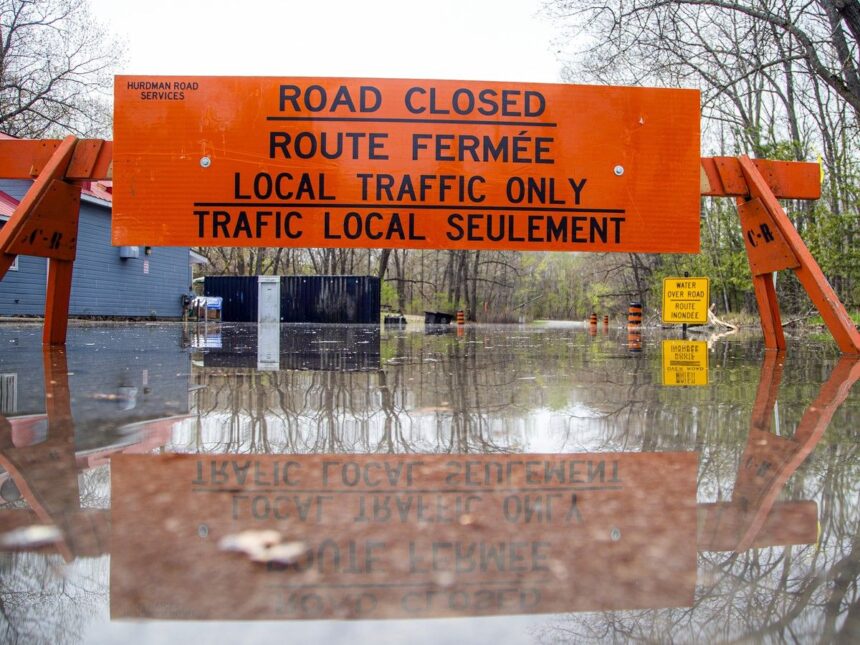

The spring sun had barely warmed the ground when I found myself at the Ottawa River shoreline last week, notebook in hand, watching the water inch closer to the embankment. This familiar ritual happens every year, yet it never loses its tension. Residents along the river know this dance well, and 2023 has brought its own unique concerns about rising water levels across our region.
Conservation authorities across Ottawa have issued multiple flood watches as snowmelt combines with spring rainfall. The Rideau Valley Conservation Authority and the Mississippi Valley Conservation Authority both activated monitoring protocols in late April. They’re keeping close eyes on water levels throughout their watersheds. These watches mean conditions are right for flooding, though immediate danger hasn’t been declared yet.
The Ottawa River Regulation Planning Board reported water levels approaching seasonal highs in several locations. Their data showed measurements exceeding normal spring levels by approximately fifteen to twenty centimeters in some areas. That might not sound like much, but I’ve learned over years of covering these events that even small increases matter significantly. Property owners near vulnerable zones understand this reality better than most people.
Local officials have emphasized the importance of preparedness without creating unnecessary alarm. Mayor Mark Sutcliffe addressed residents during a recent press conference at City Hall. His message focused on vigilance rather than panic. “We’re monitoring the situation closely with our conservation partners,” he stated clearly. “Residents in flood-prone areas should review their emergency plans and stay informed through official channels.”
The Rideau Valley Conservation Authority serves approximately 3,800 square kilometers of watershed area. Their specialists have been tracking precipitation patterns since early March. Spring runoff this year started slightly earlier than usual, creating extended exposure to potential flooding. Chris Warwick, the authority’s executive director, explained their approach to me during a phone interview. “We’re balancing natural water flow with dam operations to minimize downstream impacts,” he said. “It’s a complex equation that changes hourly.”
What strikes me most about Ottawa’s flood response is how much it’s evolved since 2017 and 2019. Those devastating floods taught harsh lessons to communities throughout the region. Infrastructure improvements have been substantial. The city invested over forty million dollars in flood mitigation projects since those difficult years. These improvements include enhanced drainage systems, raised roadways, and expanded retention areas.
Neighborhoods like Constance Bay remain particularly vulnerable despite these improvements. Residents there have developed their own informal warning networks. They share water level updates through community social media groups and keep sandbags ready in garages. This grassroots vigilance complements official monitoring systems effectively. I spoke with longtime Constance Bay resident Margaret Doyle yesterday afternoon. “We don’t wait for official warnings anymore,” she told me. “We watch the river ourselves and prepare early.”
The Mississippi Valley Conservation Authority covers a different but equally important watershed area. Their jurisdiction includes communities like Carleton Place and Almonte upstream from Ottawa. Water management decisions made there directly affect downstream conditions in our city. They’ve maintained flood watch status for tributaries feeding into the Ottawa River system. Coordination between these various authorities has become increasingly sophisticated over recent years.
Climate patterns have definitely shifted compared to historical norms. Environment Canada data shows increasing variability in spring precipitation across Eastern Ontario. Some years bring sudden heavy rainfall while others feature gradual snowmelt. This unpredictability makes forecasting more challenging for conservation authorities. They must prepare for multiple scenarios simultaneously rather than following predictable seasonal patterns.
Technology has transformed flood monitoring capabilities dramatically. Real-time water level sensors throughout the watershed feed data directly to central monitoring systems. Conservation authorities can track changes minute by minute rather than relying on periodic manual measurements. This technological advancement provides earlier warning times for communities at risk. The public can access much of this information through online portals and mobile applications.
Sandbag distribution centers opened in several locations across Ottawa as precautionary measures. City crews prepared stockpiles at strategic points including Nepean, Gloucester, and rural West Carleton areas. These sandbags remain available to residents who need them for property protection. The city learned from previous floods that early distribution prevents last-minute scrambles when conditions deteriorate rapidly.
Insurance implications weigh heavily on homeowners in flood-prone areas. Many discovered after 2017 that standard policies excluded overland flooding coverage. The insurance industry has since developed specialized flood insurance products, though they remain expensive for high-risk properties. This financial reality adds stress to the physical dangers that rising waters present. Some residents have invested thousands in personal flood barriers and sump pump systems.
Ottawa’s emergency management team conducts regular coordination meetings during flood watch periods. Representatives from conservation authorities, public works, fire services, and paramedics participate. They review current conditions and update response protocols as needed. This integrated approach ensures faster, more effective responses if conditions deteriorate. Having covered several emergency situations over my career, I’ve noticed how much smoother these coordinated efforts operate compared to past years.
Schools in potentially affected areas received updated emergency protocols from the Ottawa-Carleton District School Board. Administrators reviewed evacuation routes and communication procedures with staff members. While immediate school closures weren’t anticipated, preparedness planning helps minimize disruption if flooding worsens. Parents appreciated these proactive communications even though they hoped implementation wouldn’t become necessary.
The psychological toll of repeated flood watches shouldn’t be underestimated. Families who experienced previous flooding describe ongoing anxiety each spring. Mental health professionals recognize this seasonal stress pattern among affected populations. Support resources remain available through community health centers for residents struggling with flood-related anxiety. This aspect of disaster preparedness often receives less attention than physical infrastructure but matters enormously to community wellbeing.
Agricultural operations face particular challenges during flood watch periods. Farms along river valleys must protect livestock and equipment while managing waterlogged fields. Spring planting schedules can be disrupted significantly by extended wet conditions. The agricultural community has developed impressive resilience strategies, but each flood season brings economic uncertainty. Rural communities depend heavily on successful growing seasons.
Looking ahead, conservation authorities will continue monitoring conditions throughout the spring melt period. Weather forecasts indicate variable precipitation patterns over coming weeks. No single factor determines flooding outcomes. The combination of remaining snowpack, soil saturation levels, rainfall timing, and temperature patterns all contribute. This complexity explains why predictions remain somewhat uncertain despite technological advances.
Residents can stay informed through official sources including city websites and conservation authority alerts. Social media provides supplementary information but should be verified against official channels. I’ve learned to recommend multiple information sources to people seeking reliable updates. Emergency preparedness kits should include flashlights, batteries, medications, important documents, and several days of food and water. These simple preparations make significant differences during actual emergencies.
Standing by the river last week, watching the swollen current rush past, I remembered previous springs and their various outcomes. Some years pass without incident while others test our community’s resilience severely. The 2023 flood watches remind us that nature commands respect and preparation protects people. Ottawa has grown stronger through difficult experiences, but vigilance remains essential each spring when the waters rise again.