
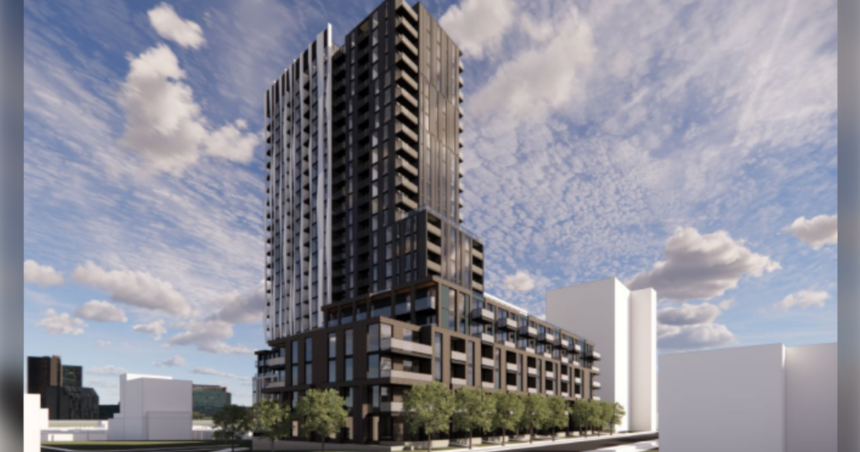

The Preston Street corridor stands at another crossroads moment. A developer has submitted plans for a 25-storey residential tower that could fundamentally reshape Little Italy’s skyline and character. Having covered zoning battles across Ottawa for nearly two decades, I’ve watched these conversations split communities right down the middle.
The proposed high-rise would rise at the corner of Preston and Carling, replacing existing low-rise structures. Developer representatives presented their vision to City Hall planning committees earlier this month. They’re positioning this project as a solution to Ottawa’s persistent housing shortage while promising to respect the neighbourhood’s Italian heritage. That’s the sales pitch, anyway.
Little Italy Business Association members have voiced concerns about the scale. Current buildings along Preston rarely exceed six or seven storeys. Jumping to 25 floors represents a dramatic departure from established patterns. Local business owners worry about construction disruptions, parking pressures, and whether the tower’s design will clash with the street’s distinctive character.
CTV News Ottawa reported that community consultations have already begun. The developer must navigate multiple approval stages before breaking ground. Planning committee reviews, heritage assessments, and public meetings will unfold over coming months. This process typically takes anywhere from eight to eighteen months in Ottawa.
Councillor for the ward indicated cautious support during preliminary discussions. The city desperately needs additional housing units to address affordability challenges. Ottawa’s rental vacancy rate hovers around two percent, well below healthy market levels. Every new residential project theoretically eases pressure on existing housing stock.
But density conversations in established neighbourhoods rarely unfold smoothly. I remember covering similar disputes in Westboro five years back. Residents feared their community would lose its village atmosphere. Developers argued that proximity to transit demanded higher density. Eventually, compromises emerged, though not everyone left satisfied.
Preston Street carries special significance beyond typical neighbourhood identity. Italian immigrants established businesses there through the mid-twentieth century. That cultural legacy remains visible in restaurants, cafes, and annual festivals. The Italian Week celebration draws thousands each June. Protecting that heritage while accommodating growth creates genuine tension.
The developer’s architectural renderings show ground-floor retail spaces. They’ve promised to incorporate design elements reflecting Italian architectural traditions. Terracotta coloring, arched windows, and public plaza spaces feature prominently in concept drawings. Whether these gestures adequately address heritage concerns remains hotly debated.
Housing affordability advocates have rallied behind the proposal. Ottawa Community Housing Corporation recently reported waiting lists exceeding ten thousand families. The housing crisis affects young professionals, seniors on fixed incomes, and newcomers alike. Adding 200-plus residential units could provide meaningful relief, supporters argue.
Infrastructure capacity questions loom large. Preston Street already experiences traffic congestion during peak periods. Adding hundreds of new residents without corresponding transit improvements could worsen existing problems. OC Transpo route adjustments might become necessary. Water and sewer systems require assessment to ensure adequate capacity.
I spoke with a Preston Street restaurant owner last week who expressed mixed feelings. She recognizes that more residents could mean more customers. But she worries construction lasting two years might drive away existing clientele. Small businesses operate on thin margins. Even temporary disruptions can prove devastating.
Environmental considerations enter the equation too. Ottawa’s Climate Change Master Plan calls for increased urban density near transit corridors. Sprawl contributes significantly to greenhouse gas emissions. Concentrating population growth along existing infrastructure theoretically reduces environmental impact. The proposed site sits within walking distance of Carling Station.
Parking provisions spark particular controversy. The developer plans to include underground parking for residents. But Preston Street businesses depend heavily on street parking for customers. Construction could eliminate dozens of on-street spaces temporarily or permanently. Finding balance between resident needs and commercial viability proves challenging.
Similar projects across Ottawa provide instructive precedents. The Bowery high-rise in Hintonburg generated comparable debates three years ago. Initial opposition eventually softened as community benefits materialized. Ground-floor retail spaces activated the streetscape. New residents supported local businesses. Concerns about character erosion didn’t fully materialize.
Not every story ends positively, though. Some developments have indeed altered neighbourhood character beyond recognition. The key difference often lies in thoughtful design and genuine community engagement. Developers who treat consultations as checkbox exercises typically face ongoing resistance.
City planning staff will scrutinize shadow studies and wind analyses. Tall buildings create microclimates that affect surrounding properties. Excessive shadowing can damage nearby businesses or residential quality of life. Wind tunneling effects sometimes make sidewalks unpleasant during winter months.
Heritage Ottawa may weigh in on preservation questions. While no designated heritage buildings occupy the specific site, the broader district carries cultural significance. Balancing preservation with evolution requires nuanced judgment. Cities that freeze development often face different but equally serious problems.
The approval process will test whether Ottawa can manage growth thoughtfully. City planning documents emphasize “complete communities” with mixed uses and varied housing types. This proposal aligns with official policy directions. Implementation always proves messier than policy statements suggest.
I’ve observed that successful projects share common characteristics. Developers who genuinely listen to community concerns fare better than those dismissing opposition. Design modifications responding to specific feedback build goodwill. Transparency about timelines and impacts demonstrates respect.
Financial viability questions persist regardless of community sentiment. Construction costs have escalated dramatically. Interest rate increases affect project financing. Some approved developments never actually get built because economics don’t work. Approvals constitute necessary but insufficient conditions.
Preston Street faces decisions that will echo for generations. The neighbourhood can’t remain frozen in amber. But growth must respect what makes communities valuable in the first place. Finding that balance requires wisdom, patience, and good faith from all parties.
Coming months will reveal whether this proposal moves forward as presented, gets modified substantially, or faces rejection. Each outcome carries consequences for Ottawa’s housing future and neighbourhood character. These aren’t abstract planning questions. They affect real people making homes and livelihoods along Preston Street.