
I’ve covered political events in this city for years, and this one feels different. Something’s shifting in how we talk about politics, and apparently, three people who’ve lived inside the machine think it’s worth addressing publicly.
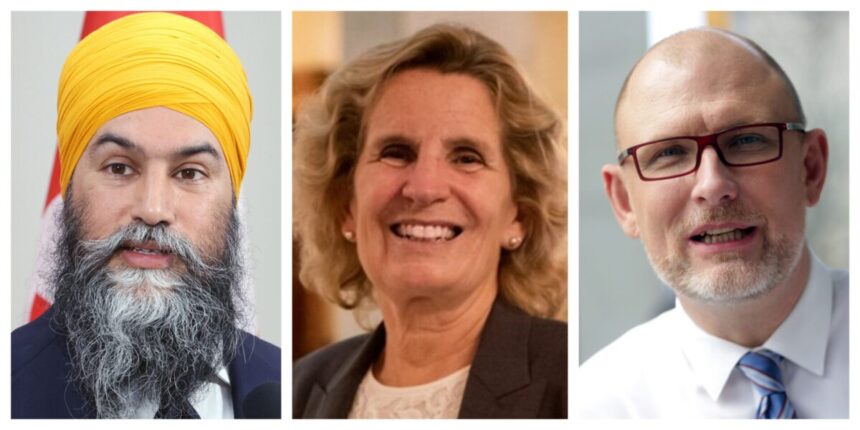
The Canadian Club of Calgary is hosting a debate on May 1 that brings together an unusual trio. Jagmeet Singh used to lead the federal NDP. Kathleen Wynne ran Ontario as premier. Ian Brodie served as chief of staff when Stephen Harper occupied the Prime Minister’s Office. They’re coming to discuss what many of us have noticed but few want to name directly: politics has gotten meaner.
Political discourse used to follow certain unwritten rules. You could disagree without questioning someone’s basic humanity. Those boundaries seem quaint now, almost nostalgic. Walk through any comments section or watch question period, and you’ll see what I mean.
The debate will focus on partisanship and how political conversation has deteriorated. But it’s not just abstract theory. The trio plans to address something more concrete and more troubling. Politicians and public officials face increasing threats and hostility, the kind that goes beyond heated disagreements.
I remember when angry constituents wrote letters. Now they show up at homes. The RCMP reported a significant increase in threats against federal politicians in recent years. Local officials aren’t exempt either.
Calgary makes sense as a venue for this conversation. We’ve always been politically engaged, sometimes intensely so. Our city council meetings can get heated. Provincial politics here rarely lacks passion. But lately, something darker creeps into these exchanges.
The Canadian Club of Calgary has hosted political discussions for decades. This organization brings together business leaders and community members interested in policy debates. Their events typically draw crowds wanting substance over spectacle. This particular debate should attract significant attention given the profile of the speakers.
Singh brings perspective from leading a national party through turbulent times. He faced racism and religious discrimination personally. His experience wearing a turban in Canadian politics exposed ugliness that many Canadians preferred not to acknowledge. He’s qualified to speak about hostility in political life.
Wynne governed Ontario during polarized times. She became premier when social media was already reshaping political communication. Her tenure saw intense criticism, some legitimate and some viciously personal. She knows what happens when political opposition crosses into something else entirely.
Brodie offers a different angle. He worked in the nerve center of federal power during the Harper years. That government faced fierce opposition and dished out plenty itself. He’s seen how political strategy intersects with public discourse, for better and worse.
The timing matters. We’re watching politicians across Canada reconsider whether public service is worth the personal cost. Municipal councils struggle to attract candidates. Federal MPs talk openly about the toll on their families. Something has to give.
Stephen Lewis recently passed away, and the political world mourned someone who represented an earlier era of political combat. Lewis fought hard for his beliefs but maintained respect for opponents. His son Avi now leads the federal NDP. The contrast between political generations becomes stark.
The debate comes as Air Canada’s CEO departed amid controversy. Politicians across party lines weighed in, showing how business and politics increasingly overlap in public discourse. André Pratte, formerly a senator, returned to a senior role with Quebec Liberals. These movements illustrate how political careers now follow less predictable paths.
Calgary has always valued straight talk. We appreciate leaders who say what they mean without excessive polish. But straight talk differs from cruelty. Honesty doesn’t require dehumanization. That distinction seems lost sometimes.
Local political observers will watch this debate closely. The business community represented by the Canadian Club wants stability and predictability. Excessive political toxicity threatens both. Companies hesitate to engage publicly when every statement becomes a potential firestorm.
I’ve interviewed hundreds of politicians over my career. Most entered public service with genuine intentions, wanting to improve their communities. Few anticipated the current environment. They expected criticism and opposition. They didn’t expect threats against their families.
The debate format will matter. If it devolves into partisan point-scoring, the irony will be painful. If the three speakers genuinely grapple with difficult questions, something valuable might emerge. We need models for how to disagree productively.
Calgary voters deserve better than what political discourse often delivers now. We can handle complex policy debates. We don’t need everything reduced to slogans and attacks. This debate might offer a small step toward something healthier.
May 1 isn’t far off. The Canadian Club will likely sell out the event quickly. People are hungry for conversations that acknowledge problems without just adding to them. Three people from different political worlds will attempt exactly that.
Whether one evening of civil discussion can counter years of deteriorating norms remains unclear. But at minimum, it signals that people inside politics recognize the problem. That’s necessary before solutions become possible.
I’ll be watching how this debate unfolds. Calgary deserves to hear honest reflection about where political culture has gone wrong. More importantly, we need to hear ideas about how to rebuild something better. Three voices with deep political experience might just offer both.