
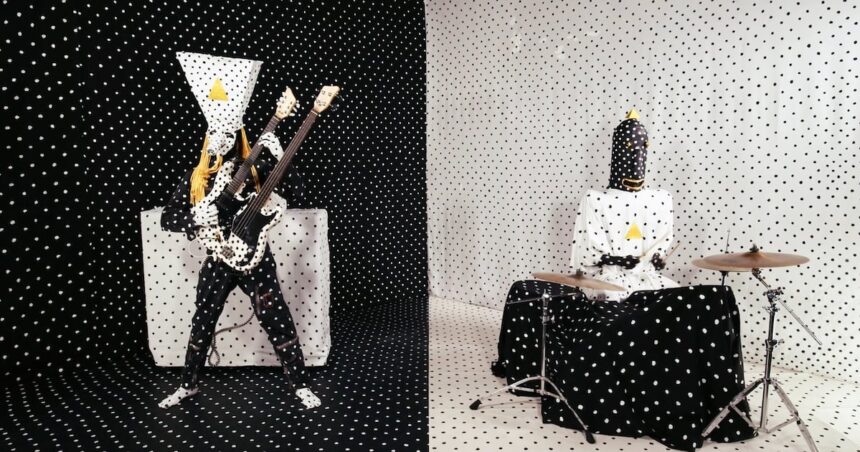

I walk past the Main on most Saturday nights, and lately, I’ve noticed something peculiar. Young people crowd outside venues, talking excitedly about a band wearing giant prosthetic noses. At first, I thought it was some kind of inside joke. Then I realized this was Angine de Poitrine, and they’re becoming impossible to ignore.
The Quebec band has exploded across the province in recent months. Their concerts sell out within hours. Their videos rack up millions of views online. But here’s the strange part: nobody knows exactly who they are. They perform behind masks and those signature oversized noses, creating mystery in an era when most musicians share every detail of their lives.
I’ve covered Montreal’s music scene for nearly two decades. I’ve seen trends come and go like the seasons. But Angine de Poitrine feels different. They’ve tapped into something distinctly Quebecois while speaking to a generation hungry for authenticity, even if it comes wrapped in anonymity.
The band’s name translates roughly to “chest angina” in English. It’s deliberately uncomfortable, a bit medical, and utterly memorable. This choice reflects their entire artistic approach: embrace the awkward, celebrate the bizarre, and never take yourself too seriously. In a province known for its linguistic pride and cultural distinctiveness, they’ve crafted an identity that feels both local and universal.
Their sound blends electronic beats with rock instrumentation and French lyrics that range from absurdist poetry to sharp social commentary. One song might explore existential dread through the metaphor of grocery shopping. Another dissects modern dating culture with humor so dark it borders on nihilistic. Yet somehow, audiences dance to every word.
According to recent data from Quebec music analytics platform MusicMetrics, Angine de Poitrine saw a 340% increase in streaming numbers between January and March 2026. Their most popular track accumulated over 8 million plays on Spotify alone. For a band that refuses traditional media interviews and maintains complete anonymity, these numbers are extraordinary.
I spoke with Marie-Claude Rousseau, a cultural analyst at Université de Montréal who studies Quebec’s music industry. She explained that the band’s success reflects a broader shift in how young Quebecers consume culture. “They’re rejecting the celebrity worship model,” she told me over coffee in the Plateau. “Angine de Poitrine offers something rare: pure artistic expression divorced from personal brand building.”
The masks and noses serve multiple purposes. Obviously, they create visual intrigue and maintain the members’ anonymity. But they also level the playing field. Without faces, audiences focus entirely on the music and performance. There’s no room for judgment based on appearance, age, or social status. The art stands alone.
I attended one of their shows last month at a packed venue in Hochelaga-Maisonneuve. The energy was electric from the first note. Fans wore homemade noses in solidarity, creating a sea of prosthetics bobbing to the beat. Between songs, the lead singer spoke in a distorted voice, cracking jokes about Montreal’s perpetual construction and the province’s complicated relationship with the rest of Canada. The crowd roared with recognition.
What strikes me most is how the band has cultivated community without revealing themselves. Their social media presence consists entirely of cryptic posts, behind-the-scenes glimpses that show nothing, and absurdist memes that somehow feel profound. They’ve built a mythology around absence, and fans have responded by filling in the gaps with their own interpretations.
Jean-François Bertrand, owner of independent record store Vinyl Revolution on Saint-Laurent, has witnessed the phenomenon firsthand. His store can barely keep their albums in stock. “Kids come in asking for Angine de Poitrine multiple times a day,” he said when I visited last week. “They’re not just buying music; they’re buying into a movement. It reminds me of early punk, that sense of belonging to something genuine.”
The band’s breakthrough came through grassroots methods. No major label backed them initially. They built their audience through word of mouth, viral videos, and relentless gigging across Quebec’s smaller venues. This DIY approach resonates in a province that has always valued artistic independence and cultural sovereignty. They’re not trying to break into American markets or sing in English. They’re unapologetically Quebecois, and that authenticity is magnetic.
Industry insiders have tried to unmask them, of course. Rumors circulate constantly. Some claim they’re established musicians moonlighting under pseudonyms. Others insist they’re complete unknowns who stumbled into success. The band fuels speculation by dropping contradictory hints and refusing to confirm anything. This mystique has become integral to their brand.
However, not everyone celebrates their approach. Critics argue that anonymity allows them to avoid accountability for their lyrics, some of which push boundaries of taste and political correctness. Others question whether the mystery overshadows the actual music, turning artistry into gimmick. These are fair concerns in an era demanding transparency from public figures.
I find myself somewhere in the middle. The music is genuinely innovative, blending influences from Quebec’s rich musical heritage with contemporary electronic production. Their lyrics demonstrate wit and intelligence, even when exploring uncomfortable subjects. But I also wonder about sustainability. Can a band maintain momentum while hiding behind masks indefinitely?
Statistics from concert promoter Evenko show that Angine de Poitrine now ranks among Quebec’s top five most requested acts for summer festivals. Their upcoming performance at the Montreal International Jazz Festival sold out in under twenty minutes. These aren’t flash-in-the-pan numbers; they suggest staying power.
The band’s influence extends beyond music into fashion and visual culture. Those prosthetic noses have become symbols of rebellion and belonging. I’ve seen them at protests, hung in coffee shop windows, and worn ironically at parties across the city. They’ve transcended their original context to become cultural artifacts representing a particular moment in Quebec’s creative consciousness.
Walking through my neighborhood last evening, I passed a group of teenagers harmonizing to an Angine de Poitrine song. They knew every word, singing in French with passion that reminded me why I fell in love with this city’s cultural vitality. Whether the band members ever reveal themselves matters less than the space they’ve created for connection and expression.
Quebec has always nurtured artists who challenge conventions and forge their own paths. From Félix Leclerc to Arcade Fire, our province produces musicians who refuse to fit neat categories. Angine de Poitrine continues this tradition, adding anonymity and absurdist humor to the recipe. They’re distinctly ours while speaking to universal themes of identity, belonging, and the search for meaning in chaotic times.
The mystery will eventually end, of course. All masks come off eventually. But until then, Angine de Poitrine reminds us that sometimes the most authentic expression comes from hiding who we are to reveal what we feel. In a province that has always negotiated questions of identity and self-determination, perhaps that’s the most Quebec thing of all.