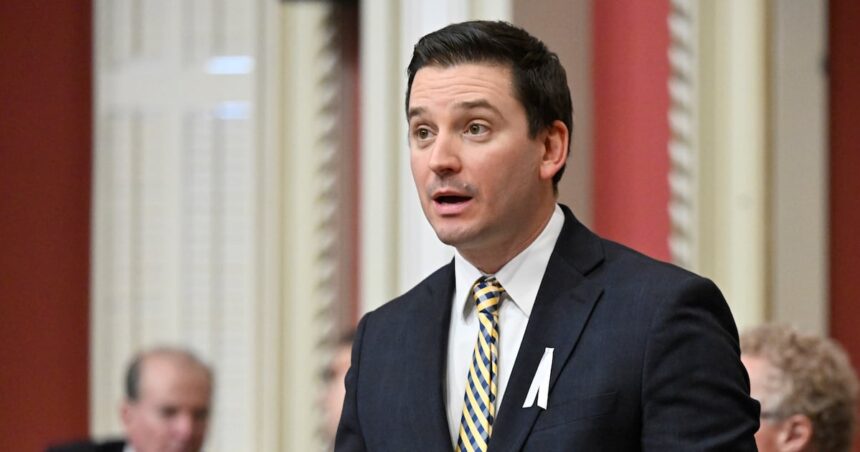

I watched the afternoon light filter through my office window yesterday when the news broke. Simon Jolin-Barrette was stepping back from controversy again.
The Justice Minister announced significant changes to Quebec’s draft constitution on Wednesday. The Legault government is pulling contentious provisions that sparked heated debate across Montreal and beyond.
This isn’t just political maneuvering. It’s a reflection of how our province navigates identity and rights in 2026.
Removing the Legal Challenge Ban
The most striking change involves public funding restrictions. Jolin-Barrette initially proposed prohibiting organizations from using public money to challenge certain fundamental laws in court.
Those laws included Bill 96, our Official French Language Act. They also covered Bill 21, the controversial Secularism Act.
Civil rights groups immediately raised concerns. Legal scholars questioned constitutional validity. Community organizations across Montreal worried about access to justice.
I’ve covered enough Quebec politics to recognize strategic retreat. This provision was always going to face serious challenges.
Constitutional lawyer Julius Grey told reporters the original proposal was “constitutionally dubious.” He argued it would have created a two-tier justice system in Quebec.
The English Montreal School Board had been particularly vocal. They’ve fought language law provisions in court before. Blocking their ability to fund legal challenges seemed like silencing legitimate dissent.
Over coffee last week at Café Olimpico, I spoke with a community organizer. She described the proposed restriction as “chilling.” Her group depends on modest public grants for operations.
The idea of losing court access felt fundamentally wrong to her.
Environmental Rights Addition
Jolin-Barrette isn’t just removing provisions though. He’s adding a collective right to the environment into the draft constitution.
This reflects growing climate consciousness across Quebec. Young activists have been demanding stronger environmental protections for years.
I’ve covered climate marches through Montreal’s streets since 2019. The energy around environmental justice has only intensified.
Adding this right to our constitutional framework signals priority shift. It acknowledges environmental protection as fundamental to Quebec identity.
Environmental lawyer David Robitaille called this addition “symbolically important.” He noted that collective rights recognize our shared responsibility to future generations.
Quebec has positioned itself as a climate leader within Canada. We’ve invested heavily in renewable energy. Our carbon pricing system predates the federal version.
Enshrining environmental rights constitutionally reinforces that commitment. It also creates potential legal tools for communities facing environmental threats.
The Broader Constitutional Project
Quebec’s constitutional project has been years in development. The Legault government wants to establish a formal provincial constitution separate from Canada’s framework.
Currently, Quebec operates under various fundamental laws without a single constitutional document. This project aims to consolidate provincial values and rights.
The draft includes protections for French language. It affirms Quebec’s distinct national character. It outlines fundamental rights and governmental structure.
Political scientist Geneviève Tellier from the University of Ottawa described the project as “identity affirmation.” Quebec has never signed Canada’s 1982 constitution. This provincial document represents continued assertion of autonomy.
I remember covering the language law debates in my early journalism career. Those same tensions about identity and rights still shape Quebec politics today.
Walking through Old Montreal last month, I overheard tourists speaking a dozen languages. Yet French remains our common thread. It’s what makes this place distinctly ours.
Political Calculations
Jolin-Barrette’s amendments reveal careful political calculation. The Justice Minister has faced criticism throughout this constitutional process.
Opposition parties called the original provisions authoritarian. Civil liberties groups organized against them. Even within the Coalition Avenir Québec, some members expressed private concerns.
Liberal MNA Marc Tanguay welcomed the amendments but questioned why problematic provisions were included initially. He suggested the government was “testing limits” of public tolerance.
Québec Solidaire spokesperson Haroun Bouazzi praised the environmental addition. However, he criticized the draft’s overall approach to collective versus individual rights.
The Parti Québécois has been cautiously supportive. They favor constitutional affirmation of Quebec nationhood but worry about specific provisions.
This political landscape creates pressure from multiple directions. Jolin-Barrette must balance nationalist aspirations with rights protections.
He must satisfy the CAQ base while avoiding constitutional invalidity. He must advance Quebec autonomy without triggering federal intervention.
Community Response
Montreal’s diverse communities have watched this process warily. Many worry about how constitutional changes might affect minority rights.
The English-speaking community remembers decades of language law evolution. Religious minorities remain concerned about secularism law impacts.
I’ve attended community meetings in Côte-des-Neiges where residents debated these issues passionately. For newcomers especially, understanding Quebec’s constitutional particularity requires significant context.
Fo Niemi from the Center for Research-Action on Race Relations expressed cautious optimism about the amendments. He noted that removing the legal challenge restriction “restores some faith in democratic process.”
However, he emphasized that the underlying laws remain problematic for many communities. The constitution doesn’t resolve those fundamental tensions.
What Happens Next
The amended draft will continue through Quebec’s National Assembly. Further debate and revision remain possible before any final adoption.
Legal experts expect constitutional challenges regardless of amendments. The relationship between provincial and federal constitutional authority remains complex.
Quebec cannot unilaterally change its status within Canadian confederation. But it can establish internal constitutional frameworks governing provincial matters.
I expect this debate to continue for months, possibly years. Constitutional questions touch our deepest collective anxieties and aspirations.
As I write this, spring is finally arriving in Montreal. The city awakens from winter with renewed energy.
Perhaps that’s fitting timing for constitutional renewal too. We’re constantly negotiating who we are and what we value.
These amendments show that even in constitutional matters, Quebec remains a work in progress. We’re still writing our collective story.