
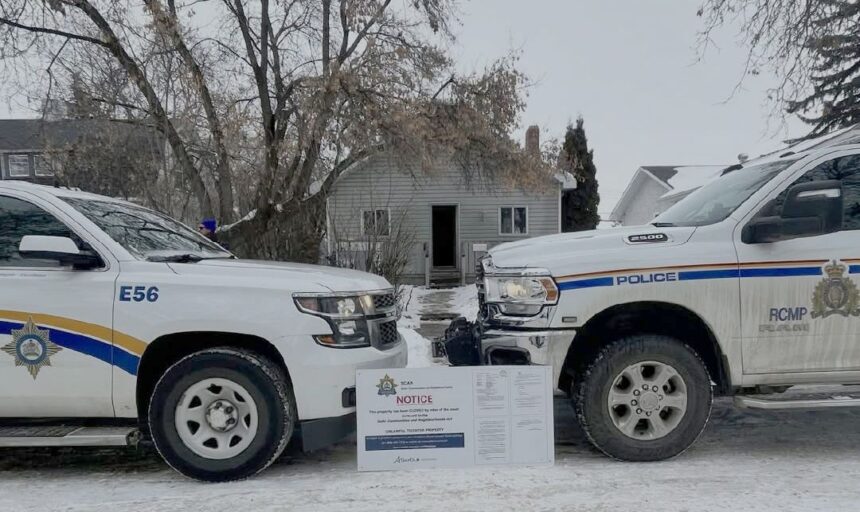

The Wetaskiwin RCMP worked alongside SCAN, the Safer Communities and Neighbourhoods unit, to secure closure orders for both properties. Residents had reported constant traffic at odd hours, suspected drug activity, and a general sense of unease in what used to be quiet streets. These weren’t just minor annoyances. Families were afraid to let their kids play outside.
SCAN operates under provincial legislation designed specifically for situations like these. The unit investigates properties where illegal activity creates ongoing problems for neighbors. Unlike traditional policing that targets individual crimes, SCAN looks at patterns. They examine how a property affects the surrounding community over time.
I’ve covered enough of these cases to know the relief neighbors feel when action finally happens. One woman I spoke with last year described similar issues on her block. She told me she’d stopped sitting on her front porch because of the people coming and going next door. That kind of fear changes how people live in their own homes.
The investigation into the Wetaskiwin properties took several months. SCAN doesn’t rush these cases. They gather evidence, document patterns, and build solid cases before approaching property owners. The process protects everyone’s rights while addressing legitimate community safety concerns.
Officers observed the houses extensively during their investigation. They documented who came and went, tracked complaint reports from neighbors, and coordinated with local RCMP members. The evidence had to clearly show that illegal activity was happening regularly at these locations.
Property owners received notices before the final closure orders came down. SCAN gives owners opportunities to fix problems voluntarily. Some landlords genuinely don’t know what’s happening at their rental properties. Others know but haven’t taken action. Either way, the notice period allows them to evict problem tenants or make necessary changes.
In these Wetaskiwin cases, the problems continued despite warnings. That’s when SCAN moved forward with formal closure orders. The legal documents prohibit anyone from entering or occupying the properties for a specified period. Violating a closure order brings serious consequences including fines and potential criminal charges.
Wetaskiwin isn’t unique in facing these challenges. Communities throughout Alberta deal with problem properties that destabilize neighborhoods. What makes SCAN effective is their focus on the property itself rather than just arresting individuals. When police arrest someone for drug crimes, another person often steps in to continue operations at the same location. SCAN breaks that cycle.
The impact on surrounding properties extends beyond safety concerns. Real estate values can drop when a problem house operates in a neighborhood. Families looking to buy homes avoid streets with known issues. Long-time residents feel trapped, unable to sell without taking financial losses.
I remember walking through a neighborhood in north Edmonton where SCAN had recently closed a property. The change was visible. Kids were riding bikes again. People were outside doing yard work and chatting with neighbors. One man told me it felt like getting his street back. That’s the goal behind these interventions.
Critics sometimes question whether closures simply move problems to different neighborhoods. It’s a fair concern. SCAN acknowledges that possibility but argues their approach still benefits communities. Moving a problem is better than letting it continue unchecked. Plus, closures send messages to property owners about accountability.
Landlords across the province have responsibilities under residential tenancy laws. They can’t simply collect rent while their properties damage neighborhoods. SCAN cases remind property owners that ignoring illegal activity has real consequences. Some landlords have improved their tenant screening and property management after seeing SCAN actions in their communities.
The Wetaskiwin closures required collaboration between multiple agencies. Local RCMP provided ground-level intelligence and complaint documentation. SCAN investigators brought specialized expertise in property-related enforcement. Municipal officials supported the process through their regulatory authority. This teamwork approach tackles problems from multiple angles simultaneously.
Neighbors who filed complaints showed courage in speaking up. Reporting problems with nearby properties can feel risky. People worry about retaliation or being labeled as troublemakers. But without community input, SCAN can’t identify which properties need investigation. Those initial complaints often come from people who’ve lived on their streets for decades and watched conditions deteriorate.
The closure period gives neighborhoods breathing room. Streets can return to normal rhythms. Families regain their sense of security. Property owners face decisions about their holdings. Some sell rather than deal with the scrutiny. Others clean up their act and become better landlords.
Wetaskiwin residents affected by these properties will likely notice immediate changes. The constant vehicle traffic should stop. Late-night disturbances should end. The anxiety that comes from living near illegal activity should ease. These might seem like basic expectations, but for people enduring months or years of problems, the relief is profound.
SCAN’s work continues throughout Alberta with dozens of investigations ongoing at any given time. Each case represents a community asking for help and agencies responding. The Wetaskiwin closures demonstrate that even smaller cities outside major urban centers have access to these enforcement tools.
Moving forward, these properties will eventually reopen. The closure orders aren’t permanent. When that happens, the hope is that new occupants or reformed owners will be better neighbors. SCAN sometimes monitors properties after closures to ensure problems don’t resume. The goal isn’t punishment for its own sake but genuine neighborhood improvement.
For now, two Wetaskiwin streets are quieter. Families living nearby can exhale. And other property owners in the area have a clear reminder about the standards expected in residential communities.