
Walking through Toronto Metropolitan University’s campus last week, I found myself thinking about identity in ways I hadn’t before. The city’s diversity isn’t just a statistic. It’s lived experience, especially for students navigating multiple cultural worlds simultaneously.
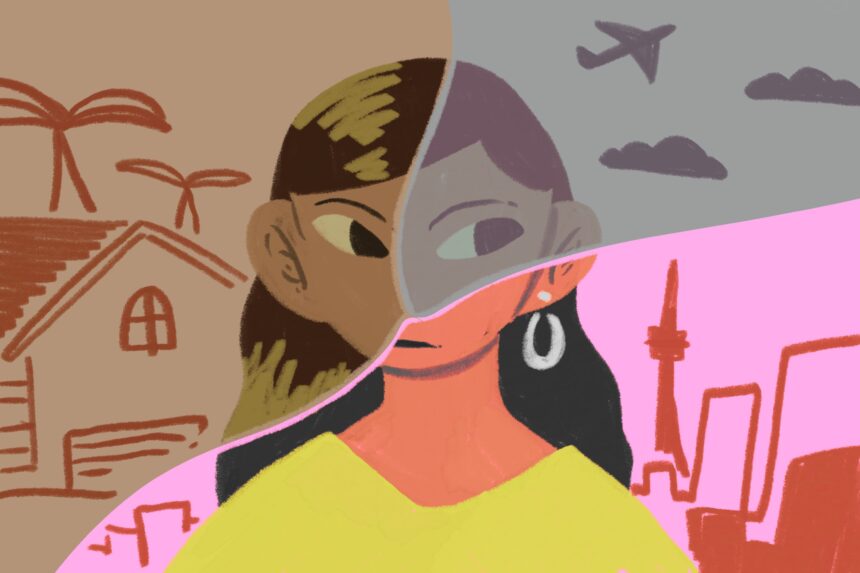
Third-culture kids represent a growing demographic at TMU. These students grew up across borders, carrying passports that don’t fully capture their complex identities. Their stories challenge traditional notions of home and belonging.
Masoud Kianpour studies this phenomenon at TMU. He’s a sociologist who researches multiculturalism and third-culture experiences. Kianpour defines these students as children who spent developmental years outside their parents’ culture. They construct something entirely new rather than simply blending backgrounds.
“These kids don’t develop rootedness in either home culture or host culture,” Kianpour explained during our conversation. “Instead they construct a third-culture.” His own son falls into this category. He understands the struggles firsthand.
Elizabeth Abi Jones embodies this experience perfectly. The fifth-year psychology student has lived in six countries. Born in the United States to Gambian parents, she’s called Senegal, Kenya, Tunisia and Ivory Coast home at various points. Her father’s work demanded constant relocation.
When people ask about her background, Jones adjusts her answer based on context. “I usually just tell people I’m American,” she said. “Depending on how I feel, I’ll give them the full breakdown.”
That flexibility reveals something deeper about third-culture identity. Home becomes detached from geography. For Jones, family defines home more than any particular location. “Home is where my family is,” she explained simply.
Growing up between cultures created challenges Jones still navigates today. She faced teasing for not speaking Wolof, her native language. Her mother’s advice became a touchstone during difficult moments. “Don’t ever let anybody tell you where you’re from,” Jones recalls her saying.
At TMU, Jones found community through the Black Business Student Association. She connects more strongly with racial identity than specific cultural backgrounds. The BBSA provides diverse perspectives from African, Caribbean and Latin American students. “I’ve always been interested in other people’s cultures,” Jones noted, her traveling background shining through.
Hamed Bakkar brings a different perspective to third-culture experiences. The third-year computer science student grew up in Damascus, Syria. At seventeen, he moved to Rome when his father took a United Nations position. He spent three years in Italy before coming to Toronto.
Bakkar found surprising similarities between Syrian and Italian cultures. Both prioritize family gatherings, restaurant experiences and café culture. “They love living life,” he said about both communities. Toronto’s fast-paced, work-centered atmosphere struck him as distinctly different.
Moving at seventeen meant Bakkar experienced displacement differently than younger third-culture kids. Language barriers created immediate challenges in Italy. “You definitely feel it immediately,” he recalled about not speaking Italian initially.
Kianpour emphasized how Canada’s multiculturalism eases identity navigation for third-culture students. “When you say ‘I’m a Canadian,’ no one assumes you’re necessarily white or belong to a particular ethnic background,” he explained. Toronto’s diversity creates space for complex identities.
Saanika Mahajan’s story illustrates how economic factors shape third-culture experiences. The fourth-year software engineering student moved from India to the United Arab Emirates at age ten. Despite splitting childhood between countries, she identifies as “80 percent Indian.”
Limited integration opportunities in the UAE strengthened Mahajan’s connection to Indian heritage. Emirati culture remains close-knit, she explained. “They let everybody coexist, but in their own groups,” Mahajan observed. Her UAE childhood felt thoroughly Indian through school, food and community connections.
Discrimination also influenced Mahajan’s identity formation. She witnessed salary disparities affecting Indian workers, including her father. “They overwork the Indians but underpay them for the same designation,” she said about American companies operating there.
Kianpour confirmed this pattern affects many third-culture kids. “Their belonging might become conditional or hesitant,” he noted. Acceptance depends on appearance and accent rather than genuine integration.
Despite challenges, Mahajan celebrates Indian culture’s growing international presence. Bollywood’s popularity in the UAE created shared cultural moments. “Even locals like Bollywood,” she said enthusiastically about movie screenings she attended.
Canada represents a fresh start for Mahajan. She’s actively “absorbing” local culture during her undergraduate years. Returning from vacation recently, she felt genuine emotion navigating campus again. “When I navigated Sankofa Square again, I felt like home,” she shared.
Toronto’s unique position as a multicultural hub serves these students well. The city doesn’t demand cultural assimilation the way other places might. Instead, it creates room for hybrid identities to flourish.
Covering education stories here, I’ve noticed how TMU reflects broader Toronto trends. The university attracts students from everywhere, creating campus dynamics that mirror city neighborhoods. Multiple languages echo through hallways. Food choices span continents. Cultural celebrations overlap throughout the year.
Third-culture students bring valuable perspectives to campus life. They understand code-switching intuitively. They navigate cultural differences naturally. They build bridges between communities that might otherwise remain separate.
Kianpour uses the term “cultural liminality” to describe their experience. It means existing in-between, never fully belonging anywhere. That sounds isolating, yet these students often develop remarkable adaptability. They read social situations quickly. They adjust communication styles fluidly. They find common ground across differences.
Jones, Bakkar and Mahajan each found belonging differently at TMU. Jones connected through racial identity. Bakkar appreciated Canada’s multicultural acceptance. Mahajan gradually built Canadian identity while maintaining Indian roots. No single path exists for third-culture students.
Their stories matter beyond campus boundaries. Toronto continues attracting immigrants and temporary residents whose children will grow up between cultures. Understanding third-culture experiences helps create inclusive communities.
These students also represent Toronto’s economic future. Their international perspectives and cultural fluency create competitive advantages in global business. Their language skills open international markets. Their cross-cultural understanding facilitates partnerships.
Walking through TMU’s campus, I see Toronto’s future taking shape. Third-culture kids aren’t caught between worlds. They’re creating new ones, building identities that transcend traditional boundaries. Their experiences challenge us to rethink belonging in increasingly mobile, interconnected societies.
Toronto offers something many cities can’t provide these students. It offers permission to be multiple things simultaneously. You can be Indian and Canadian. American and Gambian. Syrian, Italian and Canadian. The city doesn’t demand choosing.
For third-culture kids finding their way at TMU, that permission matters enormously. It transforms liminality from isolation into possibility. It reframes in-betweenness as unique positioning rather than permanent displacement.
Their presence enriches campus culture and city life. They remind us that identity isn’t fixed or singular. It’s fluid, constructed and reconstructed through experiences across borders. They show us that home can be many places or wherever family gathers.