
Standing in my local No Frills last week, I watched a young mother pause at the produce section. She picked up a head of lettuce, checked the price, and quietly put it back. That small moment has stayed with me, especially after my recent conversation with a Toronto farming expert who paints a concerning picture of what’s coming next.
The shelves look full right now. Prices seem stable, at least for the moment. But according to Derryn Shrosbree, a farmer and advocate with 33seven, a Toronto-based advisory firm for farmers, we’re sitting in the calm before a potential storm. Unless tensions in Iran ease soon, he warns that grocery prices could spike dramatically within just a few months.
The problem traces back to the Strait of Hormuz. This narrow waterway has become a bottleneck for global trade. About a third of the world’s fertilizer supply can’t move through this critical passage right now. That might sound like a distant problem, but Shrosbree explains it’s already hitting farmers hard where it hurts most.
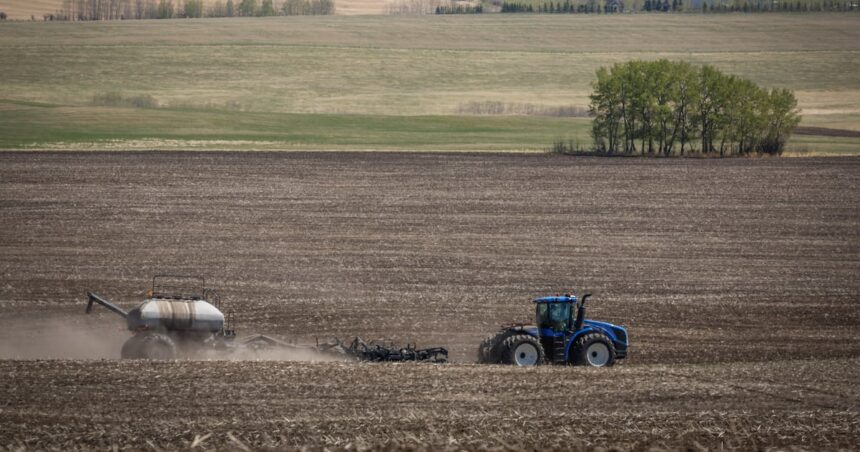
Urea and dry nitrogen are essential for growing crops. These fertilizers have jumped by hundreds of dollars per tonne in recent weeks. Shrosbree breaks down the math in terms any of us can understand. It now costs a farmer between $40 and $60 more per acre just to plant and maintain their crops.
“That’s obviously impacted the cost of inputs for the farmer,” Shrosbree told me during our phone interview. “If this continues, yes, we’re going to run into shortages. And that will be a very tricky thing for the consumer, because prices will spike fast.”
The numbers are staggering when you look closely. Farmers are seeing a $500 per tonne increase in urea, which forms part of base fertilizer. Dry nitrogen has jumped by $250 per tonne. These aren’t small adjustments. They represent fundamental shifts in production costs that will eventually reach Toronto grocery stores.
Shrosbree expects a 10 to 15 per cent increase in base commodity prices. However, he cautions that this will fluctuate significantly depending on the product type. Some items might see smaller increases, while others could jump even higher.
I’ve covered enough economic stories to know that price increases rarely affect everyone equally. The mother I saw at No Frills will feel this differently than someone shopping at Pusateri’s. But everyone shops for groceries, and when base commodity prices rise by double digits, nobody escapes entirely.
There’s a silver lining here, at least temporarily. Shrosbree says there’s no immediate supply shortage facing farmers right now. Canadian farmers have already stockpiled enough fuel and fertilizer on-site to plant their crops for the upcoming season. This foresight buys us some time.
“We will get into the field with no problem with enough nitrogen, urea, sulfur, phosphates, etc,” Shrosbree explained. “So we’re hoping that things calm down a little bit, and by harvest time, which is sort of September time.”
The real test comes during harvest season. Combines are massive machines that consume diesel at remarkable rates. If farmers face severe diesel shortages by September, it will directly affect the crops that eventually reach Toronto markets. Shrosbree’s concern is palpable when he discusses this possibility.
Walking through Toronto’s financial district yesterday, I noticed how disconnected we sometimes feel from agricultural realities. We’re surrounded by glass towers and tech startups. But our food still comes from farms, and those farms depend on global supply chains that can break down quickly.
Shrosbree draws comparisons to the 2022 Russia-Ukraine conflict. When that war started, oil prices initially spiked before stabilizing. The global supply adjusted to a new normal. He’s sensing that pattern might repeat itself with the current Iran situation.
“So we’re sensing that this will happen again here,” Shrosbree said. His tone wasn’t panicked, just realistic about the cycles he’s witnessed before.
Despite the challenges, Shrosbree maintains a surprisingly optimistic outlook. He points out that it’s “not all doom and gloom” right now. The Bloomberg Commodity Index is up six per cent year to date. He’s expecting strong exports, which benefits Canadian farmers.
The Canadian canola industry has caught a break recently. Tariffs on exports to China have dropped to less than 15 per cent. This represents significant relief for farmers who depend on international markets. Shrosbree sees this as a positive counterbalance to rising input costs.
“So we’re super optimistic for a great season,” he told me. “And I think that the commodity prices will more than offset the input prices.”
Then he offered a distinctly Canadian observation that made me smile. “As you know, Canadian farmers are extremely resilient. We’re used to taking hockey pucks to the face constantly. So we will find a way around this, like we do on most of our challenges.”
That hockey metaphor resonates here in Toronto. We understand resilience through sports. We’ve watched teams rebuild, adapt, and overcome. Farmers operate with similar determination, though their challenges involve soil and weather rather than ice and pucks.
The federal government has stepped up with practical assistance. Farm Credit Canada offers a program that allows farmers to borrow up to $500,000 through a new credit line. This helps farmers manage spiking input costs without making desperate short-term decisions.
“That has helped a lot of farmers to be able to sort of buffer the current price increases,” Shrosbree said. “So we’re grateful for that.”
Government programs don’t always work smoothly, but this one seems to address a real need at the right time. It gives farmers breathing room to navigate these turbulent months.
As I write this from my downtown Toronto office, I’m thinking about that mother at No Frills. She’s making difficult choices now, and those choices might get harder in coming months. But I’m also thinking about farmers like Shrosbree who are working through complex challenges most of us never see.
The next few months will tell the story. If tensions in Iran ease and supply chains normalize, we might avoid the worst scenarios. If not, Toronto shoppers should prepare for noticeable price increases by late summer or early fall.
For now, the groceries look abundant. The prices seem manageable, if higher than we’d like. But beneath that surface stability, forces are gathering that could reshape what we pay for food. Staying informed helps us prepare, both practically and mentally, for whatever comes next.