
I walked past the US Consulate on University Avenue countless times over the years. It’s one of those imposing buildings you notice but rarely think about. That changed dramatically this week when gunshots shattered the usual downtown calm. Police rushed to the scene early morning, and Toronto found itself at the center of an international security investigation.
The incident unfolded around 7:30 AM on a typical weekday. Shots rang out at the American diplomatic facility located at 225 Simcoe Street. Officers from the Toronto Police Service arrived within minutes. They immediately secured the perimeter and began investigating what officials are calling a deliberate attack on American soil in Canada.
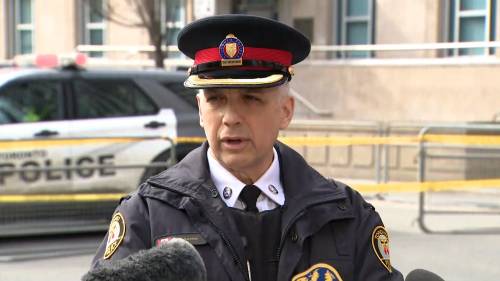
Chief Myron Demkiw addressed reporters later that day. His words carried weight and urgency. “This is definitely a national security incident,” he stated firmly. The declaration elevated the situation beyond routine police work. Federal agencies joined local investigators almost immediately. The RCMP and Canadian Security Intelligence Service now coordinate with American counterparts.
No injuries were reported during the shooting. That’s remarkably fortunate given the building’s location in the heart of Toronto’s business district. Thousands of people work within blocks of the consulate. Morning commuters typically flood those sidewalks during rush hour. The timing could have resulted in tragedy under different circumstances.
Investigators discovered bullet holes in the building’s exterior. Forensic teams photographed and documented each impact point. Spent shell casings littered the ground nearby. Evidence technicians carefully collected every piece of physical evidence. These details will help reconstruct exactly what happened and identify who pulled the trigger.
The US Consulate serves approximately 7.5 million Americans living in Ontario. It processes visas, handles passport renewals, and assists citizens in distress. Diplomatic facilities represent their home countries on foreign soil. Attacks against them carry serious international implications. Canada and the United States share the world’s longest undefended border. This incident tests that relationship in unexpected ways.
Security footage from surrounding buildings became crucial to the investigation. Toronto’s downtown core has extensive camera coverage. Banks, retail stores, and residential towers all maintain surveillance systems. Detectives spent hours reviewing recordings from multiple angles. They’re piecing together the shooter’s movements before and after the attack.
Local business owners expressed shock and concern. Maria Santos operates a coffee shop two blocks away. “I heard what sounded like firecrackers,” she told reporters. “Then police cars came from everywhere. It’s scary to think someone would do this so close to where we work every day.”
The consulate remained closed following the incident. Staff members were sent home while security assessments continued. American officials work closely with Canadian authorities to determine when normal operations can resume. Diplomatic security specialists from Washington arrived to evaluate protection protocols.
Toronto Mayor Olivia Chow released a statement condemning the violence. “Our city stands united against acts that threaten public safety and international cooperation,” she wrote. Her words reflected the sentiment across Toronto’s diverse communities. This city prides itself on being peaceful and welcoming to all nations.
The investigation expanded beyond Toronto quickly. RCMP officers in Ottawa coordinate with American FBI agents. National security analysts examine potential motives behind the attack. Was this politically motivated? Could it be connected to international tensions? These questions dominate discussions among law enforcement professionals.
Public safety expert David Chen teaches criminology at York University. He explained the seriousness of attacking diplomatic property. “Consulates enjoy special protections under international law,” Chen said. “Violating that protection is treated extremely seriously by governments worldwide. Canada will spare no resources solving this case.”
Downtown Toronto returned to normal by afternoon. Yellow police tape came down. Traffic resumed its usual flow. But anxiety lingered among people who work nearby. Security guards at neighboring buildings remained extra vigilant. Office workers glanced nervously at the consulate when passing by.
The incident raises questions about security at diplomatic facilities across Canada. Toronto hosts dozens of consulates representing countries from every continent. Most maintain relatively low-key presences compared to embassies in Ottawa. This shooting may prompt reassessments of protection measures at all such locations.
Social media lit up with speculation about the shooter’s identity and motives. Police urged the public to avoid spreading unverified information. “We’re following every credible lead,” Detective Sergeant Williams told reporters. “What we need now is anyone with information to come forward. Even small details could prove vital.”
Rewards are being offered for information leading to an arrest. Toronto Crime Stoppers set up a dedicated tip line. The US State Department also announced financial incentives for helpful intelligence. Authorities believe someone saw something useful even if they don’t realize its significance.
This marks the first shooting at Toronto’s US Consulate in recent memory. Diplomatic facilities occasionally face protests or demonstrations. Actual violence remains extraordinarily rare. The last comparable incident occurred years ago at a different location. Canada’s reputation as a safe, stable democracy makes this attack particularly jarring.
International implications extend beyond Canada and America. Other nations watch closely to see how this situation unfolds. Diplomatic security depends on host countries providing adequate protection. Any perception of vulnerability could affect how countries station representatives abroad.
The investigation continues around the clock. Forensic analysts process evidence in laboratories. Digital specialists examine electronic communications. Traditional detective work complements high-tech investigation methods. Every resource available to Canadian law enforcement focuses on identifying the perpetrator.
Toronto remains safe despite this unsettling incident. Millions of people live, work, and visit downtown daily without problems. One violent act doesn’t define a city built on diversity and mutual respect. But it serves as a reminder that vigilance remains necessary even in peaceful places. The coming weeks will reveal more about who attacked the consulate and why they chose such a provocative target.