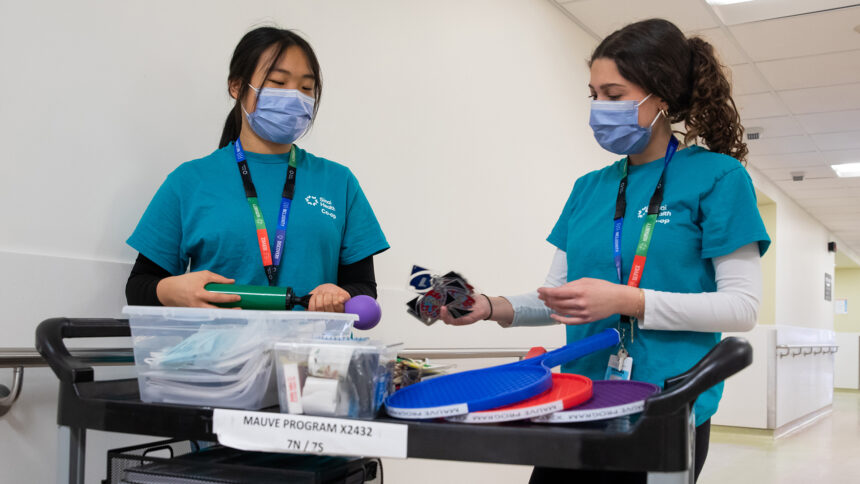

Walking through the hallways of Mount Sinai Hospital this past summer, I noticed something refreshing among the usual rush of doctors and nurses. Young people in bright T-shirts were guiding patients, organizing surgical instruments, and learning what it really means to work in healthcare. These weren’t medical students or nursing trainees. They were high school kids from Toronto Community Housing communities, getting their first real taste of hospital life.
The program connects youth from low-income neighborhoods with hands-on experience at two major Toronto hospitals. It’s part of a partnership between Sinai Health and Toronto Community Housing Corporation that’s been quietly reshaping how young people in our city access healthcare careers. Eleven students spent their summer break working four to six hours daily at Mount Sinai Hospital and Hennick Bridgepoint Hospital. They weren’t just shadowing or observing from a distance. They were actually working alongside staff in intensive care units, fracture clinics, and medical device departments.
I’ve covered workforce development stories across Toronto for years, and this partnership stands out. Most summer jobs for teenagers involve retail counters or lawn mowers. This program puts them directly into professional healthcare environments where they interact with patients, participate in emergency drills, and attend meetings with hospital leadership. The contrast couldn’t be sharper between flipping burgers and preparing instruments for surgery or comforting an elderly patient with dementia.
Dr. Gary Newton, who leads Sinai Health as President and CEO, told me these early exposures matter tremendously. Opening doors before students even graduate high school gives them time to explore career options they might never have considered. It benefits everyone involved, from the students discovering new paths to the hospital teams who gain enthusiastic helpers to the patients who receive extra attention and care. I found his perspective particularly compelling because it moves beyond charity to mutual benefit.
Stacy Golding coordinates community services at Toronto Community Housing and explained why access matters so deeply. Many of these students come from racialized, low-income families where healthcare careers can feel completely out of reach. They have the aspiration and the capability, but they lack the connections and exposure that wealthier students often take for granted. Programs like this one level the playing field by providing structured opportunities to prove themselves in professional settings. When given the chance, these young people consistently demonstrate they can thrive.
The program structure mirrors Sinai Health’s regular co-op placements but reserves spots specifically for youth living in Toronto Community Housing properties. Students must complete formal applications and sit through thirty-minute interviews. Once accepted, they commit to working Monday through Friday throughout July and August. Theresa Shiel, who directs volunteer resources at Sinai Health, emphasized that the hospitals wanted to offer genuine opportunities at well-known institutions rather than token experiences. The application process itself teaches professionalism and interview skills that serve students well regardless of their eventual career choices.
Placement areas vary widely based on student interests and hospital needs. Some work in the Neonatal Intensive Care Unit caring for premature infants. Others assist in fracture clinics or join the MAUVE program, which stands for Maximizing Aging Using Volunteer Engagement and focuses on elderly patients. The Medical Device Reprocessing Department gives students behind-the-scenes exposure to the complex logistics that keep operating rooms functioning. Each placement offers distinct learning experiences and different types of patient interaction.
What struck me most during my conversations with hospital staff was their insistence that these students perform real work with actual impact. They’re not extras or decoration. In the medical device department, volunteers help select, prepare, and package instruments for elective surgeries. In patient care areas, they assist with wayfinding through complex hospital layouts, walk patients to diagnostic tests, provide warm blankets, and simply offer companionship. These tasks might seem small, but anyone who’s spent time in a hospital knows how much they matter when you’re scared, in pain, or confused about where to go next.
Angel Lau works as an elder life specialist in the MAUVE program and regularly supervises student volunteers. She values the frontline patient interaction they receive. Students interested in occupational therapy, physical therapy, nursing, or similar careers get authentic previews of daily work life. They experience the emotional rewards of helping people and the physical demands of being on their feet for hours. They learn how to communicate with patients who have dementia or mobility limitations. These lessons simply can’t be replicated in classrooms or textbooks.
The learning extends well beyond medical knowledge or healthcare procedures. Students develop teamwork skills while collaborating with diverse staff members. They practice problem-solving when faced with unexpected situations like responding to emergency codes or supporting patients experiencing distress. They build leadership capacity by taking initiative and demonstrating reliability in professional environments. Theresa Shiel pointed out that students confront difficult emotions too, learning how they personally handle sadness, loneliness, and crisis situations they’ve never encountered before.
Some students discover healthcare is their calling and return as regular volunteers, researchers, or eventually staff members. Others realize bedside care isn’t right for them, and Theresa considers that equally valuable. She recalled one co-op student who arrived determined to become a physician but fainted at the sight of blood. He eventually became a successful lawyer specializing in healthcare law and working with hospitals. The program helped him discover where his actual talents and interests aligned, even though it wasn’t his original plan.
This two-way discovery process requires genuine commitment from both the hospital and the students. Theresa emphasized it’s not just an assignment to complete or a box to check. It’s a partnership where students decide how much they want to invest in learning and growing. When students show up ready to engage fully, the hospital responds with extensive mentorship, networking opportunities, and exposure to diverse career paths. The relationship benefits both sides when approached with seriousness and mutual respect.
Walking Toronto’s neighborhoods, I’ve seen how geography often determines opportunity in our city. Kids growing up in certain postal codes have parents who are doctors, lawyers, and business executives. They hear dinner table conversations about professional life and benefit from family connections that open doors. Students in Toronto Community Housing communities possess equal intelligence and ambition but often lack these informal advantages. Programs bridging this gap don’t just help individual students. They strengthen our entire healthcare system by drawing talent from previously overlooked populations.
The timing matters too. High school represents a critical period when students begin making decisions about post-secondary education and career directions. Early exposure to healthcare professions helps them make informed choices about whether to pursue science courses, apply to specific university programs, or explore alternative pathways into the field. It also builds their resumes with meaningful experience that stands out on future applications for jobs, scholarships, or admission to competitive programs.
Toronto faces ongoing healthcare workforce challenges like most major cities. We need more nurses, technicians, therapists, and support staff across our hospital system. We also need healthcare workers who reflect the diversity of communities they serve and understand the barriers patients from marginalized backgrounds face when accessing care. This partnership between Sinai Health and Toronto Community Housing directly addresses both needs by creating pipelines for talented young people from underrepresented communities to enter healthcare careers.
The partnership represents something larger than a summer jobs program. It demonstrates how major institutions can actively work to dismantle barriers that keep opportunities concentrated among privileged groups. It shows commitment to building a more inclusive healthcare workforce that draws from all of Toronto’s neighborhoods. Most importantly, it proves that when we invest in young people and give them genuine opportunities to demonstrate their capabilities, they consistently rise to meet the challenge and often exceed expectations.