
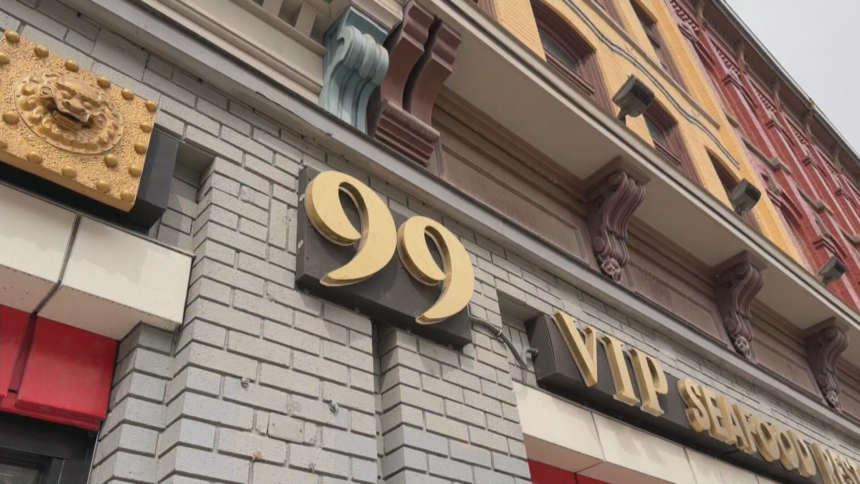

The short-lived venture of VIP Seafood on Rideau Street has come to an end, leaving yet another vacancy in one of Ottawa’s most talked-about retail locations. The upscale Chinese seafood restaurant closed its doors after operating for just a few months in the space that once housed the infamous Rideau Street McDonald’s.
Walking past that corner recently, I noticed the darkened windows where vibrant red lanterns once hung. It’s a sight that’s become all too familiar along this stretch of downtown Ottawa. The closure marks another chapter in the ongoing story of a location that seems unable to shake its troubled past.
VIP Seafood opened with considerable fanfare earlier this year. The restaurant promised authentic Cantonese cuisine and fresh seafood dishes in an elegant dining atmosphere. Management invested heavily in renovations to transform the space from its fast-food origins into something more refined. The interior featured traditional Chinese decorative elements and modern dining fixtures.
The timing of the opening seemed promising at first glance. Downtown Ottawa has been slowly recovering from pandemic-related challenges. Office workers have gradually returned to their workplaces. Tourism numbers have been climbing back toward pre-pandemic levels. Restaurant owners across the city have reported improved business conditions in recent months.
However, operating a restaurant on Rideau Street presents unique challenges that extend beyond typical business considerations. The location carries a reputation that predates the McDonald’s era. Issues with public safety, homelessness, and street disorder have plagued this section of downtown for years. Business owners frequently cite these concerns as significant obstacles to attracting and retaining customers.
According to Statistics Canada data from earlier this year, restaurant failure rates across Ontario have remained elevated compared to historical averages. Approximately thirty percent of new restaurants close within their first year of operation. The challenges facing the food service industry include rising food costs, labor shortages, and changing consumer preferences.
The McDonald’s that previously occupied this space became internationally notorious in 2013 following a viral video showing a chaotic brawl inside the restaurant. The footage garnered millions of views online and cemented the location’s reputation as one of the most difficult McDonald’s franchises to operate. The fast-food giant eventually closed the location permanently in 2019 after years of security incidents and operational challenges.
Local business improvement area representatives have acknowledged the ongoing difficulties facing Rideau Street merchants. The corridor struggles with competition from the Byward Market just blocks away and newer commercial developments in other parts of the city. Foot traffic patterns have shifted significantly since the pandemic began. Many downtown workers now split their time between home and office rather than commuting five days weekly.
I’ve covered enough restaurant openings and closings over the years to recognize certain warning signs. VIP Seafood faced an uphill battle from the start. The concept targeted a specific demographic seeking higher-end dining experiences. That audience typically has many options across Ottawa and may avoid areas perceived as unsafe or unpleasant.
The restaurant industry operates on notoriously thin profit margins even under ideal circumstances. Rent costs in downtown Ottawa commercial spaces remain high despite vacancy challenges. Food costs have surged over the past two years due to supply chain disruptions and inflation. Labor costs continue rising as restaurants compete for skilled kitchen staff and servers in a tight employment market.
City council members representing downtown wards have repeatedly called for increased resources to address street-level issues affecting businesses. Councillor Mathieu Fleury has been particularly vocal about the need for coordinated approaches involving social services, police presence, and business support. The challenges require solutions that balance compassion for vulnerable populations with the legitimate concerns of merchants trying to operate viable businesses.
The closure leaves questions about what comes next for this high-profile location. Property owners face the challenge of attracting tenants willing to take on the risks associated with the address. Previous attempts to rebrand the space have failed to overcome its reputation and the practical difficulties of operating there.
Some urban planning experts suggest the space might be better suited for a different type of business entirely. A retail concept less dependent on creating an upscale atmosphere might prove more resilient. Service businesses or quick-service food options could potentially succeed where full-service restaurants have struggled.
The broader implications extend beyond one failed restaurant venture. Rideau Street serves as a major artery through downtown Ottawa and a key corridor for both residents and visitors. The health of businesses along this street reflects larger questions about downtown revitalization and public space management.
Walking through the Byward Market area on a recent Saturday afternoon, I observed healthy crowds at neighboring restaurants and shops. The contrast with quieter sections of Rideau Street just a few blocks away remains striking. Something about that particular stretch continues to repel the energy and activity that characterizes other nearby areas.
Restaurant association data indicates that successful establishments typically require twelve to eighteen months to build steady customer bases and achieve profitability. VIP Seafood never reached that crucial threshold. The quick closure suggests either severe financial pressures or a strategic decision to cut losses before they mounted further.
The empty storefront now joins others along Rideau Street awaiting new tenants and fresh opportunities. Each closure carries lessons about location selection, market positioning, and the complex factors that determine business success or failure. For downtown Ottawa, the challenge remains finding sustainable solutions that address root causes rather than simply cycling through new occupants.
The story of this space continues to evolve, reflecting broader narratives about urban development, community safety, and economic vitality in Canada’s capital city. What happens next at this address will tell us much about Ottawa’s ability to solve persistent downtown challenges.